
1. Technological innovation: from basic security to fine-tuning
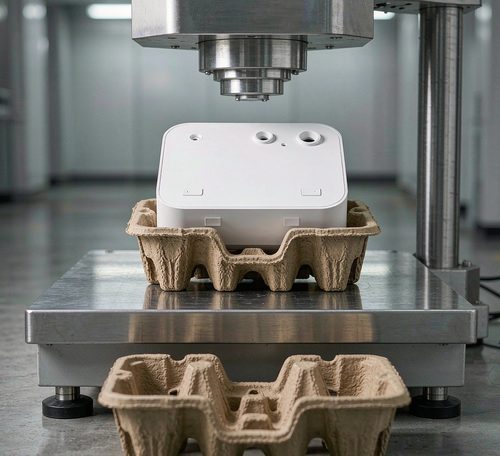
The fundamental problem with high-end electronics is that their precise parts are quite fragile. Molded pulp has "structural cushioning" since it has a three-dimensional structure. Traditional plastic packaging, on the other hand, uses material deformation to absorb impacts. For example, Shaoyin sports earphones are packaged in bagasse-enhanced pulp molded packaging. The circumference of the side wall of the honeycomb unit structure has been mechanically improved. It can handle 30% more pressure than regular foam and can survive a drop test from a height of 1.5 meters. The pulp-molded lining of Lenovo ThinkPad X1 series laptops uses 3D printing technology to bind with motherboard parts at the millimeter level. This lowers the rate of breakage during shipping from 0.8% to 0.2%.
Material innovation makes it possible to use things in more ways. The packaging for the Apple Beats Studio Pro earbuds is constructed of a mix of sugarcane bagasse and bamboo fiber. It has a compressive strength of 120 kPa and cuts carbon emissions by 42%. The gift box for the Huawei Mate 60 Pro has been upgraded with nanocellulose technology to obtain a surface hardness of 3H (pencil hardness level), which meets the strict specifications for high-end items' resistance to wear. These new technologies have made molded pulp packaging go from "usable" to "preferred," and it is even starting to replace more traditional methods like vacuum forming and injection molding.
2. Environmental premium: a mix of brand value and market demand
Because people want to buy things that are good for the environment, market rules are shifting. According to Grand View Research, the global market for high-end electronic pulp molding packaging is predicted to develop at a compound annual growth rate of more than 12%, reaching $768 million by 2024. Lenovo's research on customers shows that 68% of Gen Z shoppers would spend an extra 10% to 15% for packaging that is better for the environment. Because of this tendency among customers, brands have to reconsider how they package their products: Sony said at CES 2025 that by 2030, all of its product packaging would be made from 100% pulp. The Google Pixel 9 phone includes a sliding paper cover design that uses 30% less material and costs $0.8 less to package each unit.
Policy pressure speeds up changes in the industry. The EU's Packaging and Packaging Waste Regulation (PPWR) says that by 2030, all packaging must have a void ratio of less than 50%. This means that molded pulp can be carefully shaped to keep the void ratio within 30%. The Chinese industry regulation "Technical Requirements for Energy Consumption of Pulp and Plastic Products" encourages companies to use 60% less energy to make plastic packaging than they normally do. These rules not only keep the market in check, but they also give technology a chance to grow. Companies that use advanced hot pressing molding methods can recycle up to 95% of their products. This is 40 percentage points more than the first generation technology.
3. The Aesthetic Revolution: Where technology and natural materials meet
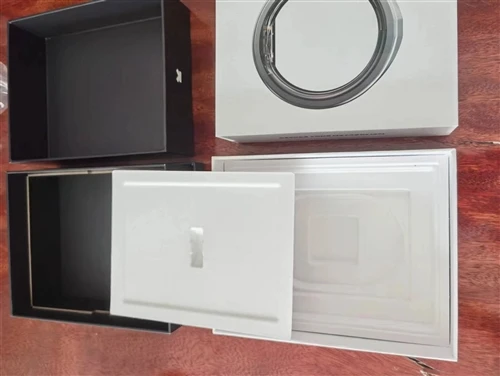
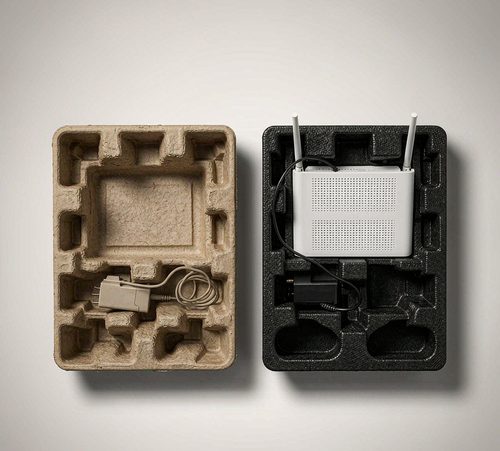
Now, expensive packaging is the main way that brands tell their stories, going beyond just protecting their products. The difference between the high craftsmanship of electronic gadgets and the natural fiber texture of molded pulp creates a unique "technological humanistic aesthetics." The Leifen high-speed hair dryer's pulp-molded packaging is made from the same bamboo color substrate as the device itself, and laser etching shows the outline of the product. The idea behind the brand is "coexistence of nature and technology." When you open the box, the warm feel of the fibers makes a contrast with the cold metal body. The "two sheets of paper" packaging for Rokid Me smart speakers, which has a simple structure that suggests "subtractive life," has been shared millions of times on social media. This shows that this design language is becoming a new standard in the industry.
Customization options provide up even more design possibilities. The Year of the Loong limited edition gift box for the Usmile Smile plus electric toothbrush uses a molding method to combine traditional materials with product curve, making a collection all by itself. The bamboo fiber packaging for the Lenovo Moto Razr foldable screen phone tackles the problem of single color in traditional pulp molding by utilizing a biodegradable water-based coating to make gradient dyeing possible. A Nielsen study found that 73% of people thought that pulp-molded packaging is "more high-end." These improvements illustrate that eco-friendly materials can meet both practical and emotional needs.
4. Working together across the whole supply chain, from closed-loop circulation to new materials
For the industry to improve, all parts of the chain need to make technological progress. Yongfa Mold has devised a ternary formula of "waste paper sugarcane bagasse bamboo fiber" that cuts the cost of raw materials by 18% and makes packaging 25% stronger. Shaoyin employed AI to improve mold design in manufacturing. This slashed the time it took to make a new set of molds from 45 days to 18 days and lowered the price of a single set of molds by 60%. Amazon's "closed-loop recycling system" turns trash packaging into recycled fibers for making new packaging. This way, 92% of the resources used are recycled.
Setting standards makes it harder for businesses to compete. The "White Paper on Environmental Protection Packaging for Sports Earphones," which was shown at the IPFM show and has since become the industry standard, lists five important factors. Two of these are compressive strength and carbon footprint traceability. The Lenovo-sponsored national standard "Technical Specification for Pulp Molding Packaging of Electronic Products" has made testing methods like drop testing and moisture resistance the same for everyone, which has led to widespread deployment. These requirements help Chinese companies get more power on the world stage in addition to making their products better. China currently has 40% of the world's market for high-end electronic pulp-molded packaging.