
1. Material properties: The benefits of using natural fibers in mechanical systems
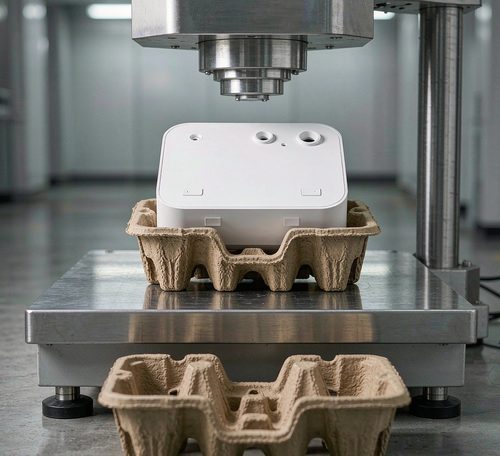
Plant fibers including waste paper, bamboo pulp, and sugarcane bagasse are used to make molded pulp. The fibers are then shaped into a three-dimensional mesh structure using vacuum suction technology. The fibers of this structure are randomly woven together to provide a three-dimensional support system that looks like a honeycomb and has its own unique mechanical qualities.
Stress distribution and energy absorption: Because the fibers are held together by hydrogen bonds and woven together, they can absorb outside stresses through elastic deformation instead of material compression. An egg tray, for instance, weighs only 65g yet can hold 80kg of static weight without breaking. The honeycomb structure keeps a single tray from bending more than 3mm, which is superior than foam plastics of the same thickness.
Optimizing density and strength: When fibers are shaped at high temperatures and pressures (180–250 °C, 5–10 MPa), the hydrogen bonds between them are reorganized, and the density rises to 0.6–0.8 g/cm ³, which makes the material much more rigid. Adding aluminum sulfate waterproofing agent or starch adhesive reinforcing compound increases fiber adherence by 30% while keeping the material light (50% less dense than wood).
Dynamic buffering performance: In impact testing, the buffering distance of pulp molding has a negative relationship with the transmitted acceleration. For instance, a certain brand of mobile phone packaging uses a multi-layer composite structure (cavity+vertical reinforcement design) that cuts the speed of vibration transmission during shipping by 40% and keeps the product intact 99.7% of the time during drop testing.
2. Structural Design: From Individual Safeguards to Comprehensive Solutions
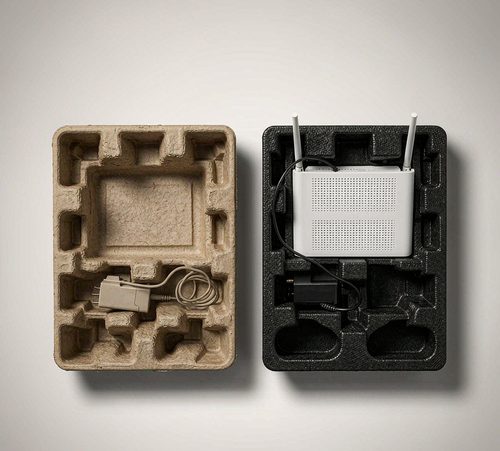
The improvement of pulp molding from "universal buffering" to "customized system protection" is driven by the wide range of electronic devices that need it. This lowers the rate of damage during shipping through six main designs:
Optimizing geometry: Stiffeners and chambers: Designing the mold to make voids and add ribs within. For instance, a certain kind of laptop computer packaging has a vertical reinforcement structure that looks like a "well." This structure doubles the load-bearing capacity and can handle a stacking pressure of 100 kg.
High temperature and high pressure composite made of 3 to 5 layers of pulp board. It makes the link between fiber layers 30% to 50% stronger. A certain brand of TV packaging has a 5-layer composite construction that can hold 500 kg of items and has a compressive strength of 15MPa. It can be used instead of wooden pallets.
Protection by region:
Barrier with Honeycomb: Micro scale honeycomb units are used to partition areas for precision parts like camera modules and circuit boards. When these units are hit from the outside, they work together to deform and absorb energy. The packaging for a certain brand of headphones has a 0.5mm honeycomb shape, and the rate of damage to the parts during drop testing has dropped from 8% to 0.3%.
Gradient buffering: Make density gradients based on how the weight of the product is spread out. For instance, a certain type of game console packaging uses a high-density (0.8g/cm ³) structure in the center of gravity area and a low-density (0.5g/cm ³) structure in the edge area. This makes the package 20% lighter and 15% better at protecting the game console.
Design that keeps moisture and static out:
Pulp molding packaging can incorporate conductive fibers or anti-static coatings to get rid of the static charge that builds up during transit. This can cut the damage rate of electronic devices due by static electricity from 3% to 4% to zero.
Using nano coating technologies, such replacing PFAS compounds with graphene oxide, may make things waterproof and oil-resistant, which is what electrical parts need to be able to do. For instance, a certain type of medical equipment packaging has received the EU food contact material certification and may work well in temperatures as low as -18 °C.
3. Use in business: from high-end electronics to complete scene coverage
In the world of 3C electronics:
Packaging for mobile phones: The internal handling rate for Xiaomi mobile phone packaging has gone up to 99.9%, and the rate of damage during transit has gone down by 80%. It has passed ISTA 3A standard testing, which simulates the conditions of global transportation.
Lenovo will slowly switch out plastic cushioning packing for laptops starting in 2022 and will have completely switched to pulp molding by 2024. The Yoga series has a "double cavity+arc-shaped vertical bar" structure that was improved by ANSYS simulation. It can bend less than 2mm under a static load of 80kg.
When it comes to home appliances:
TV packaging: The Samsung QLED series uses a combination of "pulp molded tray+EPE buffer strip." The tray can hold 200 kg, which cuts the weight of the packing by 35% and the carbon emissions by 50%.
The exterior unit of the air conditioner has a pulp molded corner bracing structure, and Gree uses machine learning to improve the mold design. When a static load of 80 kg is put on it, the deformation is less than 2 mm. This saves 40% on costs compared to standard hardwood corner braces.
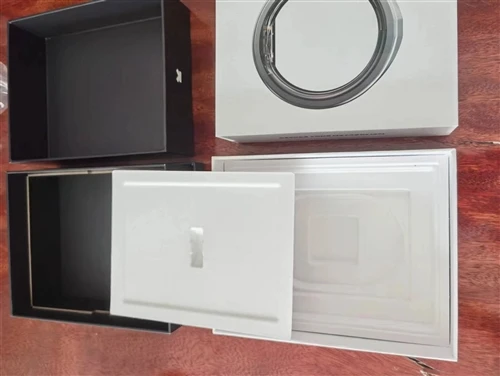
Wearable devices: Smart Watch: The Apple Watch Series 8 comes in a box constructed of 0.3mm ultra-thin pulp molding that protects precision electronic parts with "microporous breathability+anti-static coating" technology. The box has a damage rate of less than 0.1% when opened.
AR/VR devices: One type of VR headset packaging has a "six sided buffering design." This design has survived a 30cm free fall test and kept the internal lens module 100% undamaged.
4. Breakthroughs in technology and a standard system
Innovation in materials:
Nanofiber reinforcement: Adding nanocellulose with a diameter of 50 to 100 nm makes the material 50% stronger, and this has been used in packaging for a certain brand of drone.
Biobased coating: Natural polymer coatings like sodium alginate and chitosan are utilized instead of typical petroleum-based waterproofing agents. This cuts the composting cycle of materials down to 30 days.
Intelligent manufacturing upgrade: AI mold design: By using machine learning to improve the mold structure, one company has cut the design cycle from 7 days to 2 days and increased the use of materials by 15%.
Digital production line: The industrial Internet platform was used to keep an eye on the full process, from mixing the right amount of raw materials to checking the finished product. This raised the factory's yield to 99.5%.
Complete standard system: The International Organization for Standardization (ISO) has published ISO 18847, "Test Methods for Pulp Molded Packaging." This document lists 12 performance indicators, including load-bearing, cushioning, and moisture resistance.
The "General Specification for Pulp Molding Packaging of Electronic and Electrical Appliances" is being developed by the China Electronics Standardization Research Institute. It is planned to be put into use in 2026 and will help the industry develop in a more consistent way.