1. Risks of packaging air purifiers
Air purifiers are common household equipment that are quite accurate, and their risk level is much higher than that of regular fans.
It has the following parts on the inside:
HEPA filter system (sensitive parts in the core)
System with a high-speed fan (power core)
Core for sensing and detecting systems
These systems are mostly responsive to three kinds of transportation settings:
One is that fluctuations in pressure can cause structural displacement;
Second, shaking may change how the fan is coaxial;
Third, pollution could make the filter element less effective.
the main purpose of air purifier packaging is not only to keep it from falling, but also to keep its structure steady.
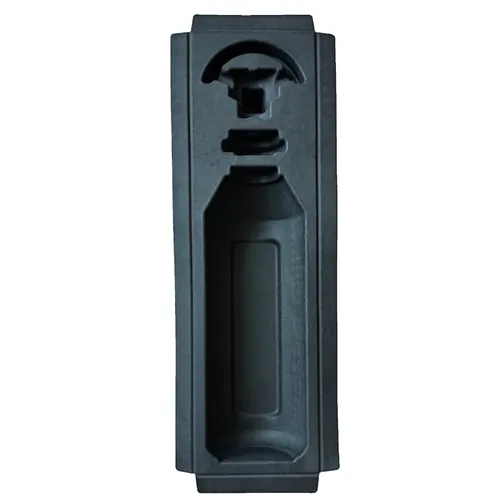
2. The Logic of Moulded Pulp Structure
When it comes to air purifiers, the most important thing about moulded pulp is not the materials it is made of, but its capacity to manage structure.
It normally protects itself with three modules:
Bottom module: holds up the whole machine and stops the bottom from bending while it is under pressure;
Central module: keep the body still so it doesn't shake left and right;
Top module: Limit movement up and down to keep the transportation from jumping;
Instead of only being a filler layer, this structure makes a "closed positioning system."
So, while designing packaging for air purifiers, it is more like engineering structural parts than packing materials.
3. Special rules for cleaning equipment
Air purifiers are clean items, which means that their packaging must fulfil certain standards.
Moulded pulp provides a few important benefits over EPS foam:
It won't shed powder, so it won't get into the HEPA filter. It also won't make static electricity or pick up particles in the air.
The structure of the material is stable, thus it won't break down into small pieces when being moved;
These elements are highly crucial for protective packaging for home appliances, especially when shipping high-end items.
4. Evaluation of transportation reliability
ISTA 3A testing is usually needed for air purifiers. This testing has three parts: drop, vibration, and pile pressure.
In terms of sensible structural design:
Most of the time, moulded pulp packing can get a high pass rate.
Foam packaging is similarly stable, however it depends on the quality of the materials.
The main distinction is:
Foam is based on the qualities of the material. Structural design that depends on pulp.
So, if the design is good enough, moulded pulp may fully meet the needs of air purifiers for transportation.
5. Trends in the growth of the industry
The air purifier industry is making changes to its packaging, mostly because of three things:
The first is to encourage the use of other materials through environmental rules;
The second is the rise in structural needs that come with high-end branding;
The third is the global supply chain's single standard for green packaging.
Moulded pulp is becoming one of the most popular options for eco-friendly packaging for apps.
At the same time, more and more firms are adding eco-friendly packaging to their products as a way to improve their brand image and make them more competitive in the market.