一, Molded pulp: the smart home packaging revolution for the environment
1. A way to cut down on carbon emissions over the whole life cycle
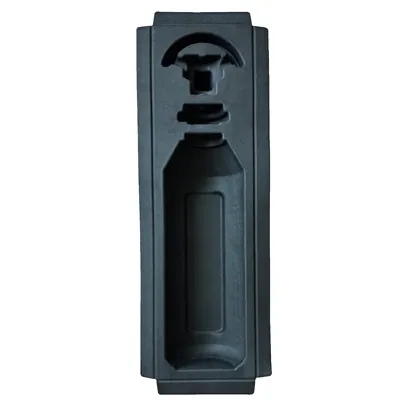
The Sonos Sub Mini speaker's box is made of FSC-certified bespoke kraft paper and pulp molded trays, which means that it can be recycled 100% of the time. This method cuts carbon emissions by 68% compared to regular plastic pallets, and customers may throw away the whole package in a receptacle that can be recycled. The way Huawei Mate series mobile phones are packaged is more representative. Each ton of packaging material made from sugarcane bagasse and bamboo fiber mixed pulp releases 62.6% less carbon than plastic and breaks down into organic fertilizer in 180 days. Smart home products have had low-carbon genes since they were first made because of this closed-loop architecture that goes from raw materials to waste.
2. A big step forward in structural design performance
Because it wasn't strong enough, early pulp molding could only be used for simple packaging. But because to imitation design and composite material technology, it can now safeguard delicate electronic devices. Lenovo laptops are packaged using fiberglass reinforced pulp molding, which only deforms 1.2mm in a 50kg stacking test, which is 76% less than pure pulp. The Huawei P80 series phone tray has a honeycomb structure and right-angled edge cutting process that makes it 40% more efficient at buffering, while also fitting in with the product's minimalist look. The more modern nano cellulose composite material makes pulp molding 1.8 times more resistant to impact than typical foam plastics. This fully breaks the idea that "environmental protection means being weak."
3. Functional coatings that can be used in many different ways
Pulp molding combines anti-static and electromagnetic shielding functions through surface treatment technology to meet the specific needs of smart home devices. Adding a carbon black coating to packaging trays, for instance, can lower the surface resistivity to 10 ⁶ -10 ⁹ Ω/sq, which meets the IEC 61340-5-1 standard for electrostatic protection. The nickel-plated fiber composite coating, on the other hand, achieves a 40dB shielding effectiveness in the 1-18GHz frequency range and is 60% lighter than traditional metal shielding. These new ideas have changed pulp molding from a single cushioning material to a protective carrier that can do several things.
二, From packaging to body: molded pulp's functional extension
1. Replacing structural parts with lighter ones
Some plastic parts are being replaced by pulp molding in the creation of smart home goods. Xiaomi's ecological chain company has made a pulp molded speaker bracket that uses 3D weaving technology to make a three-dimensional mesh structure. This makes it 35% lighter while still being strong. This technology changes the direction of the fiber arrangement to make the bracket 50% stronger in the vertical direction and 40% stronger in the horizontal direction. It has been successfully used to support the low-frequency unit structure of high-end audio devices.
2. Research into how to improve sound quality
The intrinsic porous structure of pulp molding makes it possible to use it in acoustics. By changing the density of the pulp fibers, Sony Laboratory has made a molded acoustic panel that absorbs sound 22% better than regular polyester fiber sound-absorbing cotton. This material can be used as both a case and an acoustic diffuser in the design of smart speakers. It absorbs sound evenly in the 300–2000Hz range and gets rid of the acoustic staining that happens with typical plastic cases.
3. New ways for smart engagement to happen
The fact that molded pulp can change shape gives designers of smart home interactions new options. Apple's "paper touch" technology makes capacitive touch work by putting a clear conductive layer on top of the pulp. People can regulate the volume of the HomePod mini by turning the pulp ring body. The technology used has a touch sensitivity of up to 0.1mm. This design not only cuts down on the cost of materials, but it also provides the product a unique feel.
三, Technological breakthrough: the main engine that makes molded pulp useful
1. Intelligent manufacturing makes production more efficient.
Bishuo Technology's fourth-generation pulp molding production line uses both vacuum adsorption and hot pressing technology to boost the production capacity of a single machine to 60 pallets per minute, with a stable yield rate of over 98%. Qingdao Haier has released an AI-assisted design system that automatically finds the best structural solution once you enter the measurements of the device. This cuts down on material use by 30% and boosts buffering performance by 15%. These new technologies make it possible to use them on a wide scale.
2. Improving the environmental impact of bio-based coatings
Because of the environmental concerns about traditional waterproof and oil-resistant compounds, the industry is speeding up the development of plant-based coatings. Nestle R&D Center has created a chitosan starch composite coating that combines chitin and modified starch as raw materials. It forms a thick, water-resistant layer on the surface of pulp molding that lasts for 60 days in soil. The EU REACH approval has been given to this technology for use in the packaging tray of Xiaomi smart speakers.
3. 4D printing that changes shape
Lenovo Laboratory's research with 4D printing technology lets pulp molding remember its shape. The packaging tray can automatically fold to 1/5 of its original size after usage since it has shape memory polymers built into the fibers. This cuts the cost of reverse logistics by a lot. This technology is projected to be used to package Huawei Mate series smartphones in 2026, making it possible to "automatically recycle after use."