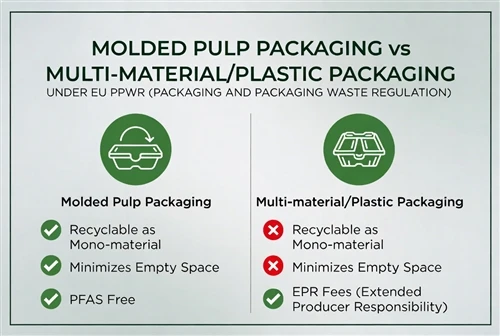
Molded pulp, celebrated for its eco-friendly and sustainable nature, is crafted through intricate production processes. Two prominent methods employed in the manufacturing of molded pulp products are the dry press and wet press techniques. This article delves into the nuances that differentiate these methods, shedding light on their respective advantages, applications, and environmental implications.
Dry Press Technique:
The dry press method in molded pulp production involves the use of dry or semi-dry fibers to create the desired product. Here are key aspects that distinguish the dry press technique:
a. Materials: Dry press molded pulp utilizes fibers with lower moisture content. The process often involves pre-drying the pulp to reduce its water content before molding. This ensures that the fibers maintain their form during the molding process.
b. Molding Process: The molding process in dry press involves placing the dry or semi-dry fibers into a mold and applying heat and pressure. The absence of excess water means that less energy is required for the drying stage, making the overall process more energy-efficient.
c. Applications: Dry press molded pulp is commonly used for products that require a smoother surface finish and precise details. Electronics packaging, trays, and cosmetic packaging are examples of applications where the dry press technique shines due to its ability to create finer and more intricate designs.
d. Environmental Impact: The dry press technique generally results in lower energy consumption compared to wet press methods, contributing to a reduced carbon footprint. Additionally, the absence of excess water in the process minimizes the environmental impact associated with water usage and wastewater treatment.
Wet Press Technique:
In contrast, the wet press technique involves the use of fibers with higher moisture content, creating a slurry that is then molded into the desired shape. Here are the distinctive features of the wet press method:
a. Materials: Wet press molded pulp utilizes fibers with higher water content, often in the form of a slurry. The molding process starts with fibers suspended in water, facilitating the formation of the desired shape.
b. Molding Process: The wet press method involves pressing the wet pulp into a mold and subsequently drying the molded product. The excess water is removed during the drying stage, which may involve the use of heat and pressure.
c. Applications: Wet press molded pulp is well-suited for products that do not require a perfectly smooth surface finish. It is commonly used for packaging solutions such as egg cartons, molded containers for fruits, and protective packaging for fragile items.
d. Environmental Impact: While the wet press technique may consume more energy due to the need for drying, it is still considered an environmentally friendly process. The water used in the initial stages can often be recycled, reducing overall water consumption.
In conclusion, the choice between dry press and wet press techniques in molded pulp production depends on the specific requirements of the end product. The dry press method excels in creating detailed and refined designs, making it suitable for certain packaging applications. On the other hand, the wet press technique offers efficiency in molding products that may not require a perfectly smooth surface. Both methods contribute to the overall sustainability of molded pulp, offering environmentally friendly alternatives to conventional packaging materials. As technology and industry practices evolve, understanding these differences becomes crucial for businesses aiming to make informed decisions about their packaging solutions.