
一,Material Characteristics: Disruptive Innovation from "Irreversible Pollution" to "Natural Circulation"
1. Where raw materials come from and how long they last
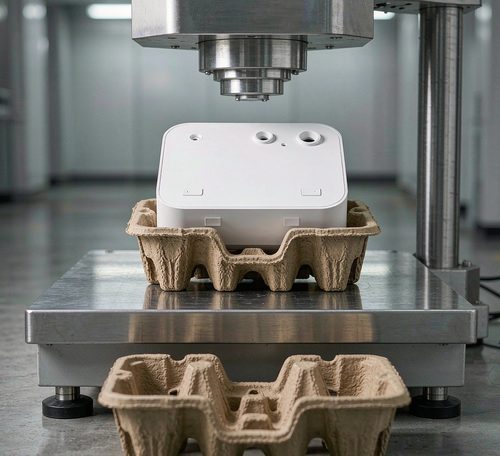
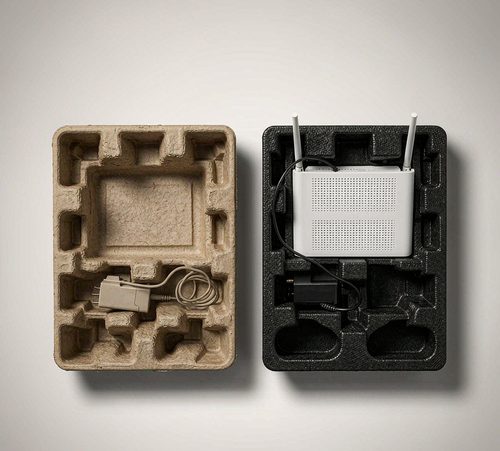
Molded pulp is created from agricultural waste like bamboo pulp, bagasse, and waste paper. More than 95% of it can be recycled, creating a closed-loop industrial chain. For instance, recycling old cardboard boxes to make molded egg trays can help a business cut down on tree felling by 0.8 cubic meters for every ton of molded egg trays it makes. EPS (polystyrene foam), on the other hand, is made from petroleum-based raw ingredients. It takes 1.5 tons of crude oil to make one ton of EPS, and these raw resources can't be reused. EPE (polyethylene foam) does employ some recycled plastics, however it only recycles less than 30% of them, and the performance of the raw feed is greatly diminished.
2. Performance of degradation and lifespan
In the wild, molded pulp products can break down fully into water and carbon dioxide in 90 days. If you compost them at home, the process can be sped up to 45 days. The things that break down it are not harmful and can directly take part in ecological cycles. EPS, on the other hand, takes hundreds of years to break down, and the microplastic particles that are discharged during this process build up in the food chain. EPE breaks down a little faster than EPS, but it still takes more than 50 years. Burning it can make very dangerous chemicals like dioxins.
3. Safety of chemicals and compliance with food contact regulations
Adding natural waterproofing agents like beeswax and starch-based coatings to molded pulp can make it IP67 waterproof and moisture-proof. It also fulfills FDA criteria for food contact. One kind of frozen food box uses modified pulp molding technique that keeps the structure stable between -40 and 220 degrees Celsius without the risk of chemicals moving around. EPS can let styrene monomers out when the temperature is high (>80 °C), and EPE can let plasticizers out when it comes into contact with oils and fats for a long time. Both of these things are dangerous for food safety.
二, Process logic: a performance breakthrough from "passive buffering" to "structural empowerment"
1. Rebuilding buffering performance mechanically
Traditional foam packaging uses the bending of materials to soak up energy. It can give quick cushioning because it has a closed cell structure, but it doesn't stick well to structures that are complicated. For instance, when you use EPS to package electronics, you need extra bubble wrap, which raises the whole cost by 30%. Molded pulp has a three-dimensional fiber structure that looks like a honeycomb and can hold up to 50 kg/㎡ of weight. It can also be perfectly fitted to the design of a product using 3D molds. After a certain car parts maker started using bespoke pulp molded lining, the rate of damage while shipping went down from 2.3% to 0.15%.
2. Ability to change to fit different situations
Molded pulp can satisfy a wide range of demands by changing the way it is made:
In a high-temperature situation, applying inorganic fire retardant can raise the fire resistance temperature to 1200 °C, which is good for packing industrial kiln parts.
In an anti-static situation, adding conductive fibers can keep the surface resistivity between 10 6 and 10 9 Ω, which is what electronic parts need to be anti-static.
New scene for preserving food: The natural fiber structure lets air through at a rate of 800g/m² per 24 hours. Film covering technology can change the breathability, which can make fruits and vegetables last 3 to 5 days longer.
3. Easy to stack and light weight
The density of molded pulp products is only 0.3–0.5g/cm³, which is a little higher than EPS (0.02–0.03g/cm³), but the foldable design makes the most of the area. For instance, a certain kind of pulp molded egg trays have a nested structure that makes stacking 30% more efficient than EPS egg trays and allows 25% more capacity to be transported in one container. Also, pulp molded products can cut down on storage space by half, which cuts down on logistical expenses by a large amount.
三, Market Trend: The shift from "Policy Driven" to "Value Restructuring" in industry
1. Release of policy dividends
The worldwide prohibition on plastic is speeding up. The EU's "Disposable Plastic Directive" says that EPS food packaging must be completely banned by 2030. China's "14th Five Year Plan" for circular economy development mentions pulp molding as one of the main materials to promote. industry research firms say that by 2025, the worldwide pulp molding industry will be worth more than $12 billion and will expand at a pace of 15% per year. On the other hand, the EPS/EPE market will drop by 3% per year.
2. Making the cost structure better
The cost of pulp molding per ton has gone down to 17500 yuan, which is about the same as EPS (16000 yuan/ton). However, the overall cost benefit is big:
Transportation cost: The amount of pulp molded goods is 40% less than EPS, however the amount of single transportation is 60% more;
Cost of storage: A foldable form makes storage space three times more useful;
Cost of disposal: The cost of recycling waste pulp molding is 800 yuan per ton, whereas the cost of recycling EPS is less than 200 yuan per ton. This means that expensive processing fees must be paid.
3. Giving power to brand value
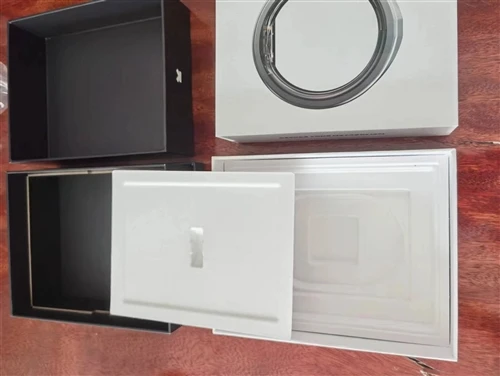
As people become more mindful of the environment, a "green premium" starts to arise. A poll found that 78% of people would pay 10% to 20% more for eco-friendly packaging. Apple has completely switched to pulp molded trays for its iPhone packaging. This has cut the carbon footprint of each package by 45% and made the brand more popular by 22 percentage points.
四, The cutting edge of technology: the path from "function replacement" to "performance surpassing"
Pulp molding technology is currently making progress toward high accuracy and several functions:
3D mold accuracy: With five-axis CNC machining, the mold error is kept to within ± 0.1mm, which is good enough for the packaging needs of precision instruments.
Composite material use: When biobased plastics like PLA are mixed with the product, it becomes three times stiffer and waterproof to IPX5 level.
Smart packaging integration: RFID tags or temperature and humidity sensors can be built into the packaging to provide for full traceability and quality control throughout the supply chain.