


Molded Pulp Packaging for Consumer Electronics: Protecting Smartphones, Tablets and Wearables in Transit
Lead: When a smartphone or pair of earbuds leaves the factory, it travels through warehouses, trucks and parcel hubs before reaching a buyer - and the packaging has to survive all of it. Consumer electronics brands are shifting their inner packaging from EPE foam and EVA to custom molded pulp inserts, because fiber packaging protects as well, weighs less, and strips plastic out of the unboxing moment entirely.
What Consumer Electronics Need From Packaging
Consumer electronics are a demanding packaging category for three reasons:
- High value. A single damaged unit can erase the margin on an entire batch, so protection is non-negotiable.
- Fragile and precision-critical. Screens, lenses, circuit boards and connectors crack or shift under impact, and tolerances are tight.
- B2C transit. Unlike industrial freight, consumer electronics often ship singly through parcel networks, where drops are common and handling is rough.
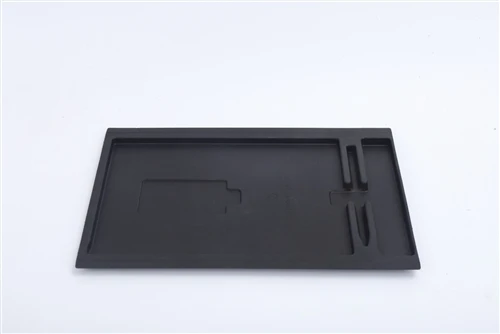
Molded pulp inserts address all three. The fiber is formed to the exact contour of the device, locking it in place so it cannot slide or rattle. On impact, the pulp wall deforms locally and absorbs energy rather than transmitting it to the product. And because the material is custom-formed, the same insert can hold the device, its accessories and cables in separate compartments, removing the need for multiple plastic bags and foam pieces.
Why Brands Are Leaving EPE and EVA Behind
For years the standard was EPE (expanded polyethylene) foam and EVA foam, die-cut into device-shaped cavities. They work, but they carry real costs:
| Criterion | Molded pulp insert | EPE/EVA foam insert |
|---|---|---|
| Recyclability | 100% curbside recyclable | Not curbside recyclable, rarely collected |
| Plastic content | None (all-fiber) | 100% plastic foam |
| Tooling cost | Medium, amortized over volume | Low |
| Unit cost at high volume | Comparable | Comparable |
| Dimensional stability | Good, consistent walls | Can compress permanently |
| Brand perception at unboxing | Fiber = premium sustainable | Foam = conventional plastic |
The regulatory and reputational pressure is the real catalyst. EU packaging rules require packaging to be recyclable by 2030, and EPR fees in several European markets now penalize plastic foam. Meanwhile, consumer surveys consistently show that electronics buyers notice - and reward - plastic-free packaging. When a premium phone unboxes to reveal a molded fiber tray instead of foam, the brand gets a sustainability moment it cannot get from a printed box alone.
Where Consumer Electronics Use Molded Pulp Today
The applications fall into a few distinct formats:
- Device cradles in retail boxes. A molded fiber tray that holds the phone or tablet, with cutouts for charger and cable. This is the fastest-growing use, replacing both EPE foam and plastic accessory bags.
- Accessory and earbud cases. Small two-piece molded pulp cases for earbuds, smartwatches and chargers, often with a printed sleeve.
- E-commerce shipping inserts. For products that ship without a branded retail box, a molded pulp insert inside a corrugated shipper protects the device for parcel transit.
- Demo and kiosk displays. Molded fiber trays that double as retail display stands, keeping devices secure while on show.
The Unboxing and Branding Advantage
Consumer electronics packaging is judged by feel, not just protection. Molded pulp gives brands control over that experience:
- Surface finish. Wet-press molding produces a smooth, dense surface that feels premium and can carry subtle branding. Dry-press is more economical for high-volume, low-cost segments.
- Color and coating. Fiber can be dyed or coated for a consistent brand color, though many brands intentionally leave the natural kraft finish as a visible sustainability signal.
- Printing. Labels and graphics can be printed directly on the tray or on a wrap-around sleeve, keeping the fiber tray clean while adding branding.
For premium devices, the unboxing moment is increasingly designed as part of the product experience. A molded fiber tray that fits the product precisely and reveals it in layers reads as intentional design, not cost cutting.
What the Numbers Say
Market and performance data for consumer electronics molded pulp packaging (directional estimates):
| Metric | Estimate |
|---|---|
| Consumer electronics packaging market, global (2026) | USD 30–40 billion (estimated) |
| Share of inner packaging transitioning to fiber | Growing 15–25% per year (estimated) |
| Weight reduction vs EPE foam insert | Approx. 30–40% (estimated) |
| Drop-test performance vs foam | Equivalent at standard 1.0–1.5 m heights (estimated) |
| Recyclability of molded pulp insert | 100% (curbside paper stream) |
| Plastic items removed per device box | 2–5 (foam + bags replaced by one fiber tray) |
The weight story matters twice: lighter packaging lowers freight cost per unit, and because molded pulp nests flat during shipping to the assembly plant, inbound logistics are more space-efficient than pre-cut foam blocks.
Design Considerations for Device Inserts
Electronics buyers commissioning molded pulp inserts should lock down these parameters:
- Exact device geometry. Tray design starts from the device CAD or a dimensional drawing. Contact points must be placed on the frame and back, never on the screen or camera module.
- Accessory layout. Charger, cable, earbuds and paperwork each need a designed pocket, or they migrate during transit and defeat the protection.
- Drop-test target. Confirm the drop height and package weight your carrier or retailer requires, and engineer the wall thickness and ribbing to pass it.
- Surface and coating. Decide between dry-press and wet-press early, since it affects tooling, unit cost and the unboxing feel.
- Volume and tooling. Tooling is the main fixed cost; higher volume justifies finer wet-press tooling and faster amortization.
How Hesheng Builds Consumer Electronics Packaging
Hesheng Innovation Development Ltd. manufactures custom molded pulp packaging - device cradles, accessory cases and e-commerce inserts - from recycled fiber with in-house tooling and both wet-press and dry-press lines. Since 2013, the company has supplied electronics, food, cosmetics and beverage clients across North America, Europe, South America and Australia.
For a consumer electronics project, Hesheng works from the device drawing, engineers the tray and accessory layout, approves tooling samples, then ramps serial production with drop-test and dimensional QC. Both dry-press and wet-press options are quoted so brands can balance finish against cost.
Ready to prototype a device insert? Contact Hesheng and the engineering team will confirm tooling feasibility and sample lead time within one business day.
FAQ
Q: Can molded pulp packaging be colored for consumer electronics?
A: Yes. Wet-pressed molded pulp accepts colorants and surface treatments well, so phone and headphone inserts can be molded in brand colors with a smooth, refined finish.
Q: Why choose wet press for electronics inserts?
A: Wet pressing produces a denser, smoother surface with tighter dimensional control, which fits premium consumer electronics where the insert sits close to the device.
Q: Is molded pulp safe for direct contact with electronics?
A: Molded pulp is non-abrasive, non-conductive and free of metal components, so it is safe for direct contact with devices during storage and transit.
Q: Can the insert match the exact shape of my device?
A: Yes. Inserts are molded to the exact contours of the device, holding it firmly and reducing movement inside the box.


