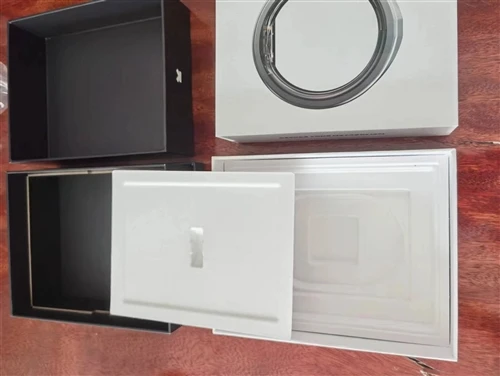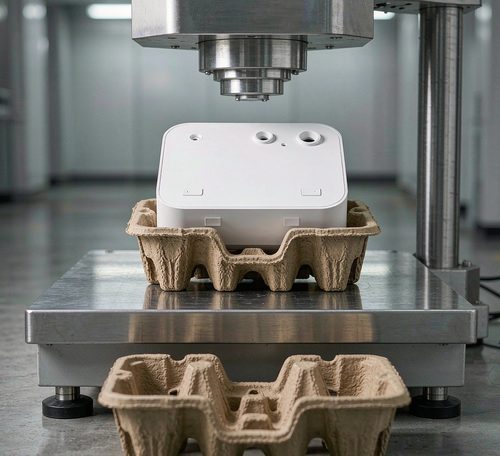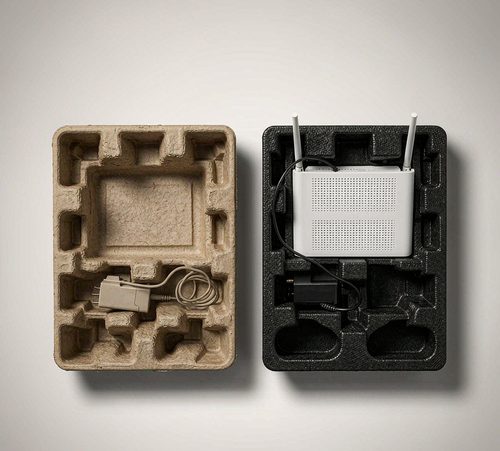

Paper tray packaging is a three-dimensional paper material that uses waste paper, pulp, sugarcane pulp and other fibers as raw materials and is molded by molding. Due to its good performance and environmental protection, it is currently widely used. At present, trays can be produced in large quantities and extensively. However, in the production process of paper trays, drying is a very important process and occupies a large production cost. How can the production process improve the drying efficiency of paper trays?
The raw material of the paper tray is only about 1% paper fiber slurry. After the wet paper is formed, the wet paper must be pressed to reduce the moisture content of the wet paper to 55%, while the water content of the paper tray is as high as 65%-75% after forming. It is difficult to use mechanical methods to reduce the water content. In the production process of paper trays, about 3.5-4.5KG of water should be removed from each kilogram of finished paper trays through the drying process, whether in terms of reducing production costs or improving the quality of paper trays , It is of great significance to improve the drying efficiency!
The wet paper mold with paper fiber as the main component is a porous object with capillary structure inside, and moisture exists between the surface of the fiber and the pores of the fiber capillary. The paper support products used for the inner packaging of products generally require good dynamic cushioning properties, and the moisture in them cannot be completely removed by mechanical pressing, but needs to be removed by drying. Therefore, compared with the conventional paper drying process, the drying strength of pulp molded products is very high.
On the one hand, hot air acts as a heat source to provide energy for removing moisture, and on the other hand, it acts as a moisture carrier to take away the moisture that is constantly evaporating. The moisture in the wet paper tray depends on the internal and external diffusion of water. The so-called internal diffusion refers to the migration process of water in the wet paper tray from the inside to the outer surface, and the external diffusion refers to the evaporation of water from its surface. The process of taking away. The dryness rate of the paper support depends on the speed of the internal and external diffusion of the moisture and the balance and coordination between the two. Reasonable process conditions should be established around the above two aspects and the dry physical properties of the paper support product!
The paper tray technology and the first product first appeared in Denmark, and in the 1960s it was possible to form an automated assembly line production, but it had not yet been widely used at that time. Paper trays cause a lot of white pollution in daily production and life. When a new type of environmentally friendly packaging material is urgently needed on the market, paper tray packaging has been paid attention to, which has driven the development of the paper tray packaging industry. At present, the technology of the domestic paper tray industry is also very mature. It can be produced in large quantities to reduce costs. The performance of the paper tray has also been greatly improved. With superior environmental protection, cushioning, anti-impact, anti-static, and moisture-proof performance, at the same time It can also customize a variety of paper tray packaging according to needs, so it is favored by companies in different industries and becomes a good choice for product packaging!