
The Current State of the Molded Pulp Industry in Home Appliance Packaging
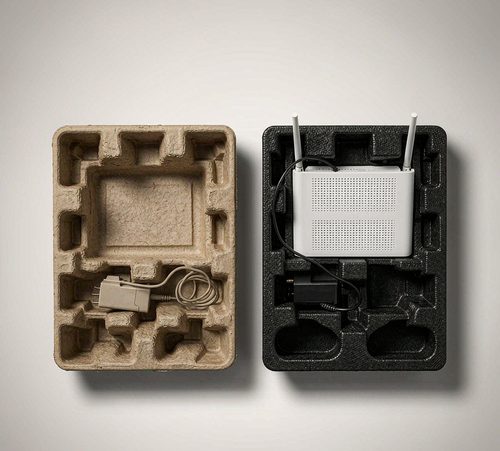
Home appliance brands have been moving away from EPS and EPE foam for years. Retailer scorecards, consumer unboxing videos, and tightening rules all push in the same direction. Molded pulp packaging gives them a fiber-based option that still protects heavy, awkward, and sometimes fragile products. Demand for molded pulp molded trays and molded pulp packaging boxes keeps rising as a result.
The old bottleneck was never the material itself. It was the way most factories produced it. Traditional and semi-automatic lines are slow, inconsistent, and labor-heavy. Wall thickness varies. Density drifts. Changing from one tray design to another can take hours. Those limits become painful once appliance customers start asking for higher volumes and tighter quality data.
|
Key Metric |
Traditional / Semi-Auto |
Automated Line (typical range) |
|
Daily capacity |
3,000–5,000 pcs |
10,000–20,000+ pcs |
|
Defect rate |
5–8 % |
Under 1–2 % |
|
Labor per line |
Higher |
Noticeably lower |
|
Mold changeover |
2–4 hours |
20–40 minutes |
|
Thickness & density control |
Variable |
Much tighter |
How Automated Production Lines Work in Molded Pulp Manufacturing
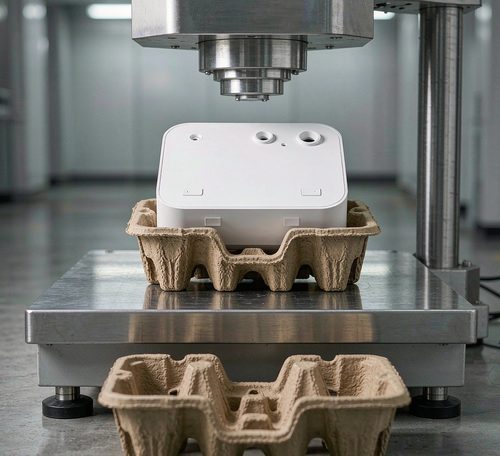
An automated line moves material through a steady sequence: fiber preparation, precise forming, controlled drying, pressing or shaping, inspection, and stacking. Sensors watch slurry consistency, vacuum levels, and temperature profiles the whole way. When something drifts, the system corrects it before the next cycle.
Robotic transfer keeps molds and parts moving with high repeatability. Vision systems or simple AI inspection catch thin spots, cracks, or dimensional problems in real time. Drying zones adjust airflow and heat independently so energy is not wasted on parts that are already dry enough.
None of this feels like science fiction on the factory floor. Operators still walk the line. They just spend less time fighting the process and more time watching the data.
The Real Impact of Automation on Molded Pulp Packaging Production
Capacity is the most visible change. Many factories that once struggled to hit 4,000–5,000 pieces a day now routinely clear 12,000–18,000 on the same footprint. Higher cavity counts and shorter cycle times do most of the work.
Quality improves just as clearly. When slurry, vacuum, and drying stay inside tight windows, density and wall thickness stop wandering. Defect rates that used to sit at 6–8 percent often drop below 1 percent. That matters when the tray has to protect a glass blender jug or a heavy motor base.
Labor costs fall because one automated line needs fewer people than a traditional line of similar output. The exact saving depends on local wages, but the direction is consistent. Faster changeovers also shrink lead times, which appliance brands notice immediately when they are racing a product launch.
|
KPI |
Before Automation |
After Automation |
|
Daily output |
3,000–5,000 |
12,000–18,000 |
|
Defect rate |
6–8 % |
Under 1 % |
|
Operators per line |
Higher |
Often 40–60 % fewer |
|
Typical lead time |
Longer |
Noticeably shorter |
|
Energy per finished unit |
Baseline |
Usually lower |
How Automation Enables Better Customization for Home Appliance Brands
Quick mold changeover is the quiet advantage. What used to take three or four hours can now finish in half an hour on a well-designed line. That makes smaller runs and more frequent design changes practical instead of painful.
Precision forming also improves. Complex molded pulp molded trays, contoured corner pads for molded pulp for protection, and even full molded pulp packaging boxes hold tighter tolerances. The geometry stays consistent from the first piece to the last.
Digital prototyping helps too. Designers take the appliance CAD, model the tray, cut prototype tooling, and send physical samples for drop testing before anyone commits to production molds. Appliance engineers get to see and test the real part instead of approving a drawing and hoping.
Does Automation Affect the Sustainability of Molded Pulp Packaging
Smart drying systems usually cut energy use per piece rather than raise it. Heat recovery and zone control stop the ovens from running flat-out when they do not need to.
Tighter process control also means less scrap. Fewer rejected trays go back into the pulper or the waste stream. Closed-loop water systems recycle process water instead of sending it all to treatment.
When you add those gains together, the carbon intensity per unit of packaging often comes out lower on an automated line than on an older one-even before you count the inherent advantage of fiber over foam.
|
Environmental Factor |
Traditional Line |
Automated Line |
|
Energy per unit |
Higher |
Lower with smart drying |
|
Water use |
Higher |
Reduced by recycling |
|
Material scrap |
Higher |
Significantly lower |
|
Relative carbon intensity |
Baseline |
Usually better |
Challenges and Investment Considerations for Molded Pulp Manufacturers
An automated line is not cheap. Smaller systems can start in the mid-hundreds of thousands of dollars. Larger, fully integrated setups climb into the millions. The exact number depends on capacity, number of forming stations, and how much inspection and data connectivity you add.
Payback commonly lands between 18 and 36 months if the line runs at solid utilization. Labor savings, scrap reduction, higher output, and lower energy all contribute. Utilization is the make-or-break variable-idle automated equipment pays back slowly.
Factories also need people who can work with sensors, PLCs, and dashboards. Training existing operators usually works better than trying to hire a completely new crew. Maintenance planning becomes more important too; high-output lines punish unplanned downtime harder than older equipment did.
Industry Trends: Where Automated Molded Pulp Production Is Heading
Demand for molded pulp packaging in the appliance sector continues to climb through 2030. Regulation, retailer requirements, and brand carbon targets all point the same way.
Larger appliance companies increasingly prefer suppliers who can show stable capacity and consistent quality data. Automated production is becoming one of the practical filters they use.
Factories are also linking production data to customer portals so brands can see order status and basic quality metrics without waiting for an email. At the same time, rules such as the EU PPWR updates, state-level foam restrictions in the US, and China's dual-carbon goals keep pressure on anyone still relying on older foam-heavy packaging systems.
How to Choose a Molded Pulp Manufacturer with Automated Capabilities
Look first at the actual lines running on the floor, not just the brochure. Ask about current capacity, typical defect rates, and how fast they can change from one tray design to another. Certifications and a track record with appliance packaging matter, but so does the ability to share process data.
Useful questions before you place an order:
What defect rates and process capability numbers do you actually run?
How long does a typical mold changeover take?
Can you work from our product CAD and supply prototype samples for drop testing?
How do you handle moisture resistance for the climates we ship into?
Automation usually improves cost efficiency at volume, which can help both molded pulp wholesale pricing and custom programs. Minimum order quantities still exist because of tooling, but higher line speeds make moderate volumes more realistic than they used to be on slower equipment. A capable molded pulp manufacturer or molded pulp factory with automated lines can often offer more reliable supply and tighter quality than a fully manual operation.
F Q A
Q: How much does an automated molded pulp production line cost?
A: It varies widely. Smaller systems start in the hundreds of thousands of dollars; larger integrated lines can reach several million. Get quotes based on the output and product mix you actually need.
Q: How fast can automated machines produce molded pulp trays?
A: Depending on cavity count and cycle time, modern lines commonly turn out thousands to tens of thousands of pieces per day.
Q: Is automated molded pulp production better for the environment?
A: In most cases yes. Lower energy and water use per unit, less scrap, and higher overall efficiency add to the inherent benefits of fiber-based packaging.
Q: What is the defect rate of automated molded pulp lines?
A: Well-run lines often hold defect rates under 1–2 percent.
Q: Can small molded pulp factories afford automation?
A: Many start with modular or semi-automated upgrades and expand as volume grows. Full lines are more common at medium and larger scale, but stepwise investment is realistic.
Q: How long does it take to set up a new automated production line?
A: From order to stable running usually takes several months to a year or more, depending on equipment lead times, site preparation, and commissioning.