
一, A big step forward in materials science: from "degradable" to "high performance"
1. Nanocellulose technology for strengthening
Nanocellulose (NFC) improvement technology is almost ready to be sold to the public. Nanoscale cellulose can be evenly spread out in the pulp matrix to greatly improve the material's mechanical properties. When nanocellulose is added to pulp moulding, the tensile strength goes above 150MPa, the ring compression strength goes up by 22%, the thermal deformation temperature goes up to 205 °C, and it can handle temperature shocks from -20 °C to 220 °C. For the first time, this innovation has made it possible for pulp moulding to replace industrial plastics. It can be used for high-strength tasks like making parts for cars and electronics cases.
2. Functional coverings made from plants
Fluorinated compounds (PFAS) are what make traditional pulp moulding waterproof and oil-resistant, but the EU REACH regulation puts tight limits on these substances because they build up in living things. In 2025, Donghua University made technological advances in the "chitosan stearic acid" double-layer structure coating. They filled fibre pores with chitosan to make them more oil-resistant and covered hydrophilic groups with long carbon chains of stearic acid to make a water-resistant barrier. This made the product oil-resistant up to level 12, and it didn't leak even after 30 minutes of soaking in 95 °C hot water. The hydrophobic agent made from seaweed that was created by Henkel Group can also make the waterproofing last up to 12 hours longer and the biodegradation cycle shorter, making it a better way to package food.
3. Fibre system with a mix
To use less wood pulp, the industry is speeding up the development of mixed pulp materials made from farm waste, like wheat straw, sugarcane bagasse, and bamboo fibre. The fibre length of sugarcane bagasse pulp is good (0.65-2.17 mm), and it is cheap. China will be able to produce more than 1.2 million tonnes by 2025, which is 37.4% of the raw material market. Biochemical pulping technology has made bamboo pulp better, and the fibre tear strength has gone up to 18.5kN m/kg, with a penetration rate of over 25% in the high-end packaging field. Because the fibres complement each other, the mixed fibre method not only lowers the cost of raw materials but also improves the performance of moulding.
二, Updating the process technology: both speed and accuracy will be better
1. Forming technology for very fast speeds
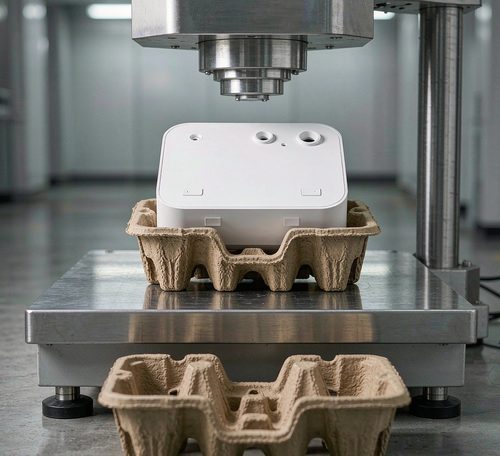
The long moulding cycle of standard pulp (90 seconds per mould) is a major problem that limits the amount that can be made. High-voltage pulse forming technology shortens the cycle to 4 seconds per mould, which cuts energy use by 43.8%. Jiangsu Xinmeixing's double helix extrusion system has made it possible for a single line to produce 22,000 tonnes per year, which has increased the automation rate of small and medium-sized manufacturers from 45% to 73%. The German company Kiefel has also released an adaptive hot press forming machine that uses AI to dynamically adjust for mould deformation. This machine has an accuracy of ± 0.012mm and can be used for the precise packaging of consumer electronics.
2. New developments in 3D cell structure
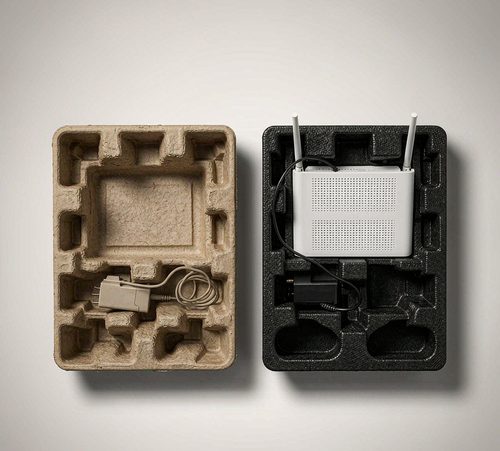
An important area of technology right now is 3D honeycomb bubble composite structure, which is used to cushion packing. Based on the "honeycomb bubble" double-layer design, the American Material Sciences Group has made the energy absorption rate 89J/g, which is 40% higher than regular EPE foam. Huawei and Lenovo worked together to create gradient density buffer packing, which protects zones by changing the density on the fly. Each year, the order size grows by 31.4%. This kind of structure not only makes things safer, but it also uses less material because the shape is optimised, which makes it easier to make things that are light.
3. Mould technique with low carbon
Life cycle assessment (LCA)-based low carbon mould design technology is quickly becoming the norm in the business world. The carbon footprint of a single set of moulds can be cut by 62% by simulating the mould flow channel and using recyclable mould materials to make it work better. The Ningbo mould industry cluster also finished the fifth generation of ultrasonic moulds, which allows for quick mould change in 30 seconds. This makes production much more flexible.
三, Innovations in functional integration: moving from "passive protection" to "active value creation"
1. A smart method for packaging
IoT technology is being fully integrated with pulp moulding to make smart packaging that can be seen and interacted with. For example, putting pH-sensitive natural colour strips in fresh food packages means that when the food goes bad and acidic substances are released, the colour strips change from green to yellow, which lets people know right away how good the food is. With a simple sensing circuit printed with biodegradable conductive paste and NFC sensing on a phone, information like storage temperature and transportation time can be read, meeting the needs of high-end fresh produce for tracking. Cornell University also created thin film soft electronic devices that can be recycled. These devices can include sensors and conductive ink inside packages to do things like track how long perishable goods can be kept.
2. Structure for adaptive preservation
In order to actively care for the problems that come up when trying to keep fresh food fresh, pulp moulding creates a layer of different functions. For instance, a composite structure made of bamboo fibres and a natural chitin antibacterial agent can automatically control the humidity inside the packaging (RH 85% to 90%), absorb ethylene gas, stop fruit and vegetable mould from growing, and increase the shelf life by two to three days compared to traditional plastic preservation boxes. For fresh meat and seafood, a composite structure made of "pulp molding+degradable PLA barrier film" is used, which has an oxygen barrier rate of ≤ 1.5cc/(m ²
3. Combinations of modular functions
"Separate storage, convenient heating, and safety protection" are the three main needs that prefabricated food packing needs to meet. Pulp moulding meets these needs by integrating functions through structural innovation. For example, a multi-cavity structure that is already put together and splits the main ingredient cavity, the side dish cavity, and the sauce cavity; each cavity is sealed separately using a recyclable plant-based sealant to keep flavours from mixing; At the bottom of the cavity, a guide groove is built to quickly drain any condensed water that forms during cooking. This keeps the taste of the ingredients. It can be heated in three ways: by steaming, boiling, or using a microwave (from -20 °C to 120 °C).
四, Smart Manufacturing System: Moving from "Experience Driven" to "Data Driven"
1. Platform for the industrial Internet of Things
Over 1200 manufacturing companies are now linked to the industrial Internet of Things platform that was set up in Kunshan, Jiangsu. Dynamic optimisation of key parameters like mould temperature and slurry concentration is achieved by collecting and analysing process parameters in real time. This raises the return rate to 99.6%. Blockchain traceability technology has also been used to handle the entire carbon footprint process. For every tonne of finished product, 0.48 tonnes of CCER indicators are traded, which helps businesses make more money through carbon trading.
2. AI method for checking the quality of pictures
Zhongxin Co., Ltd. independently created an AI visual quality inspection system that uses deep learning algorithms to find surface flaws in goods. This system cuts the error rate to 0.03ppm, making it 20 times more effective than manual quality inspection. By looking at faulty data, the system can also improve mould design and production processes in the opposite direction, creating a closed loop of "detection feedback improvement."
3. An intelligent manufacturing plan based on subscriptions
A new subscription model called "equipment leasing+product repurchase" has been released by the regional intelligent manufacturing alliance. This model lowers customers' original investment by 67% and uses blockchain technology to settle carbon points. Small and medium-sized manufacturers can rent intelligent moulding equipment, pay fees based on production volume, and then give the alliance finished goods to buy back. This lowers market risks and financial pressure.