
一,Environmental genes: a green revolution that lasts from the beginning to the end of a product's life
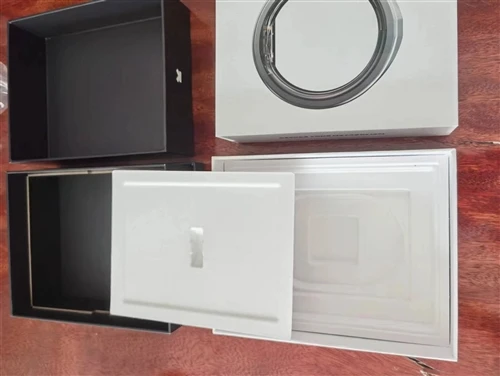
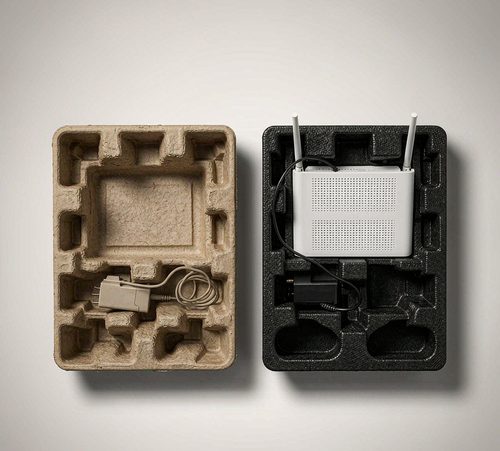
Molded pulp is good for the environment because of its natural qualities. Most of its basic ingredients come from farming, like sugarcane bagasse, bamboo fiber, and wheat straw. These materials may be used again and again, and they also take up carbon dioxide as they develop, which is called a carbon sink effect. For example, the inside tray of the Huawei Mate 60 Pro is made of a blend of sugarcane bagasse and bamboo fiber pulp. This cuts carbon emissions by 62.6% per ton of pulp molding compared to regular plastic packaging. It can also break down into organic fertilizer in 180 days, getting rid of the hidden hazard of "white pollution."
This environmental trait fits in very well with global policy goals. The EU's "Directive on Disposable Plastic Products" makes it plain that plastic dinnerware, straws, and other items can't be used. China's "dual carbon" aim also encourages the industry chain to change to low-carbon products. The packaging for the Apple Beats Studio Pro earbuds is composed of 100% bamboo fiber and sugarcane bagasse fiber. The packaging for the Sony Xperia 1 V phone is made entirely of pulp molding. All of these materials are new and answer to policy calls. Research on consumers suggests that 72% of them are willing to spend more for eco-friendly packaging. This makes molded pulp even more popular.
二, Functional breakthrough: a technological leap beyond buffering protection to precise shock resistance
Early molded pulp was only used for rudimentary packaging, such egg trays, because it wasn't very strong and chips easily. But because of the two new ideas in material science and structural design, its performance has made a big jump.
1. Imitation structure: "green armor" that is precisely connected
Modern mobile phone packaging uses imitation design to shape the cavity that perfectly fits the product's shape using CAD/CAM technologies. The Huawei P80 series paper holder has a right-angled edge cutting procedure that not only fits with the simple design of mobile phones, but also spreads out the impact force through a honeycomb structure. The experimental data shows that its buffering efficacy is 40% greater than that of standard foamed plastics. It is also not easy to deform when it gets wet, which keeps precision parts safe during shipping.
2. Composite materials: Finding the right balance between strength and toughness
To protect different parts, molded pulp can be made stronger with materials like carbon fiber and nanocellulose. Lenovo computers come in boxes made of composite pulp that is 30% fiberglass. The deformation was only 1.2mm in a 50kg stacking test, which is 76% less than pure pulp. By changing the fiber ratio, Dyson air duct packaging gets a lightweight design with a wall thickness of 0.3mm while still being impact resistant.
3. Functional coating: protection from a wide range of threats, from anti-static to electromagnetic shielding
High-end cell phones are very vulnerable to electromagnetic interference and static electricity. Using surface coating technology, molded pulp can have anti-static, shielding, antibacterial, and other characteristics all at once. Adding coatings of carbon black or graphene, for instance, lowers the surface resistivity to 10 ⁶ -10 ⁹ Ω/sq, which is in line with the IEC 61340-5-1 standard. The nickel-plated fiber composite coating has a shielding efficiency of 40dB in the 1-18GHz frequency band and is 60% lighter than traditional metal shielding.
三, Cost and Efficiency: The Financial Benefits of Large-Scale Production
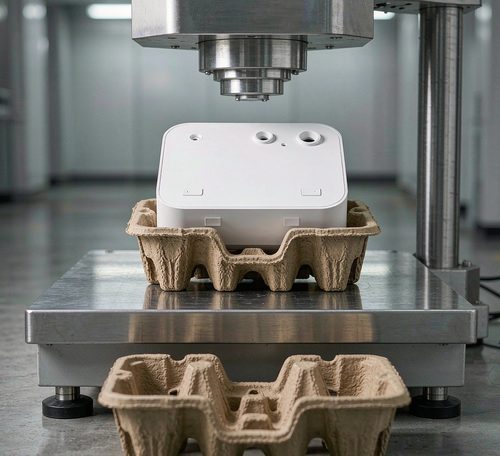
The cost of the raw materials for molded pulp is more than 40% lower than that of biodegradable plastics. However, its real advantage is in lowering the cost of the whole lifecycle. Plastic packaging needs to go through a lot of steps, such injection molding and blow molding. Molded pulp, on the other hand, uses vacuum adsorption molding technology, which means that a single mold may be used to make a complicated structure. Data from Huawei's factory in Shenzhen shows that pulp molding packaging production lines use 35% less energy than plastic packaging lines and don't need any complicated post-processing. This leads to a total cost savings of 22%.
The molded pulp is very light, which makes it much cheaper to ship. Replacing plastic cushioning with pulp molding in Lenovo laptop packaging cuts the weight of each package by 18% and cuts carbon emissions by more than a thousand tons a year. This "weight reduction and carbon reduction" effect is especially important in global supply chains, where it is a major way for businesses to reach their ESG targets.
四, Brand Premium: How the Environment Affects Competition in the Market
In the high-end consumer market, packaging has become an important way for firms to show what they stand for. Companies like Apple and Huawei use molded pulp packaging to improve their "technology for good" brand image. For example, the Huawei P80's packaging has a "high mountain and flowing water" texture design that combines Eastern aesthetics with ideas about protecting the environment. This makes the unboxing experience 30% more exciting. The Sony Xperia 1 V's packaging is based on "natural symbiosis" and has a bamboo fiber texture and simple design that appeal to environmentalists.
This plan has worked in the real world to make money. Research from a third party suggests that mobile phone items with eco-friendly packaging have a 15% higher rate of customers buying them again and a 28% higher percentage of customers liking the brand. Molded pulp is not just a material choice; it's also a strategic tool that businesses can use to gain a competitive edge.