
一, Policy and Market: The need for environmental protection leads to a billion-dollar race track.
1. A global ban on plastic causes the market to explode.
Since 2019, big economies including the European Union, the United States, and China have all put in place "plastic restriction/ban" rules. These policies stop the use of single-use plastic items and encourage the use of biodegradable packaging alternatives. ResearchAndMarkets.com says that the global market for pulp molding packaging will increase from $13.3 billion in 2023 to $18 billion in 2028, with a compound yearly growth rate of 6.2%. China is the world's biggest producer of pulp molding. In 2022, its market size reached 19.147 billion yuan, a 15.68% increase from the previous year. Its exports have been rising for five years in a row, reaching 2.664 billion US dollars in 2022. This shows that there is a strong demand for eco-friendly packaging in the international market.
2. The cost advantage speeds up the process of substitution.
Biomass resources like sugarcane bagasse, bamboo pulp, and waste paper are the main raw materials for molding pulp. These are more than 40% cheaper than biodegradable polymers. For example, the price per unit of pulp molded lunch boxes is now close to that of typical plastic lunch boxes. With more production and better technology, the price difference is likely to get even smaller. Also, its production technique uses very little energy and doesn't need high temperatures or high pressures, which is in accordance with the trend of low-carbon manufacturing.
3. Change in what people want
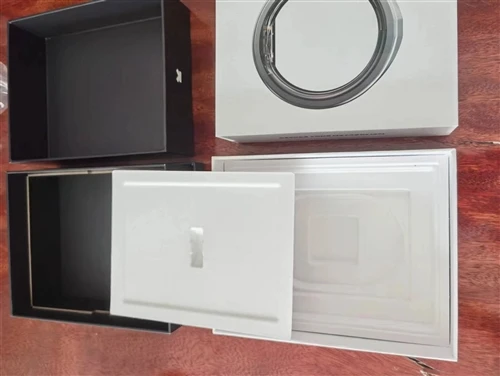
Studies reveal that more than 70% of people are prepared to pay more for packaging that is good for the environment. This is especially true for the Z generation, which has become much more open to "zero waste" and "compostable" packaging. Molded pulp is the best material for high-end cosmetics, electronics, and gift box packaging because it feels natural and can be customized (for example, with an uneven design or surface craftsmanship). For instance, the packaging for the Apple iPhone 15 series has a "zero gap" design thanks to high-precision molds, which makes the volume 18% smaller than the previous generation. It also employs 100% recycled bamboo fiber, which not only makes the brand look better for the environment but also cuts down on shipping expenses.
二,A technological breakthrough: going from "extensive substitution" to "precision manufacturing"
1. Make the mold more accurate and more compact.
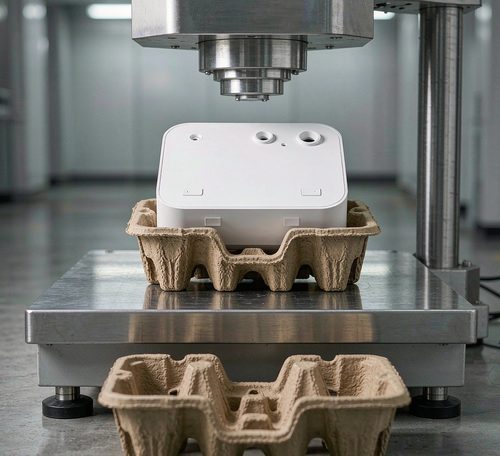
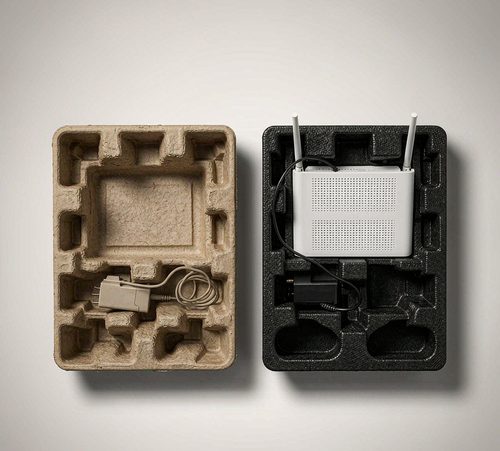
Traditional pulp molding often has drawbacks like a loose structure and too much buffer layer since the mold isn't accurate enough. 3D modeling, reverse engineering, and CNC machining can help high-precision molds get the demolding angle down to 1 °. Using wet pressing and vacuum filtration together, the space between the package cavity and the product contour can be kept to within 0.2mm. The Lenovo ThinkPad X1 Carbon packaging, for instance, employs a 0.05mm error mold. This not only keeps the package from shaking during shipping, but it also cuts down on extra space, which cuts the volume of each package by 30%.
2. How well materials work as composite reinforcements
You may regulate the density of molded pulp between 0.6 and 0.8g/cm³ by blending bamboo fiber, sugarcane bagasse, and wood fiber. This will also make the compressive strength 25% stronger. Adding nano silica or bio-based waterproof coatings can also lower the water absorption rate of packaging from 12% to 3%, which is what food packaging has to be able to do. For instance, the packaging for the Sony WH-1000XM5 earbuds uses relief technology and a waterproof coating. This not only makes the box look better, but it also passes IPX4 splash proof certification.
3. Automated production cuts expenses and makes things run more smoothly.
Using multi-station molds and completely automated manufacturing lines has cut the time it takes to make molded pulp to 8 to 12 seconds per piece, with a daily output of up to 50,000 pieces. For instance, Guangdong Hansen Intelligent Equipment's 12-station rotary production line uses mold temperature closed-loop control and pressure dynamic compensation to make sure that the size of each package is always ≤ 0.1mm. This makes it possible to support large-scale custom production.
三, Use case: full penetration from industrial packaging to consumer goods
1. Electronic products: high-quality protection and brand value
Molded pulp can protect delicate electronics like phones and headphones with bespoke cushioning by using imitation design and a honeycomb support structure. For instance, the packaging of the Huawei MateBook X Pro uses hot pressing technology to make the surface smoother (from Ra6.3 μ m to Ra1.6 μ m) and denser (by 20%). Etching technique creates a fine sand pattern surface at the same time. This not only increases friction but also makes the unwrapping ceremony feel more special.
2. Food packaging: a balance between safety and the environment
In the food delivery business, molded pulp meal boxes and drink cups have slowly taken the place of plastic ones. The EU EN13432 certification standard says that it is antimicrobial (because it has "bamboo quinone" components in its fibers) and may be composted. For instance, Starbucks China outlets use starch-based plasticizers to make their pulp-molded cup lids work in temperatures from -20 to 120 degrees Celsius, which cuts carbon emissions by 35%.
3. Healthcare and Agriculture: New Ways to Do Things
In the medical field, molded pulp is used to make disposable surgical gowns and drug trays. Silver ions are added to make it 99.9% antibacterial. In the agricultural field, biodegradable seedling pots and fruit trays cut down on plastic pollution and keep crops fresh longer by using controlled release coatings.
四, The industry has to deal with two tests at once: scale and standardization.
1. High expense of starting off
It takes a long time (typically 3 to 6 months) to make high-precision molds, and one set can cost hundreds of thousands of yuan. This makes them not very useful for modest orders with a lot of different types of items. Also, the wet pressing process needs a heat transfer oil furnace and a vacuum system. The cost of the equipment is 30% higher than that of the dry pressing process.
2. The limit on performance must be broken
The current molded pulp's buffering ability is still not as good as that of EPS foam plastic. This makes it hard to meet the needs of major household equipment like refrigerators and washing machines. To improve the structure in the future, fiber-oriented arrangement technology and composite materials like pulp and honeycomb cardboard need to be used.
3. A recycling system that doesn't work
Molded pulp can be recycled 100% of the time, but China's rules for sorting waste paper are still not clear. Also, mixed recycling can make the fiber weaker. To create a closed-loop system of "production use recycling remanufacturing," e-commerce platforms might work together to promote a circular packaging rental model.