
1. Breakthrough in technology: from "functional substitution" to "performance surpassing"
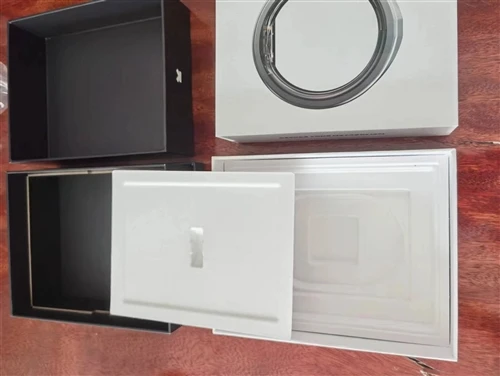
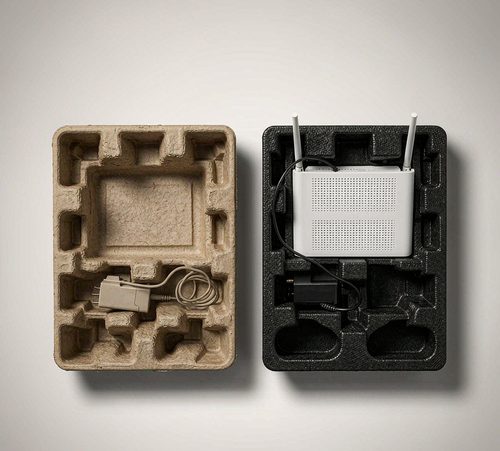
Apple's use of pulp moulding is not just about replacing materials. It is a major step forward in both environmental protection and performance because it combines material science with engineering technology.
The biggest problem with precision manufacturing
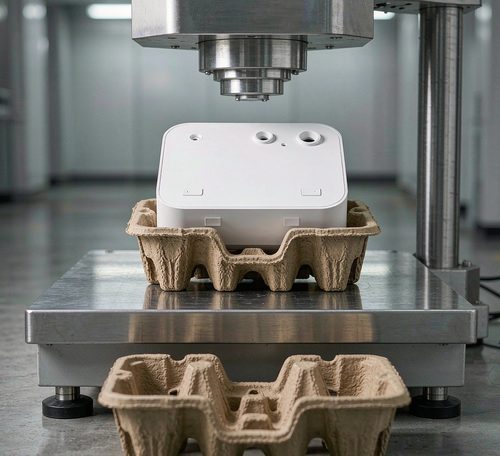
Apple says that the error control for the inner tray of the packing must be within ± 0.05 millimetres, which is far tighter than the industry standard of ± 2 millimetres. To meet this demand, supply chain companies have spent a lot of money on moulds (a single set costs more than 1 million yuan) and created high-precision vacuum adsorption moulding machines that can accurately control the fibre distribution through 300+ micropores. This makes the edge protection performance of the iPhone inner support 40% better than that of traditional foam, and it can survive a fall of 1.5 meters without breaking. Chinese factories even make 0.8mm ultra-thin curved pulp moulded parts with mistakes smaller than a human hair. This radically changes the idea that pulp moulding can only be employed in situations where precision is low.
A huge leap forward in how well materials work
Apple worked with its suppliers to make sugarcane bagasse bamboo fibre composite materials. These materials are 40% stronger than plastics yet can break down naturally in 90 days. The nanocellulose layer makes the screen protector film 98% transparent and 100% biodegradable. AI design also optimises the honeycomb structure of the pulp moulded liner, cutting material use by 30% and enhancing cushioning performance by 25%. This makes it a "lightweight+high-strength" option for high-end electronics.
Managing the environment over the whole lifecycle
Apple says that packaging must have a carbon footprint that is only 1/20th of that of regular packaging, from the time the materials are collected until the time they are recycled. For instance, the packaging box for the iPhone 16 is made of Brazilian eucalyptus fibre. The carbon dioxide that the tree absorbs while it is growing can cancel out the emissions that happen when the packaging is made. The recycled pulp moulding materials can be recycled through the "fibre bank" system, which cuts down on the environmental impact of a single package by 90% over its lifetime. Because of this "cradle to cradle" paradigm, the industry has had to change the rules for packaging that is good for the environment.
2. Industrial Restructuring: From "Apple Orders" to "Global Standards" Apple's tight criteria have led to the creation of a high-end pulp moulding industrial chain, and its technological spillover effects are changing the way the worldwide packaging industry works.
A big jump in technology in the supply chain
Chinese supply chain companies are having to break through the bottleneck of precise production because of Apple orders. Guangdong Hansen Intelligent Equipment Co., Ltd., for instance, has created the "6+1 escort mode," which includes everything from planning the production to training employees. Through 50 unique inventions, it has made tremendous strides in mass-producing its key equipment. These days, Chinese firms are sending precision pulp moulding machines and AI temperature control systems to Southeast Asia. This is part of the global movement to use less plastic. According to the numbers, the spread of pulp moulding technology in Apple's supply chain has cut packaging costs in the consumer electronics industry by 40%. The penetration rate has also gone increased from 5% to 40%.
Setting new standards for the industry
The objective of "zero plastic" set by Apple has become the standard for the whole industry. The EU's "Packaging and Packaging Waste Regulations" clearly state that at least 30% of the materials used to package electronic products must be bio-based. Companies that meet these standards can get a research and development subsidy of 50 euros per tonne. The US FDA enforces the 21 CFR 176.170 food contact standard, which encourages the use of pulp moulding in the medical and food industries. Since Hainan banned plastic packaging in 2019, pulp moulding has mostly taken the place of plastic packaging in fruit delivery and retail settings in China. Baiguoyuan and other top companies have been the first to finish the whole chain packaging change.
Global Capacity Layout
The demonstration effect of Apple's supply chain has sped up the growth of pulp moulding capacity around the world. Stora Enso has built three paper-plastic packaging plants in Europe, where they make small packages for fruits and vegetables. It is estimated to be able to make 500,000 tonnes of goods by 2026, which is enough to cover 30% of the demand in the European Union. Chinese companies have set up manufacturing centres in Southeast Asia and the Middle East to offer localised packaging services for fruits that are sent outside. After Zhejiang Zhongxin Environmental Protection built a packaging facility in Dubai, the cost of packing Xianju Yangmei for export went down by 30%, but the time it took to get there went up by 2 days. This made Chinese fruits even more competitive on the world market.
3. Market Change: From "Cost Considerations" to "Value Creation"
Apple's new packaging shows that protecting the environment is no longer a burden, but the main way to set your business apart from others.
The "sustainable premium" of luxury brands
Apple uses pulp moulding packaging to communicate the brand idea of "technology and nature coexisting." The smell of the plants and trees that line the packaging box has become a key part of the unwrapping experience for customers. The luxury goods business has copied this strategy: French brands Guerlain and Estée Lauder employ pulp moulding to make limited edition gift boxes that show the idea of "sustainable luxury" through natural textures. The Palace Museum's culture and creative industry sells 2 million sets of pulp moulded gift boxes with the "Thousand Miles of Rivers and Mountains Map" every year. This shows that eco-friendly packaging may be a way to share cultural IP.
Getting the best prices on mass-market goods
Apple's technology has helped make pulp moulding on a massive scale. Stora Enso uses the original fiber's "high looseness and thickness" to manufacture packaging items that utilise less raw materials but work the same way. The volume of Fibre biomass foam material is 20% less than regular plastic foam, and the cost is 15% less. Domestic companies can lower their production costs even further by using cheap raw materials like straw and waste paper. For instance, market data from Hainan shows that in 2024, the price of pulp moulded fruit trays would drop to 0.3 yuan per piece, which is only 0.1 yuan more than the price of plastic trays. But because they can be recycled (at a cost of 0.05 yuan per piece), the long-term cost of use is actually lower.
The "Business Loop" in the Circular Economy
The "recycling reuse profit" strategy that Apple has pushed has become the standard in the business. For instance, Finnish business REPACK's pulp-molded packaging for used iPhones lasts for 50 uses thanks to a combination of "modular lining + recycled polypropylene shell." This lowers the cost of the packaging from 2 yuan to 0.04 yuan per unit. This strategy is now available in China and has worked with a number of second-hand mobile phone sites. It saves more than 196,000 yuan a year on packing expenses and increases customer trust by 28%. This "packaging-as-a-service" business model shows that protecting the environment can have direct economic rewards.