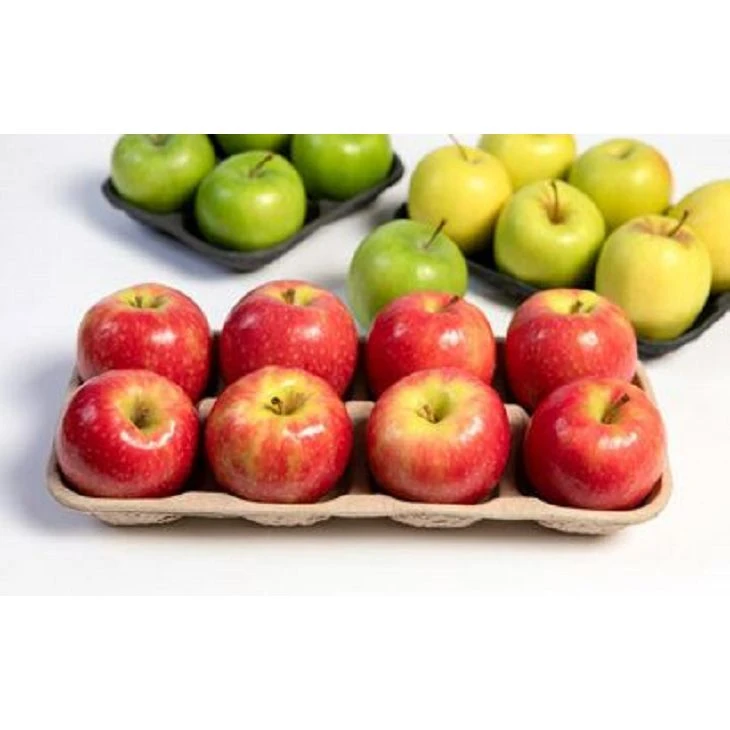
Compostable Molded Pulp Fresh Fruit Produce Trays provide a high-performance, fiber-based packaging option for fresh fruit and vegetable applications where product positioning, nesting efficiency, storage optimization, and packaging material selection are critical.
Key Features for Fresh Produce Packaging
Custom Molded Cavities: Engineered to match actual produce dimensions. Proper depth, cavity diameter, spacing, and support areas eliminate excessive movement during transit while preventing unwanted pressure points.
Fiber-Based Packaging Format: Provides a natural paper- or plant-fiber alternative to replace conventional plastic or foam packaging.
Certified Compliance: Material formulations and bio-coatings can be tailored to meet global standards, including EN 13432 (Europe) and ASTM D6400 / ASTM D6868 (USA) for compostability, as well as FDA 21 CFR and EU Regulation (EC) No 1935/2004 for direct food contact.
Nestable Design: Empty trays nest compactly to minimize warehouse storage volume, improve carton packing density, and lower transportation costs. Engineered separation force ensures smooth denesting on manual or automated lines.
Custom Ventilation Options: Precision airflow openings can be integrated to support produce respiration based on storage environment and outer packaging setups.
Natural Fiber Appearance: Offers a clean, natural aesthetic that reinforces organic produce branding and corporate plastic-reduction goals.
Fresh Fruit and Produce Applications
Berry Packaging: Strawberries, blueberries, raspberries, and blackberries organized in defined cavities to minimize movement and bruising.
Grape Packaging: Custom layouts designed according to bunch size, weight, and outer package requirements.
Apple & Pear Packaging: Deeper support geometries and larger cavity diameters tailored to higher product weight and volume.
Citrus Packaging: Optimized pocket support for oranges, lemons, limes, and mandarins.
Mushroom & Vegetable Packaging: Structured trays engineered for mushrooms, tomatoes, peppers, cucumbers, and other produce needing moisture-resilient structures.
Structural Design Features
Cavity Geometry: Engineered depth and diameter to secure produce.
Support Areas: Integrated raised sections and structural ribs for load distribution.
Ventilation Openings: Tailored airflow slots for respiration control.
Reinforced Edges: Stiffened rims to preserve structural integrity during manual and automated handling.
Nesting Clearance: Optimized stacking height with quick-release separation.
Controlled Tray Depth: Custom depth options to avoid unnecessary outer box volume.
Technical Specifications
|
Parameter |
Specification |
|
Product Type |
Molded Pulp Fresh Fruit and Produce Tray |
|
Material Composition |
Recycled Paper Pulp, Virgin Wood Pulp, or Agricultural Fiber (Bagasse, Bamboo) |
|
Food Contact Compliance |
FDA 21 CFR / EU Regulation (EC) No 1935/2004 |
|
Compostability Standards |
EN 13432 / ASTM D6400 / ASTM D6868 (Subject to specific formulation) |
|
Dimensions (L x W x H) |
Fully Custom |
|
Cavity Design & Count |
Fully Custom |
|
Ventilation & Nesting |
Available based on packaging specifications |
|
Color Options |
Natural Brown, Kraft, White, or Custom Color |
|
Tooling Options |
Custom CNC Aluminum Molds Available |
|
Packaging & Logistics |
Master Carton or Direct Pallet Bulk Packaging |
Information Required for Custom Quotation
Produce Details: Product type, average and maximum dimensions, and individual weight.
Packing Configuration: Target tray dimensions, cavity count, and arrangement.
Packaging Method: Manual or automated packing, use of flow-wrap, stretch film, or outer cartons.
Supply Chain Environment: Refrigeration, humidity levels, stacking height, and transport conditions.
Compliance & Destination Market: Target country, food-contact requirements, and specific compostability certifications needed.
Order Volume: Estimated initial and annual order quantities.
FAQ
Hot Tags: compostable molded pulp fresh fruit produce tray, China, suppliers, manufacturers, factory, customized, in stock