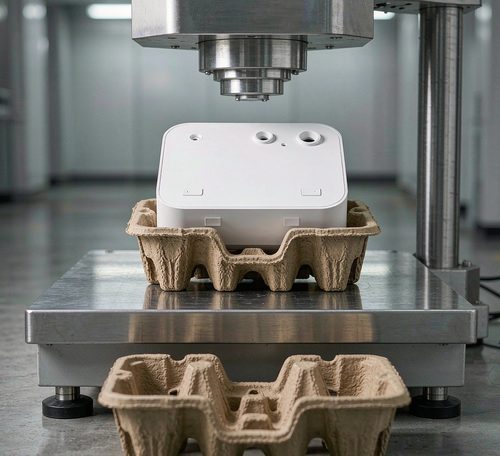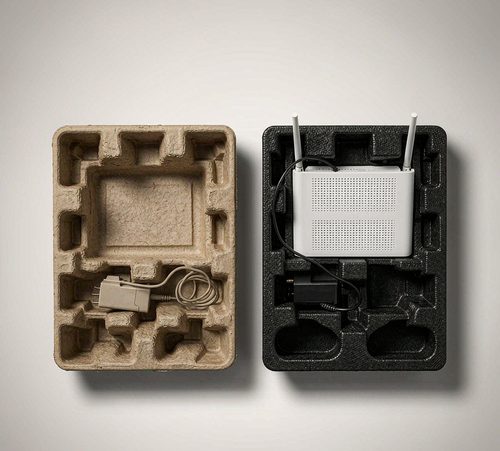

The scope of application of paper trays is becoming more and more extensive. With the continuous progress of pulp molding technology, the products that use styrofoam, EVA, blister, and cardboard as lining packaging can basically be replaced by paper trays.
Paper trays can be divided into three categories: industrial paper trays, agricultural paper trays and food trays.
1. Industrial paper tray: Mainly used in the lining packaging of household appliances, medical equipment, electrified materials, and lighting.
2. Agricultural paper trays: mainly used for fruits, eggs, agricultural nutrition bowls, etc.
3. Food paper trays: mainly used in food bowls, pots, supermarket food trays, etc.
Pulp molded products are developing rapidly and have good prospects because of their unique performance advantages:
1. The process technology is simple and practical, and there is basically no pollution in the production process, which meets the requirements of clean production. In addition, in each process of the production line, except for the high quality requirements of the personnel in the automatic control system management, the rest are all skilled skills, which can be mastered and used after short-term training, and the high degree of localization of its equipment is very conducive to the popularization of this project. Promotion, which is also a convenient condition for quickly exerting the environmental advantages of pulp molded products.
2. Wide source of raw materials and low cost. It mainly uses waste paper or annual herb fiber pulp.
3. It has good shock resistance and buffering properties, and uses the suspension method to generate adsorption, which can effectively protect the product from damage during transportation.
4. Light weight, low recycling cost, and can be used repeatedly.
5. Good protection, interchangeability and decoration performance.
6. From production use to waste disposal, there is no pollution to the environment, less water consumption in the production process, no waste water discharge, reducing environmental pollution.
7. Good air permeability, which has unique benefits for the packaging of fresh products.
8. Pulp molding products have good water absorption, hydrophobicity and heat insulation. When pulping, various additives can be added according to customer requirements to make the product resistant to acid, alkali, sunlight, water, oil, leakage and deformation.
9. Modern production technology can realize high-speed, automated mass production.
10. Compared with traditional packaging materials, such as styrofoam (EPS), EPE foam, etc., the volume is small, and it can be stacked and stored, saving stacking space and transportation costs.
11. According to the different requirements of users, the surface quality, color, graphics and other appearance elements of the product can be post-processed to meet the needs of product display.