Double-Layer Molded Pulp Composite Technology
Engineering a 5-6 mm Wall Thickness for Premium Electronics Packaging
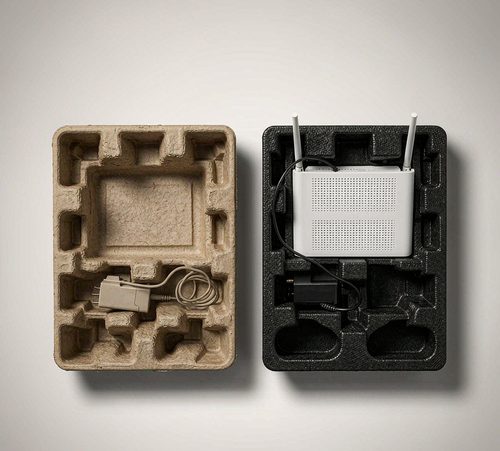
A molded-pulp packaging box that reaches a 5-6 mm edge thickness is not the product of a single molding pass. It is built from two separately molded pulp shells bonded together, with a sealed air cavity in between. That cavity does double duty: it gives the box a full, rigid profile, and it functions as the actual cushioning layer.
What Is Double-Layer Molded Pulp Composite Bonding?
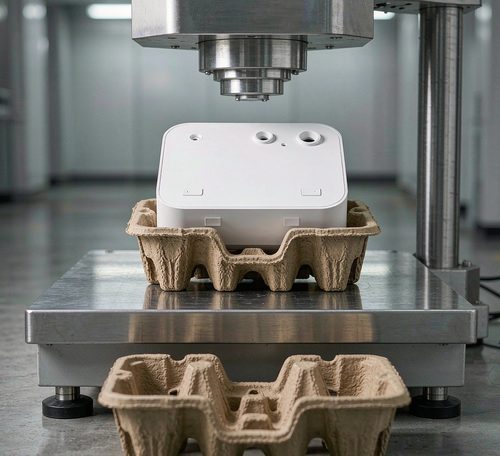
Double-layer molded pulp composite bonding refers to a process in which two independently pressed pulp-molded shells are aligned and bonded together, leaving a sealed cavity between them, rather than a single molded piece filled with solid pulp. This differs fundamentally from single-pass molding: a single layer is limited by fiber density and demolding mechanics, so increasing wall thickness in one pass tends to cause uneven shrinkage and local sagging. The composite approach instead splits the thick wall into two thin shells plus a cavity, which both reduces demolding difficulty per shell and produces a fuller, more rigid edge profile.
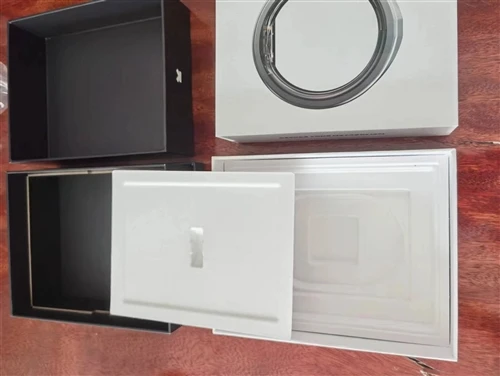
This structure is now common in packaging for book-style flip phones, tablets and TWS earbuds - categories where both premium appearance and drop protection matter. It represents one of the clearer paths by which molded pulp is moving from a low-cost eco-friendly substitute toward a genuine mid-to-premium packaging material.
The Cavity Layer: More Than Aesthetics - A Cushioning Engineering Feature
The sealed cavity created by bonding the two shells works on a principle similar to sandwich cushioning structures found elsewhere in industrial packaging, such as honeycomb board or corrugated board layering. On impact from a drop, the cavity layer absorbs and disperses part of the impact energy, lowering the peak acceleration transmitted to the product inside - which reduces damage risk at the corners and edges most exposed in drop testing. This matters especially for foldable and flip-style devices, where the hinge and screen edge are typically the most vulnerable points in a drop test.
How the Industry Quantifies Cushioning Performance
Evaluating molded-pulp cushioning performance is not purely a matter of experience - there is a fairly established testing and theoretical framework behind it:
ASTM D1596 - Standard Test Method for Dynamic Shock Cushioning Characteristics of Packaging Material. A guided platen assembly is dropped onto a stationary sample to capture acceleration-time data, producing a dynamic cushioning curve. It is one of the standard international methods used to evaluate the drop response of cushioning materials, molded pulp included.
Equivalent Area Theory - domestic researchers have proposed, based on static compression testing, characterizing molded-pulp cushioning performance by cross-sectional area, giving structural designers a quantitative basis for molded-pulp cushioning design.
Full-device drop simulation - published research on molded-pulp cushioning inserts for tablet PCs has used drop simulation to validate how insert structure affects protection during a full-device drop, offering a reference path for optimizing molded-pulp structures in electronics packaging.
|
A variable worth controlling: Published research has found that relative humidity affects the energy absorption characteristics of molded-pulp cushioning packaging for mobile phones - the material is moisture-sensitive, and cushioning performance can vary in humid conditions. Because of this, humidity control and storage/transport environment management are an important part of maintaining consistent cushioning performance in a double-layer composite structure.
|
Embossed Side-Wall Branding: Mold-Pressed Relief, Not Post-Processing
A further advantage of the composite structure is that raised text or a logo can be pressed directly into the box's side wall at the molding stage (a mold-pressed relief technique), with no separate printing or foil-stamping step required. Compared to flat printing, an embossed relief is more resistant to wear and does not flake off, and it gives the overall package a finish closer to a premium gift box - a low-cost way to raise perceived packaging quality.
Structural Comparison
|
Dimension |
Single-Layer Molding |
Double-Layer Composite |
|
Typical wall thickness |
Approx. 1.5-3 mm |
Approx. 5-6 mm or more |
|
Visual fullness |
Prone to shrinkage and sagging |
Crisp, full profile closer to blister/injection-molded look |
|
Cushioning mechanism |
Relies on fiber compression alone |
Fiber compression plus cavity sandwich cushioning |
|
Surface finishing |
Printable |
Mold-pressed embossed logo/text, plus printable |
|
Typical applications |
General cushioning inserts, pallets |
Flip phones, tablets, earbuds and other premium electronics packaging |
Why This Is a Preferred Sustainable Packaging Option
Molded-pulp packaging is typically made from renewable fiber sources - recovered waste paper pulp, bamboo pulp, or bagasse (sugarcane fiber) pulp - making it a recyclable, biodegradable material and one of the main eco-friendly alternatives to plastic blister packaging (PVC/PET) in electronics packaging. The double-layer composite structure preserves that environmental profile while closing the gap that has historically limited single-layer molded pulp - thin-looking walls and limited cushioning capacity - allowing an eco-friendly material to meet mid-to-premium packaging standards for appearance and protection.
Frequently Asked Questions
Q: Why can a molded-pulp box edge reach 5-6 mm in thickness?
A: Not through a single molding pass, but through double-layer molded pulp composite bonding: two independently molded pulp shells are aligned and bonded into one piece with a sealed cavity between them, allowing overall edge thickness to reach 5-6 mm or more without increasing the demolding difficulty of either single shell.
Q: What is double-layer molded pulp composite bonding?
A: It is a process in which two independently pressed pulp-molded shells are bonded together with a sealed cavity between them, as opposed to a single-pass molded piece filled with solid pulp. It is generally used where both a full, rigid appearance and stronger cushioning protection are required.
Q: How does the cavity structure improve cushioning protection?
A: The sealed cavity formed by bonding the two layers works similarly to a sandwich cushioning structure: on impact, the cavity layer absorbs and disperses impact energy, lowering the peak acceleration reaching the product inside and reducing damage risk at the corners of precision electronics such as phones and tablets.
Q: What products is double-layer molded pulp packaging suited to?
A: It is commonly used for book-style flip/foldable phones, tablets, and TWS earbuds - products where both appearance quality and drop protection matter - as well as premium accessories and gift-style packaging.
Q: Is molded-pulp packaging environmentally friendly and biodegradable?
A: It is typically made from renewable fiber such as recovered waste paper pulp, bamboo pulp, or bagasse pulp, making it a recyclable, biodegradable material and one of the common eco-friendly alternatives to plastic blister packaging.
Q: How is the cushioning performance of molded-pulp packaging tested?
A: The industry commonly references standards such as ASTM D1596 (Standard Test Method for Dynamic Shock Cushioning Characteristics of Packaging Material), which captures acceleration-time data from a guided drop platen to evaluate a material's dynamic cushioning curve. Domestic researchers have also proposed an equivalent area theory, based on static compression testing, to characterize molded-pulp cushioning performance by cross-sectional area.
Q: How is the raised logo or text on the box's side wall produced?
A: It can be pressed directly into shape at the molding stage - a mold-pressed relief technique that produces a three-dimensional logo or text without any separate printing or foil-stamping step. It is more wear-resistant than flat printing and adds a more premium feel to the packaging.
Q: What is the MOQ and lead time for custom double-layer molded pulp packaging?
A: MOQ is 10,000 pieces per design, with 15-25 days lead time after sample confirmation.
References
Zhang Yan, Wang Zhiwei. "Influence of Relative Humidity on the Energy Absorption Properties of Molded Pulp Cushioning Packaging for Mobile Phone." Journal of Vibration and Shock, 2015, 34(1): 39-43.
Hua Qi, Huang Yingwei. "Drop Simulation Based on Molded Pulp Cushion of Tablet PC." Journal of Xi'an University of Technology, 2013, 29(4): 485-490.
"Test and Analysis on Cushioning Properties of Molded Pulp Product" - static compression testing and equivalent area theory.
"Research Progress on the Preparation Process and Properties of Pulp Molded Products" - review of fiber selection, forming processes, and cushioning/barrier performance.
ASTM D1596, Standard Test Method for Dynamic Shock Cushioning Characteristics of Packaging Material.