
Aftersales Is a Different Problem
Bulk export packaging is built around container space and high-volume tooling costs. Warranty shipments are usually one piece or a handful. Speed, reliable protection for a single item, and the ability to use tools you already have matter more than packing density. Using the same approach for both often ends up with either too much packaging or not enough protection.
Can Small Quantities Still Use a Proper Tray
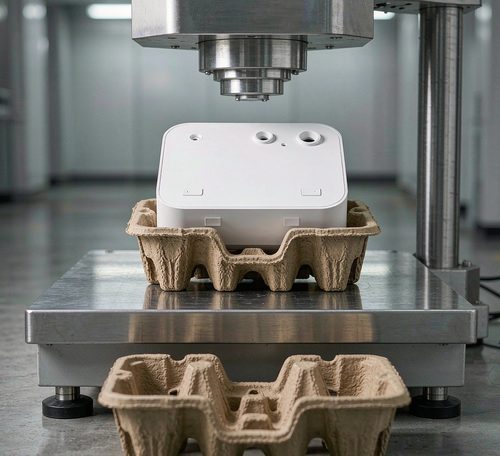
If the replacement part matches a size already running in normal production, the existing mold can often handle small runs. No new tooling needed. The extra cost per piece stays reasonable.
When the part is an older or uncommon model and the original mold is gone, the numbers change. Paying for a full custom mold just for occasional single shipments rarely makes sense. A solid generic or semi-custom option is usually the practical choice.
What Works at Different Volumes
|
Order Type |
Practical Approach |
Notes |
|
Single unit |
Reuse existing mold if possible, or good generic |
Lowest risk when the mold already exists |
|
Small batch (tens) |
Run the production mold or limited custom |
Tooling is already paid for in most cases |
|
Medium batch / spare stock |
Standard trays shared across related models |
Better balance of protection and consistency |
Does It Still Make Sense for One Unit?
The real question is not "is this order big enough?" but "do we already have a mold that fits?" If the mold exists, using a pulp tray for a single shipment adds little cost and gives consistent protection. If a new mold would be needed only for rare aftersales orders, generic protective packaging is usually the smarter economic move.
Keeping Things Consistent Across a Line
Many appliance parts share similar footprints. Designing trays that can cover several related models cuts down the number of unique tools required. Aftersales packaging can then stay closer to the main product standard without forcing a new mold for every variant. Protection improves and the customer experience stays more consistent.
The Cost of "Good Enough"
A damaged replacement does more than trigger another shipment. It creates another delay, another support contact, and often a lasting sense that the aftersales process is careless. Warranty moments are frequently the last direct contact a customer has with the brand. Packaging that looks thrown together can undo some of the care shown in the original product.
Why This Is Getting More Attention
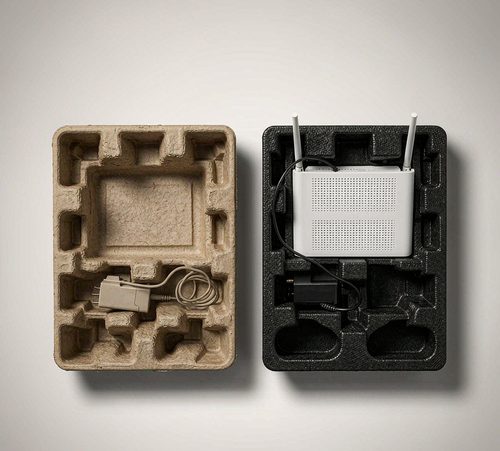
Customers notice when the original product arrives in carefully designed packaging and the replacement arrives in random foam and cardboard. The contrast is obvious. More brands are bringing aftersales packaging under the same basic standards used for primary product packaging - both for protection and for consistency.
A Quick Regulatory Note
Packaging rules in many markets apply to everything that leaves the company, not only the main product boxes. Aftersales shipments still count. Material choices and excess packaging fall under the same general expectations.
What Experience Shows
Brands that simply reuse existing production molds for common replacement parts tend to see fewer second-damage claims than those relying on improvised fill. Results vary by product and shipping route, but the pattern holds: a tray that actually fits the part reduces movement and visible damage.
Common Mistakes
Treating every aftersales shipment as a one-off that does not need proper packaging
Assuming a new mold is required without first checking whether an existing one can be reused
Using mismatched generic packaging that leaves the part free to shift
Ignoring the difference in appearance between original product packaging and replacements
Focusing only on the first-purchase experience and treating everything after as secondary
A Straightforward Way to Decide
Check whether an existing production mold already fits the part.
Match the packaging approach to the actual volume.
Weigh the cost of better packaging against the cost of a second shipment and a frustrated customer.
Keep protective and visual standards reasonably close to the main product line.
For older or rare models, decide in advance whether generic protection is acceptable.
F AQ
Q: Is molded pulp practical for a single replacement part?
A: Yes, when an existing mold can be reused. New tooling only for rare single shipments is rarely worth it.
Q: Can aftersales packaging use the same mold as regular production?
A: ften yes, if the dimensions match. That is usually the most practical route.
Q: What is the most cost-effective option for low-volume warranty shipments?
A: Reuse of existing molds where possible, then solid generic protection when molds no longer exist.
Q: Does aftersales packaging quality affect customer satisfaction?
A: It does. A damaged or poorly presented replacement is remembered.
Q: Should older or discontinued models still get custom trays?
A: Only if the volume justifies it. Otherwise a reliable generic solution is usually better.
Q: How do I choose between custom and generic for small orders?
A: Start by checking for existing molds. If none exist and volume is low, generic is the rational choice.
Q: Does inconsistent aftersales packaging hurt how the brand is seen?
A: Yes. Customers notice the gap between carefully packed original products and improvised replacements.
Q: What should I ask a supplier about reusing molds?
A: Ask whether existing tools can run small quantities, what the practical minimum is, and how lead times compare with generic options.