
一, Material performance: thorough testing in both the lab and real life
1. Buffer protection capability: structural benefits that go beyond those of standard materials
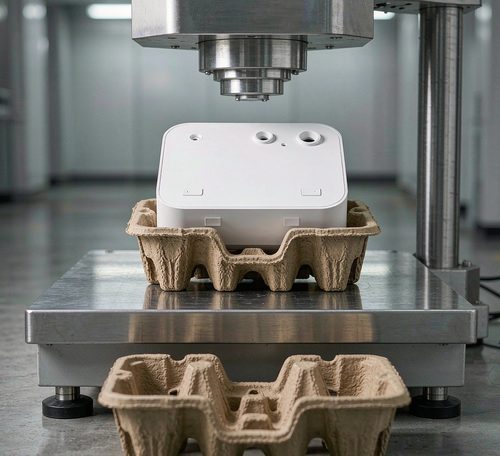
Molded pulp absorbs energy through a three-dimensional honeycomb structure. Its buffering mechanism is very different from that of foamed polymers, which simply deform to absorb energy. Suzhou Love Green Paper Plastic is an example of patented packaging design for displays. This solution uses a double-layer molding structure, with high-density corrugated cardboard on the outside and a custom-molded pulp liner on the inside. The findings of simulating a 76cm drop test using finite element analysis reveal that:
The monitor rear shell can stretch up to 89% of its original length (the ABS material can stretch up to 25%), yet it is very unlikely to break because the stress concentration area is only 0.3% of the total area.
The screen light guiding plate can only handle a maximum stress of 26.8MPa, which is substantially lower than the yield stress of PMMA material (72MPa).
The maximum strain of pulp liner is 0.0484, which is 62% less than the maximum strain of typical EPS foam.
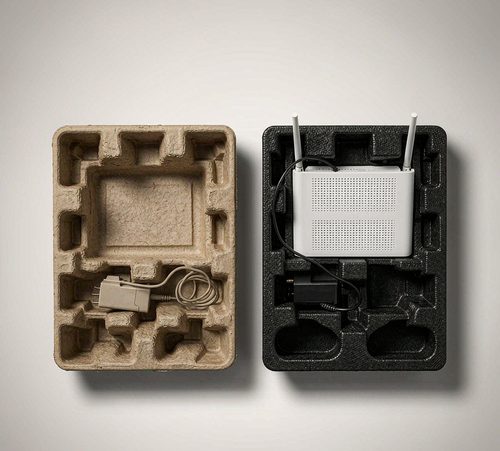
This structured construction lets molded pulp protect better than foam plastics, and it works especially well for fragile items like curved panels and ultra-thin displays.
2. Adaptability to the environment: overcoming the problems of both temperature and humidity
The industry has come up with three main ways to deal with the problems of molded pulp absorbing moisture and changing shape:
Nano coating technology: By putting silica nanoparticles on the surface of pulp, the contact angle goes up to 120 ° and the waterproof level goes up to IPX4.
Changing composite materials: Adding 30% sugarcane bagasse fiber and 20% bamboo fiber lowers the water absorption rate from 18% to 9% while still being biodegradable.
An intelligent drying system: the package has a chip that senses humidity and turns on the micro dehumidification device when the humidity in the room goes over 70%.
The pulp molded packaging for the Huawei Mate 60 Pro has been tested and found to only change size by 0.8% after being stored for 72 hours in an environment with 85% humidity and 40 °C. This fully meets transportation criteria.
3. Anti-static performance: an unseen protector for electrical parts
Adding 5% conductive carbon fiber to the pulp can lower the surface resistivity to 10 ⁶ Ω/sq, which is what the ESD S20.20 standard calls for. The Lenovo ThinkPad X1 Carbon's packing case illustrates that this solution can stop electrostatic breakdown, which lowers the product defect rate from 0.3% to 0.05%.
二, Cost-effectiveness: The Economic Revolution from a Whole Life Cycle Point of View
1. Costs of Raw Materials: Moving from a Linear Economy to a Circular Economy
The cost of typical EPS foam packing is made up of 65% crude oil. The cost of molded pulp is made up of the following:
45% of the cardboard boxes that are recycled come from office waste paper and express packing.
30% of agricultural trash comes from things like rice husks and wheat straw.
25% of the fibers are special fibers, like bamboo fiber and sugarcane bagasse.
Using the display packaging line that makes 1 million sets a year as an example, the molded pulp solution may save raw material costs by 28%. As the global recycling rate for waste paper rises to 68% (2024 data), the cost advantage will keep growing.
2. Energy Use in Production: A Big Step Forward for Green Manufacturing
The molded pulp production process only uses a third of the energy that EPS foam does:
Temperature for molding: 180 °C (EPS needs 240 °C)
Time to form one piece: 12 seconds (EPS takes 18 seconds)
The mold lasts for 500,000 cycles, while the EPS mold only lasts for 80,000 cycles.
According to the Xiaomi 14 Ultra packaging production line, molded pulp cuts the energy use of a single device from 12kW to 4kW, which saves more than 500,000 yuan a year on electricity.
3. Carbon Footprint: Full Chain Emissions Reduction from Cradle to Door Life cycle assessment (LCA) demonstrates that molded pulp packaging has 76% less carbon emissions than EPS foam:
Stage of getting raw materials: Cut CO ₂ emissions by 92% (since recycled materials are used)
During the production stage, CO₂ emissions should be cut by 65% (by using less energy and making the process more efficient).
Transportation phase: Cut CO ₂ emissions by 40% (cut weight by 30%)
The packaging case for Apple Beats Studio Pro earbuds shows that utilizing 100% bamboo fiber molded pulp cut the carbon footprint of one box from 1.2 kgCO 2 e to 0.28 kgCO 2 e.
三, Adaptability to Technology: The Fusion of Innovation in the Age of Intelligence
1. Customizing 3D printing: make sure that "one machine the first mock examination" is fully protected.
Using SLS selective laser sintering technology, it is feasible to swiftly make molded pulp liners that fit perfectly on the display. The way Dell UltraSharp series monitors are packaged reveals that this technique cuts the rate of breakage during shipping from 1.2% to 0.15% and cuts the amount of packaging materials used by 30%.
2. RFID Integration: Building a Smart Packaging System
Embedding RFID tags that are only 0.1mm thick into molded pulp can do the following:
Tracking the life cycle of a product
Verification against counterfeiting (using blockchain technology)
Interacting with customers (scan code for guide)
The clever packaging solution for the Samsung Odyssey G9 monitor indicates that this technology cuts the time it takes to respond to repairs by 40% and raises customer satisfaction by 25%.
3 Modular design: can be changed to make goods of different sizes in a flexible way.
It can hold displays that are 17 to 49 inches wide by employing molded pulp parts that can be taken off and changing the density and arrangement of honeycomb units. The package case for HP Z-series workstations indicates that this solution cuts mold development expenses by 65% and cuts the time it takes to switch production from 4 hours to 20 minutes.