Colour Boxes and Molded Pulp Inserts for UK Toy Brands: What "Environmentally Compliant" Actually Means
A UK toy brand asking whether packaging is "environmentally compliant" is usually really asking three separate questions at once: will this packaging cost us more under UK waste law, will it hold up to scrutiny from a retailer's sustainability team, and will it embarrass the brand if a customer checks the box. For a supplier producing printed colour boxes with molded pulp inner trays - a common combination for painted wooden toys, where the tray cradles the piece and prevents paint chipping in transit - the answers are more favourable than most first-time UK buyers assume, but they're worth stating with actual figures rather than a general "eco-friendly" assurance.

The Regulation That Actually Drives UK Packaging Cost: pEPR
The relevant framework isn't a toy-specific rule. It's the UK's Extended Producer Responsibility for Packaging scheme, known as pEPR, introduced under the Producer Responsibility Obligations (Packaging and Packaging Waste) Regulations 2024 and now in its first full charging year. Under pEPR, businesses that place packaging on the UK market pay a fee, calculated per tonne of packaging material, that funds local authority collection and recycling. The scheme replaced an older system where producers covered only a fraction of the real disposal cost.
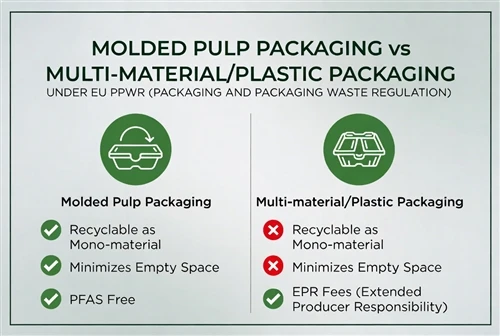
The confirmed base fees for 2025–2026, published by Defra, tell brand owners something concrete: material choice has a direct, published price attached to it. Paper and card sits at £196 per tonne. Plastic sits at £423 per tonne. Fibre-based composite - the category for laminated, multi-material fibre products like drink cartons - sits at £461 per tonne, the highest of any material. A printed colour box and an uncoated molded pulp tray, provided neither is laminated to plastic film or foil, fall into the paper and card category. That's roughly 40% of the plastic rate and well under half the fibre-composite rate.
From 2026–2027, the scheme adds a second layer: modulated fees based on a red-amber-green recyclability rating. Packaging rated red for poor recyclability pays a 1.2x multiplier on the base fee in the first year of modulation, rising to 1.6x the following year and 2.0x by 2028–2029. Packaging rated green pays less than the base rate. This is where the material choice compounds. A mono-material paper and card product - no plastic lamination, no mixed-fibre composite structure, no non-recyclable coating - is positioned for a green or favourable rating under the assessment methodology PackUK is finalising, while a plastic-windowed box or a foam-lined alternative faces the base fee and the recyclability penalty stacked on top.
Why the Colour Box and Pulp Tray Combination Holds Up Under This
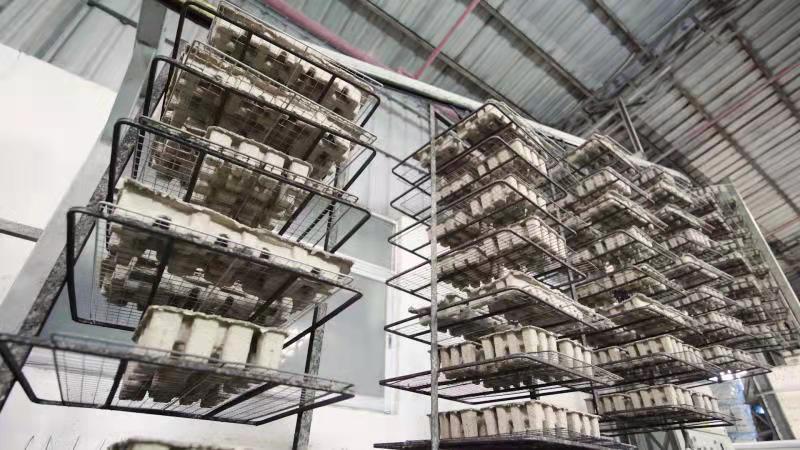
The reason this packaging format performs well isn't a marketing claim - it's a structural one. A printed colour box is paperboard; a molded pulp tray, uncoated, is also a paper-fibre product. Neither requires the lamination or plastic bonding that pushes a product into the fibre-based composite category or drags down a recyclability score. Both go into the same household paper recycling stream a consumer already uses for cereal boxes and egg cartons - there's no separation step required at end of life, which is precisely what the recyclability assessment is designed to reward.
This matters more for a UK importer than it might first appear, because the fee liability sits with whoever places the packaging on the UK market - typically the UK toy brand itself, or its UK-based distributor, not the overseas manufacturer. A brand that unknowingly imports foam-lined or plastic-clamshell packaging inherits a real, recurring cost under pEPR that a paper and card equivalent avoids. This is a legitimate cost argument to bring to a UK client, not just a sustainability one.
Where Plastic Packaging Tax Comes In - If It Applies at All
If the packaging includes any plastic component - a display window, a blister insert, printed plastic tape, shrink wrap - that component falls under a separate regime, the Plastic Packaging Tax. The 2025–2026 rate is £223.69 per tonne, rising to £228.82 per tonne from April 2026, and it applies specifically to plastic packaging containing less than 30% recycled content. Registration is required once a business manufactures or imports 10 tonnes or more of finished plastic packaging components in a rolling 12-month period - and that registration obligation applies even if the packaging qualifies for the recycled-content exemption and no tax is actually owed.
For a colour box and molded pulp tray combination with no plastic components at all, this tax simply doesn't apply, which is worth stating plainly to a UK client rather than leaving them to assume it might. If there is a small plastic element - a window film to show off a painted toy, for instance - it's worth flagging that specific component's weight and recycled content separately, since it's assessed independently from the paper elements of the box.
What UK Toy Retailers Actually Check Beyond the Legal Minimum
Legal compliance and retailer expectation aren't the same bar. Most UK toy retailers of any size - high street chains, department stores, and marketplace sellers on Amazon UK operating under enhanced seller programmes - ask for two things beyond pEPR compliance: FSC chain-of-custody certification for paper and board packaging, and a written statement of recycled fibre content. Neither is a legal requirement under pEPR itself, but both have become close to a de facto requirement for shelf placement, particularly for children's products where parents actively read packaging claims.
A supplier that can hand over an FSC certificate number, a recycled content percentage backed by mill documentation, and confirmation that no PFAS-based coatings are used anywhere in the box or tray removes most of the friction a UK buyer's compliance or sustainability team would otherwise raise as a blocking question before approving a purchase order.
What This Doesn't Cover - and Why That Distinction Matters
It's worth being direct with a UK client about scope, because conflating packaging waste rules with product safety rules is a common and avoidable confusion. pEPR and the Plastic Packaging Tax govern the packaging itself - its material, weight, and end-of-life recyclability. They say nothing about the safety of a painted wooden toy inside the box, which falls under the UK's Toys (Safety) Regulations 2011 and the associated EN 71 test standards, covering things like paint composition, small parts, and choking hazards. A fully compliant, low-fee, green-rated paper and card package can sit around a toy that separately still needs its own safety testing and documentation - the packaging supplier being confident about pEPR doesn't substitute for the toy manufacturer's own safety compliance file, and a UK client should understand these as two separate approvals, not one.
What to Actually Hand a UK Client
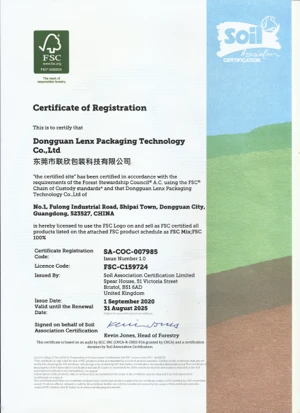
Rather than a general sustainability statement, the documentation that resolves a UK buyer's concerns quickly tends to be specific: the material breakdown of the box and tray by weight, confirmation of the paper and card classification with no composite lamination, the recycled fibre content percentage, FSC certificate details if applicable, and written confirmation that no PFAS or fluorinated coatings are used. Where any plastic component exists, its weight and recycled content should be itemised separately from the paper elements, since it's taxed and reported under a different scheme entirely.
Frequently Asked Questions
Does a UK toy company have to pay a fee for using colour boxes and molded pulp packaging? If the business qualifies as a producer under pEPR - broadly, businesses with turnover above £1 million and more than 25 tonnes of packaging placed on the market annually - yes, a fee applies, but paper and card packaging is charged at one of the lowest base rates under the scheme, £196 per tonne for 2025–2026, well below plastic or composite alternatives.
Is molded pulp packaging automatically classed as fibre-based composite under pEPR? No. Fibre-based composite refers specifically to laminated or multi-material fibre products, such as liquid cartons, not plain molded pulp. Uncoated molded pulp is classified as paper and card, which carries a substantially lower base fee.
Does Plastic Packaging Tax apply to a printed cardboard toy box? Not unless the box includes a plastic component above the registration threshold. A colour box and molded pulp tray with no plastic elements fall outside the scope of the Plastic Packaging Tax entirely.
Is FSC certification legally required for toy packaging sold in the UK? No, it isn't a legal requirement under pEPR or general UK packaging law, but it's widely expected by UK toy retailers and is often the fastest way to satisfy a buyer's internal sustainability review.