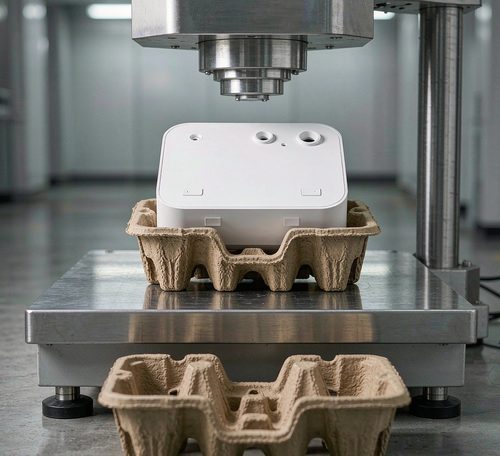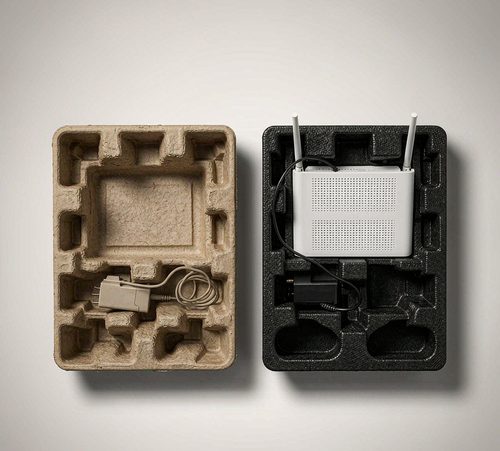

Wet pressed paper trays have earned their reputation for smooth, high-quality surfaces, but maintaining that standard requires solving a handful of recurring production problems. This article walks through the three most common ones and their solutions.
Problem one is net rupture during hot pressing. A torn mesh leaves an imprint on the tray, which ruins the appearance of an otherwise perfect product. Operators can reduce the risk by using a softer mesh and shaping it manually to follow the mold contour before pressing. For small tears, a spot welder can repair the net in place, saving the cost of a new mesh.
Problem two is surface striping. After hot pressing, some trays show fine lines across the surface. The root cause is uneven slurry absorption in the forming die, typically caused by inconsistent suction across the mold face. The recommended fixes are to drill smaller holes in the die or increase the hot press pressure. Layering additional mesh on the forming mold also helps, because it distributes the vacuum force over a wider area and prevents the lines from forming.
Problem three is blackening of thick sections. During molding, slurry tends to accumulate in the narrow corners of the product, making those areas thicker than the rest. Under hot pressing, the excess thickness compresses and turns black. Excessive pressure or long pressing times make it worse. The straightforward remedy is to trim the excess material with a file, and to review the press settings to avoid over-compression.
These solutions are well proven in production. With careful attention to the mesh, the mold and the press parameters, wet pressing lines can keep defect rates low while delivering the smooth finish that customers expect.