As businesses across the globe continue to grapple with the challenges of sustainability, molded pulp packaging emerges as a beacon of hope for a greener future. This article delves into the promising trajectory of the molded pulp packaging industry and its potential to redefine the future landscape of business.
The shift towards sustainability is no longer a mere trend; it's a fundamental paradigm shift in consumer behavior. As environmental consciousness becomes ingrained in the consumer psyche, businesses are compelled to reevaluate their practices and embrace eco-friendly alternatives. In this context, molded pulp packaging has risen to the forefront as a sustainable and innovative solution with the potential to shape the future of packaging.
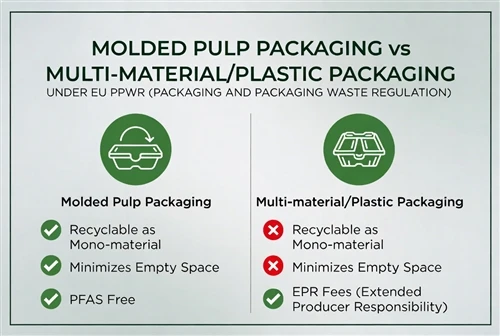
The inherent eco-friendly nature of molded pulp packaging is a significant driver of its future success. Crafted from recycled paper and cardboard, this packaging option minimizes the need for virgin materials, contributing to the conservation of forests and reduction of waste. With businesses under increasing pressure to adopt sustainable practices, molded pulp packaging becomes a strategic choice that aligns with both consumer expectations and global environmental goals.
Beyond its eco-friendliness, the versatility of molded pulp packaging positions it as a dynamic player in various industries. From electronics to food and beverage, healthcare to retail, the adaptability of molded pulp to different product shapes and sizes is a game-changer. As businesses seek packaging solutions that not only protect their products but also enhance their brand image, molded pulp emerges as a customizable and visually appealing option.
The circular economy aspect of molded pulp packaging is another crucial factor in its future success. Unlike traditional packaging materials that contribute to the growing menace of single-use plastics, molded pulp is fully biodegradable and compostable. This aligns with the circular economy model, where products are designed to minimize waste and contribute to a regenerative system. Businesses that adopt molded pulp packaging not only reduce their environmental impact but also position themselves as responsible stewards of the planet.
The future of the molded pulp packaging business lies not just in its environmental benefits but also in its economic viability. As technology advances and production processes become more efficient, the cost-effectiveness of molded pulp packaging becomes increasingly evident. Businesses can enjoy the dual advantage of meeting consumer demands for sustainable packaging while also optimizing their operational costs.
In conclusion, the future of the molded pulp packaging business is bright and promising. As businesses navigate the evolving landscape of consumer expectations and environmental responsibilities, molded pulp emerges as a holistic solution that not only meets these demands but also contributes to a sustainable and circular economy.