
In the realm of sustainable packaging, the dry press molded pulp production process stands out as an innovative and eco-friendly method of crafting packaging solutions. Developed to address the growing need for alternatives to traditional materials, this process has become synonymous with HESHENG Company's commitment to environmental stewardship. Let's embark on a journey to unravel the intricacies of dry press molded pulp production and understand why it has become a game-changer in the world of packaging.
Raw Materials Selection:
The journey begins with the careful selection of raw materials, a cornerstone of HESHENG's commitment to sustainability. The primary ingredients typically include recycled paper, cardboard, or agricultural waste. These materials undergo a rigorous screening process to ensure quality and purity, contributing to the circular economy by repurposing waste into a valuable resource.
Pulping Process:
Once the raw materials are sourced, they undergo a pulping process that transforms them into a slurry. This slurry serves as the foundation for the molded pulp, imparting flexibility and formability to the material. HESHENG employs advanced pulping techniques that optimize resource utilization while minimizing energy consumption, aligning with the company's dedication to efficiency and sustainability.
Molding Stage:
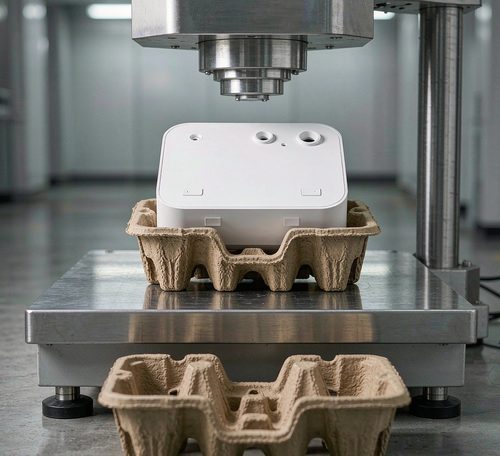
The heart of dry press molded pulp production lies in the molding stage, where the slurry is shaped into intricate and functional designs. Unlike traditional wet press methods that involve excess water, the dry press technique utilizes minimal water during the molding process. This not only reduces the environmental impact but also streamlines the subsequent drying phase, contributing to overall production efficiency.
Precision is paramount in this stage, as the molds determine the final form and function of the packaging. HESHENG's state-of-the-art machinery ensures consistent and high-quality molding, meeting the diverse needs of clients across various industries. The versatility of the dry press method allows for the creation of packaging solutions that cater to the unique specifications of different products.
Drying and Curing:
Following molding, the formed pulp undergoes a controlled drying and curing process. HESHENG employs cutting-edge technologies to optimize this phase, ensuring that the molded pulp retains its structural integrity and desired properties. The controlled environment not only enhances the strength of the packaging but also minimizes energy consumption, contributing to the overall sustainability of the production process.
Finishing Touches:
The final step involves refining the molded pulp to meet specific client requirements. This may include additional treatments for water resistance, customization of shapes, or branding elements. HESHENG's commitment to collaborative innovation ensures that clients receive packaging solutions that not only meet their functional needs but also align with their sustainability goals.
Environmental Impact and Advantages:
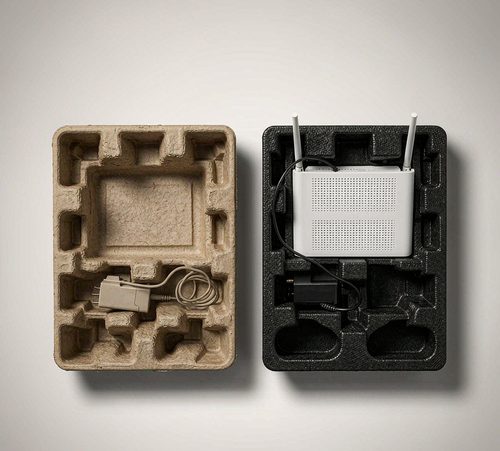
Dry press molded pulp production significantly reduces the environmental impact compared to traditional packaging methods. The minimal use of water, coupled with the utilization of recycled materials, exemplifies the eco-friendly nature of this process. Businesses adopting HESHENG's dry press molded pulp packaging not only contribute to environmental conservation but also enjoy the advantages of lightweight, durable, and customizable solutions.
In the era of sustainable practices, the dry press molded pulp production process emerges as a beacon of innovation. HESHENG Company's commitment to environmental responsibility is epitomized by this method, showcasing that green solutions can be both efficient and versatile. As industries increasingly pivot towards eco-friendly alternatives, dry press molded pulp production stands tall as a testament to the transformative power of sustainable packaging, offering a glimpse into a future where form, function, and environmental responsibility seamlessly coexist.