
Published on January 16, 2024
Wet-pressed paper pallets, recognized for their crucial role in safeguarding goods, undergo a meticulous production process that ensures both efficiency and environmental sustainability. This article delves into the intricacies of the production of wet-pressed paper trays, outlining their manufacturing steps, structural composition, and notable advantages.
Wet-Pressed Paper Holder
Let's start by unraveling the production process of wet-pressed paper trays. The procedure is systematically divided into three key stages: raw material processing, wet-pressed forming, and drying.
Raw Material Processing: The primary ingredients for wet-pressed paper trays are waste paper and water. These materials undergo processing to enhance their plasticity and adhesiveness. Waste paper is initially broken into smaller fragments and immersed in copious amounts of water. Under controlled temperature conditions, the waste paper fibers disperse, creating a cohesive paste.
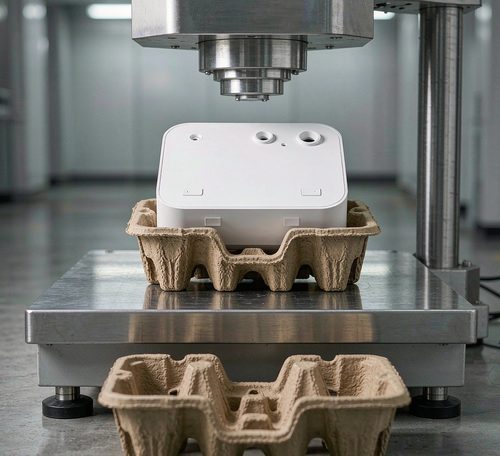
Wet Pressing Molding:Post raw material processing, the paste is transported to the molding machine. Here, the paste is compressed into trays of specific sizes and shapes. During this molding process, pressure is applied to bond the fibers tightly, and templates or specialized cutting tools shape the pallet into the desired dimensions.
Drying: Following the production of wet-pressed paper trays, the drying phase is imperative. Within the drying chamber, the trays undergo high-temperature treatment and exposure to strong winds, ensuring hardness and strength. This meticulous drying process prevents deformation and deterioration.
The structure of the wet-pressed paper holder is characterized by multiple layers of compressed cardboard, forming a robust structure capable of bearing weight and shielding cargo from damage.
Advantages of Wet-Pressed Paper Trays
Wet-pressed paper trays offer a range of benefits. Firstly, they stand out as an environmentally friendly material, being primarily composed of waste paper. Their production has minimal environmental impact. Secondly, they prove to be more economical and affordable than alternative packaging materials. With lower production costs and the ability to be reused, wet-pressed paper trays contribute to cost reduction. Additionally, their protective properties are commendable, effectively minimizing damage during transportation and reducing loss rates.
In summary, wet-pressed paper trays have emerged as a ubiquitous packaging material, integrating seamlessly into the industry. Their uncomplicated yet efficient production process, coupled with environmental advantages, underscores their significance in the packaging landscape.