
Paper trays and cardboard come from the same family of paper products, yet they serve different roles in packaging. A closer look at their similarities and differences explains when to use each one.
Their common ground is significant. The production raw materials are basically the same: pulp molding and paper and cardboard manufacturing both rely on paper fiber derived from wood and recycled sources. Because both are fiber based, both products are recyclable and biodegradable, and both fit comfortably within sustainable packaging strategies.
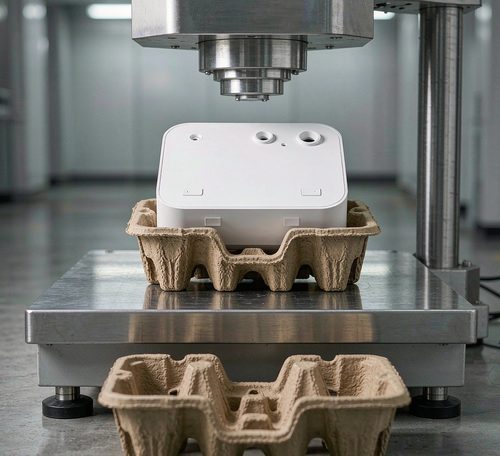
The production process, however, diverges. Cardboard production spreads pulp into a flat sheet and presses and dries it into board that can be cut and folded. Paper tray production uses a mold to shape wet pulp into a three dimensional form directly. This is the fundamental difference: one makes flat material, the other makes shaped products.
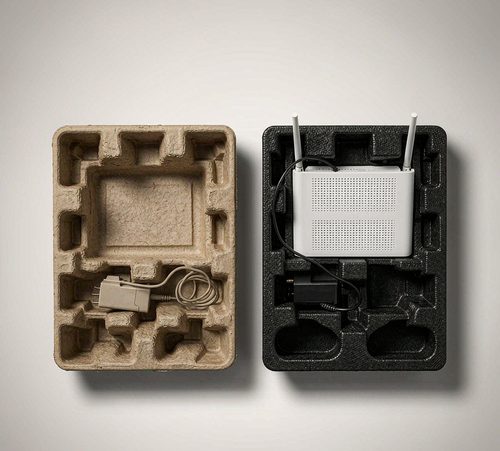
Performance follows from form. Cardboard provides a rigid flat surface that gives boxes their structure and offers printing surface for branding. Paper trays provide cushioning and containment, with molded cavities that hold products of specific shapes and absorb impact. A cardboard box transports a product; a paper tray protects it from shock and keeps it in position.
In the supply chain, the two are often used together. An outer cardboard box offers strength and stackability, while an inner paper tray cradles the product and cushions it. Their complementary strengths, built on the same fiber foundation, make them essential partners in modern packaging design.