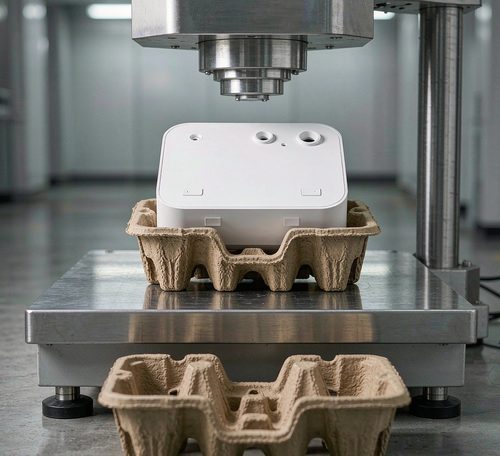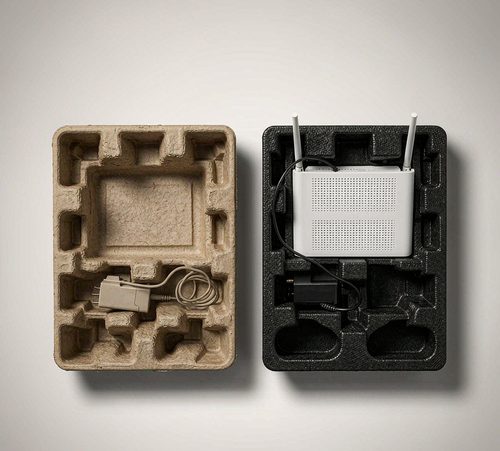

Running a paper tray factory demands careful attention to every stage of production, from raw material selection to the final shaped product. The process starts with waste paper as the fundamental raw material. This paper is pulped, with pulping materials added as needed, and then carried through forming, drying, and shaping processes before emerging as an environmentally friendly paper plastic product.
The first area that deserves attention is material preparation. Waste paper must be sorted to remove non paper contaminants such as plastic films, metal staples and tapes. Clean material produces clean pulp, and clean pulp produces trays with uniform color and texture. Poorly sorted material causes visible defects and weakens the finished product.
The second area is the pulping operation itself. Manufacturers must control the consistency of the pulp and the dosage of additives carefully. Additives such as sizing agents and strength enhancers are measured precisely; too much changes the feel and cost, too little leaves the product weak. The pulping time also matters, as it defines how completely the fibers are separated.
The third area is the forming line. Molds must be maintained in good condition, and vacuum settings must be correct to deposit fibers evenly. After forming, the drying stage requires attention to temperature and duration to prevent defects. The finishing steps then confirm that the tray meets its dimensional and strength specifications.
Paying attention to these details allows manufacturers to produce trays that are consistent, strong and visually clean. In doing so, they protect their reputation, retain customers and reduce the material waste that erodes profitability.