
1. Material Characteristics: The Seismic Gene of Natural Fiber
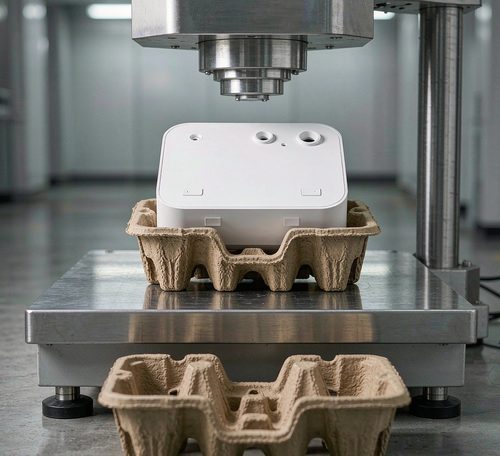
Waste paper and plant fibers, like bamboo pulp and sugarcane bagasse, are used to make molded pulp. The process includes pulping, molding, and drying. The physical qualities of natural fibers make it shock-resistant:
How it absorbs energy: When fibers are hit, they flex and break, which makes the three-dimensional network structure absorb energy. This is superior than the single cell compression of EPS foam. The pulp molded packaging that DS Smith made for Fronius welding equipment, for instance, has been shown to be able to handle impacts of more than 20 kilos in 10 drop tests (at a height of 900mm) and vibration tests.
Benefits of being anti-static: Paper fibers don't easily pick up static charge, which makes them great for safeguarding delicate electrical parts. The packaging for Apple Beats Studio Pro headphones is composed of bamboo fiber and sugarcane bagasse fiber molding. This not only protects the environment, but it also keeps audio equipment safe from static electrical harm.
Breathability and resistance to corrosion: The microporous structure of pulp molding can control the humidity within, which stops water from condensing and causing short circuits or corrosion in appliances. Changing 20% of the plastic cushioning materials in Lenovo laptop packaging to pulp molding made it 15% less likely that the product would need to be repaired.
2. Structural Innovation: AI-Driven Seismic Design Revolution
Traditional pulp molding uses trial and error to design things, which doesn't provide much room for structural optimization. Data modeling and generative design have made it possible to perfectly optimize earthquake-resistant buildings with the help of AI technologies.
AI can look at how different parameters, such wall thickness, draft angle, and structural unit distribution, all affect seismic performance at the same time. For instance, an AI visual inspection system has cut the mold design cycle for a company in Hangzhou from four weeks to one week. This has led to a 50% increase in the strength of the products and a 50% decrease in expenses.
Breakthrough in Generative Structures: AI runs millions of simulations of structure deformation and finds optimization routes that are hard for human engineers to think of. In Wenzhou, a business employed AI techniques to come up with 17,000 design concepts in three months. One of them, a travel kit box, improved its honeycomb construction, making it 40% lighter and 15% stronger in terms of how much weight it could hold.
Dynamic closed-loop control: AI can change things like the temperature of the hot pressing and the concentration of the slurry in real time throughout production to make sure that shock resistance performance stays the same. Guangdong Hansen Intelligent's completely autonomous forming matrix manufacturing line has made it possible to stretch pulp molding at right angles and demold it vertically using an intelligent dynamic parameter adjustment system. The product qualification rate has gone up to 98%.
3. Use in business: Complete coverage of the scene, from little items to big household appliances
Molded pulp packaging is used a lot in the home appliance industry, for everything from little gadgets to big appliances.
3C Electronics: Protection that is light and very accurate
Lenovo laptop packaging: We will start to replace plastic cushioning materials in 2022 and be fully using pulp molding packaging by 2024. By making the best use of the structural units, the package will be 20% smaller and the cost of shipping will be 15% lower.
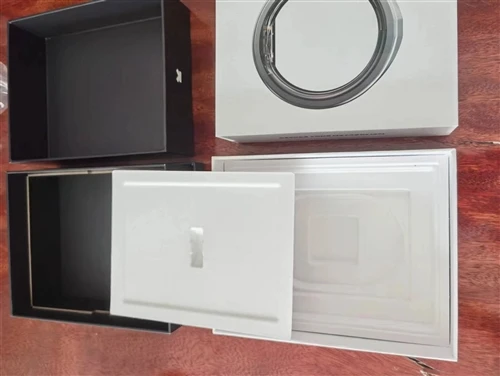
Apple earphone packaging: The nested design of the packaging makes it easier to store and meets EU carbon tariff certification criteria. It is made of 100% fiber-based material (bamboo fiber and sugarcane bagasse).
Small Appliances: Finding the Right Balance Between Cost and Performance
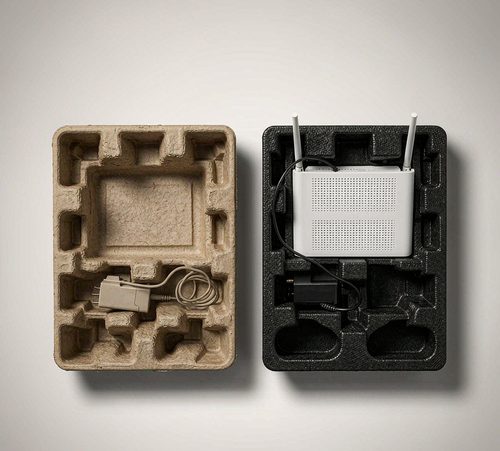
The DS Smith pulp molded tray for air purifiers has a quadruple side wall locking construction that absorbs shock just as EPS, and it cuts shipping costs by 30%.
Amokabel, a Danish manufacturer, employs 100% paper reels instead of plastic for cable reel packaging. This cuts down on the amount of plastic used by 1 kilogram each reel. The perforated shape makes it easier to thread cables, which increases operational efficiency by 40%.
Big appliances: structural innovation breaks the weight limit
Packaging for ovens: Türkiye Using heated wood support and corrugated cardboard folding technology, Patex Kajit Industrial Co., Ltd. has made packaging for full-size ovens that can be recycled 100% of the time. This cuts down on the amount of wood used by 60% and the expense of storing it by 50%.
Packaging for washing machines: The industry is looking into using pulp molding and corrugated cardboard composite structures instead of typical timber frames. Early testing suggest that the composite packaging can hold up to 200 kilos of static pressure and pass a drop test 95% of the time.