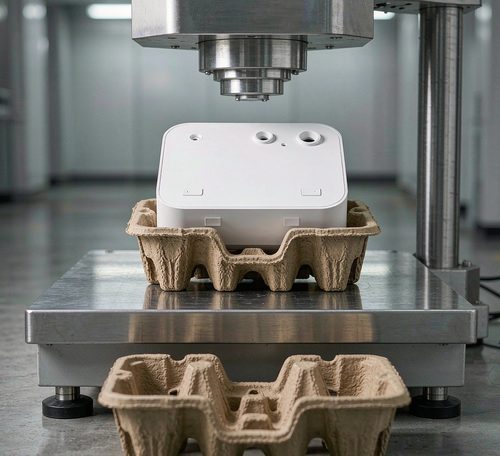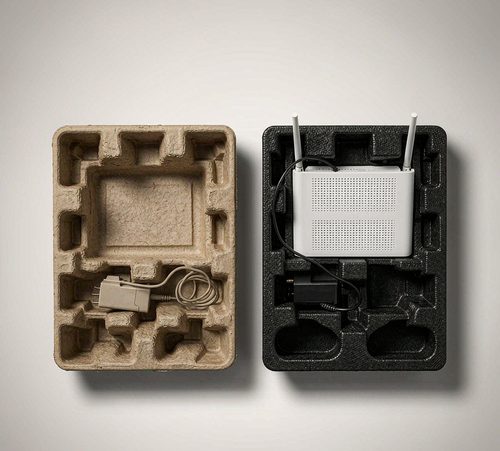

Wet pressed paper trays are popular because of their smooth surfaces and consistent quality, but achieving that finish on the production line is not always easy. Manufacturers commonly encounter several defects, and each one has a practical fix.
The first problem is hot pressing net fracturing. During hot pressing, the mesh can tear, and when a cracked net is used, the pressed product carries visible marks that spoil its appearance. The solution is to switch to a softer mesh and manually shape the net to match the product contour on the mold before pressing. If the mesh tears only partially, a spot welding machine can repair the crack and extend the life of the net.
The second issue is surface printing, where stripes appear on the tray after hot pressing. These lines are usually caused by uneven slurry absorption on the forming mold. Using a smaller drill bit to adjust the holes, or increasing the hot press pressure, can effectively reduce the striping. Adding extra mesh layers to the forming mold also helps by spreading the vacuum force more evenly across the punching area.
The third common defect is blackening of the product. This happens when the smaller sections of the product structure accumulate too much slurry during molding, making those areas thicker than the rest. When hot pressed, the extra thickness is compressed too tightly and turns black. Excessive hot press pressure or overly long pressing time can also cause the same result. The remedy is to file down the excess material or remove the extra thickness in the affected areas before pressing.
These three problems account for most of the defects in wet pressing production. With proper mesh handling, mold adjustment and pressure control, manufacturers can keep reject rates low and maintain the smooth, high-quality surface that makes wet pressed trays so desirable.