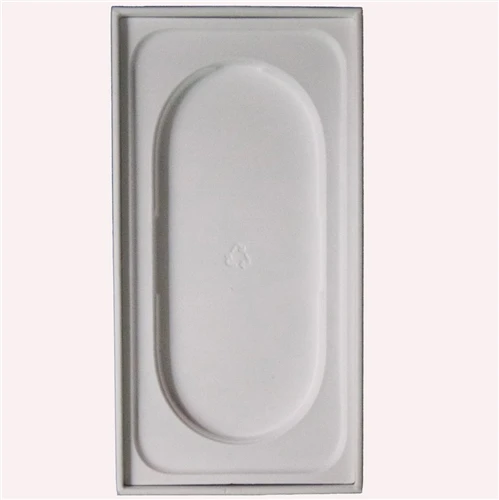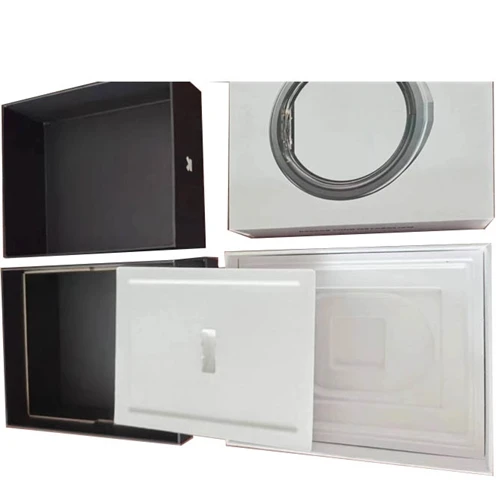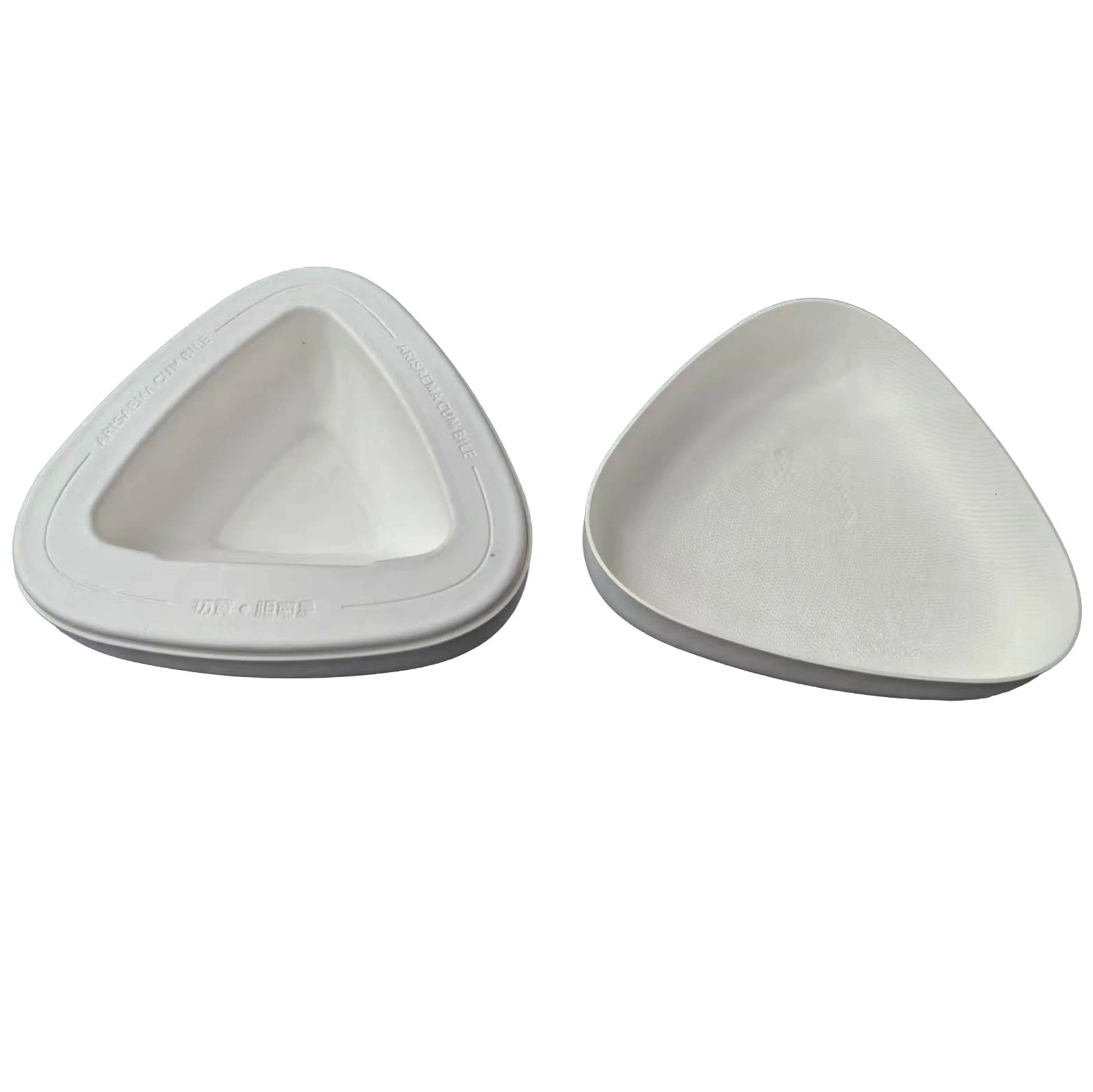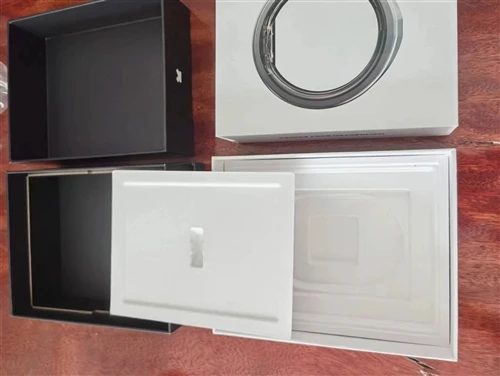

Rigid gift boxes are often chosen for electronics, cosmetics and premium accessories because they look substantial and feel durable. Inside, many of them use a molded pulp tray to hold the product. One design detail makes a surprising difference to both strength and appearance: whether the tray simply sits in the box, or is bonded to the base board and becomes part of the bottom box.
Why a Loose Tray Has Limits

A molded pulp tray is formed with thin walls, typically around 1.2 mm. That is enough for cushioning and product positioning, but it is not designed to act as a visible structural edge. When the tray is used directly as the rim of the bottom box, several problems appear:
The thin wall flexes when the box is opened, closed or handled.
The edge can look uneven or fragile at the opening.
The tray can shift inside the box during transport, especially under repeated opening.
The visible rim of a thin pulp wall looks less refined next to a rigid box.
The Bonded Structure
In a bonded design, the pulp tray is glued onto the rigid base board, and the box wall and tray are built together as one assembly. The tray edge is supported by the surrounding board, so the rim of the bottom box reaches a combined thickness of 2 mm or more, rather than the 1.2 mm of the pulp alone.
The result is a bottom box that behaves like a single solid component:
Higher edge rigidity. The rim resists bending and compression.
Stable positioning. The tray cannot slide, lift or rattle.
A cleaner opening. The thicker, more even edge gives a sharper, more premium appearance.
Better handling. The box keeps its shape when lifted, stacked or opened repeatedly.
How the Bonding Process Works
The exact steps vary by factory and design, but the process generally follows this sequence:
Tray forming. The pulp tray is molded and dried. Dimensional accuracy and flatness of the flange matter here, because the bonding surface must sit evenly on the board.
Trimming and surface control. The edge is trimmed so the tray fits the bottom box dimensions with a small, consistent tolerance.
Adhesive application. Water-based adhesive or hot melt is applied to the bonding area of the base board, or to the tray flange. The adhesive must suit both pulp and the board surface.
Positioning. The tray is placed into a fixed position on the base board, usually using a jig or locating guide so the alignment is repeatable.
Pressing and curing. The assembly is pressed so the adhesive bonds evenly across the contact area, then left to set.
Inspection. Bond strength, tray position and edge appearance are checked before the box moves on to final assembly.
Design Details That Matter
Bonding area. A wider, continuous glue area gives a stronger bond than a few spots, but must not squeeze out visibly.
Flange design. A flat, consistent flange on the pulp tray helps the adhesive contact the board evenly.
Tolerance. The tray, board and wrapped bottom box need to be designed together. Small differences accumulate in a bonded assembly, so tolerances should be agreed early.
Adhesive choice. The adhesive should hold under normal temperature and humidity changes during shipping and storage, and should be compatible with recycling goals where relevant.
Material separation. If recyclability is a priority, the design should consider how paper board and pulp can be recycled together, since both are fibre-based, which is an advantage over plastic or foam inserts.
Benefits for Brands
For brands choosing between a loose pulp insert and a bonded one, the bonded approach offers:
A more solid, premium opening experience
Better structural stability without adding plastic
A tidy appearance with no gaps between tray and box wall
Consistent product positioning from one unit to the next
The trade-off is slightly more assembly work and a need for tighter design coordination between the tray and the box. For products where unboxing quality and protection both matter, that trade-off is often worthwhile.
Key Takeaway
A molded pulp tray on its own is an excellent protective and eco-friendly insert, but its thin walls are not meant to form the visible structural edge of a premium box. Bonding the tray to the rigid base board turns two separate parts into one stable structure, with a thicker rim of 2 mm or more, better rigidity and a cleaner finish. When designing a gift box with a pulp insert, considering this combined structure from the start leads to a better result for both protection and presentation.