
The appeal of wet pressed paper trays lies in their smooth finish and high quality, but those qualities do not come automatically. Every manufacturer faces the same set of production challenges, and knowing the solutions in advance saves time, material and frustration.
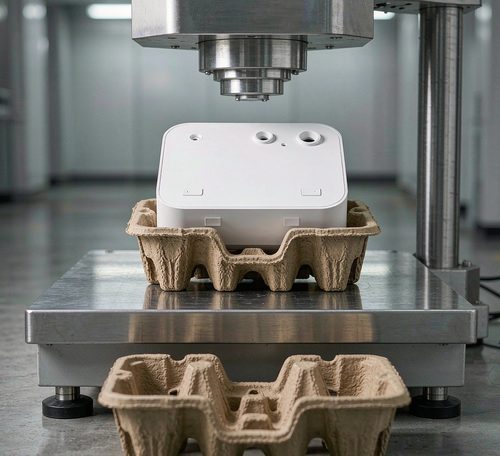
The most visible problem is the cracked net during hot pressing. When the mesh tears, the defect transfers directly to the tray surface. The proven remedy is twofold: use a softer mesh that flexes with the mold, and manually shape the net to the product profile before pressing begins. When cracks appear despite these precautions, spot welding repairs them without replacing the entire net.
A second common problem is surface striping. Trays emerge from hot pressing with faint lines, usually because the forming die draws slurry unevenly. The standard fix is to drill the die with smaller holes, which equalizes suction, or to raise the hot press pressure for a more uniform finish. Adding mesh layers to the forming mold also disperses the vacuum force and prevents striping from developing.
A third problem is black spots or blackened sections. These form where slurry builds up in narrow mold cavities, leaving the tray thicker than specified in those spots. Under hot pressing, the extra thickness compresses and darkens. Pressures that are too high or cycles that are too long aggravate the condition. The solution is to trim the excess with a file and adjust the press parameters for the specific product.
These three defects are the usual suspects in wet pressing. Manufacturers who address the mesh, the mold and the press settings systematically can maintain the smooth, attractive surfaces that make wet pressed trays a preferred choice in the packaging market.