
1. Start with the structure of the product instead of making the mould first.
In real-life projects, a lot of individuals go straight to the modelling phase from the start. However, if they don't know the product structure well, they often have to make changes over and over again later on. The key to making a moulded pulp mould that works with home appliance structures is "structural matching." diverse household appliances have very diverse weight distributions, shell shapes, and weak spots.for instance, have a centre of gravity on one side, and specific panel sections are more likely to break. If these aspects aren't looked at closely ahead of time, it will be hard to give real protection during shipping, even if the mould is formed.
2. The buffer structure should be built to handle the force that is being applied.
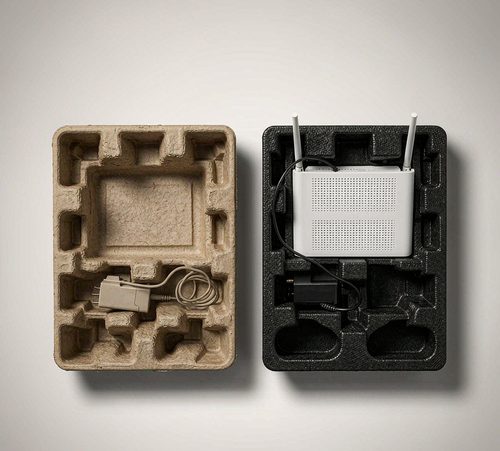
A lot of individuals think that making moulded pulp moulds thicker will make them stronger when talking about how to make them work for home appliances. But in real life, the buffering effect comes more from the way the structure is built than merely how thick it is. One good way to do this is to divide the structure based on how much force the product would experience during shipping. you could make the corners stronger and the bottom pressure better while keeping the middle section relatively light. This can make sure that the protection works, keep materials from going to waste, and speed up manufacturing.
3. The design must take into account how easy it will be to make a lot of copies.
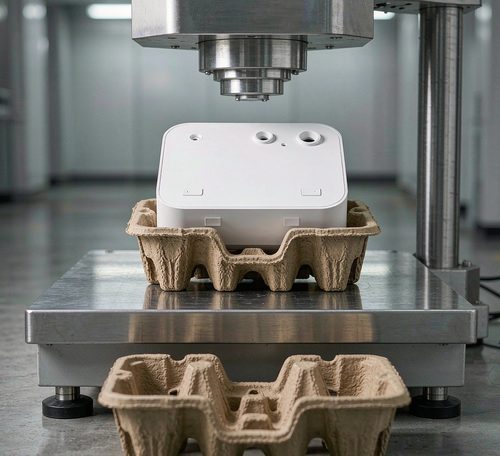
A lot of ideas may look good in the design software, but they have a lot of problems when it comes to mass manufacturing. This is also why production factors need to be taken into account when thinking about how to make moulded pulp moulds that will work for household appliance structures. For instance, if the demolding angle is good enough, if the structure will change how evenly the slurry is absorbed, and if it is likely to change shape during drying. If you don't take these things into account, it will be incredibly expensive to make changes later, and you may even have to remould.
4. Checking samples is a crucial part of optimisation.
Based on experience, very few moulded pulp moulds can get it right the first time. When it comes to making moulded pulp moulds that are good for household appliance structures, it is normally required to keep improving them by taking samples. Actual samples can show how well things stick together, how strong the structure is, and any problems with the assembly process, which are hard to guess at during the design phase. One or two rounds of adjustments should be enough to fix most of the problems and become ready for mass production.
5. The ultimate effect is often determined by how well the details are handled.
Once the basic framework is set, it's usually the little things that make the biggest difference in how people use it. if there is a clear placement structure, and if it stays stable while being moved. It is hard to fix these problems later on if they are not thought of throughout the design phase. So, once the infrastructure is done, going back and fine-tuning the specifics is a very important step in making the solution go from "usable" to "easy to use."
6. In short, structural flexibility is more important than complicated design.
When it comes to designing moulded pulp moulds for household appliances, the most important thing is not to make them too complicated, but to make sure they work with other parts. If the product features are looked at carefully at the beginning, along with a good buffer design and production feasibility, a stable and reliable solution can typically be found. A lot of problems aren't because the technology is too hard; they're because people don't think clearly at first.