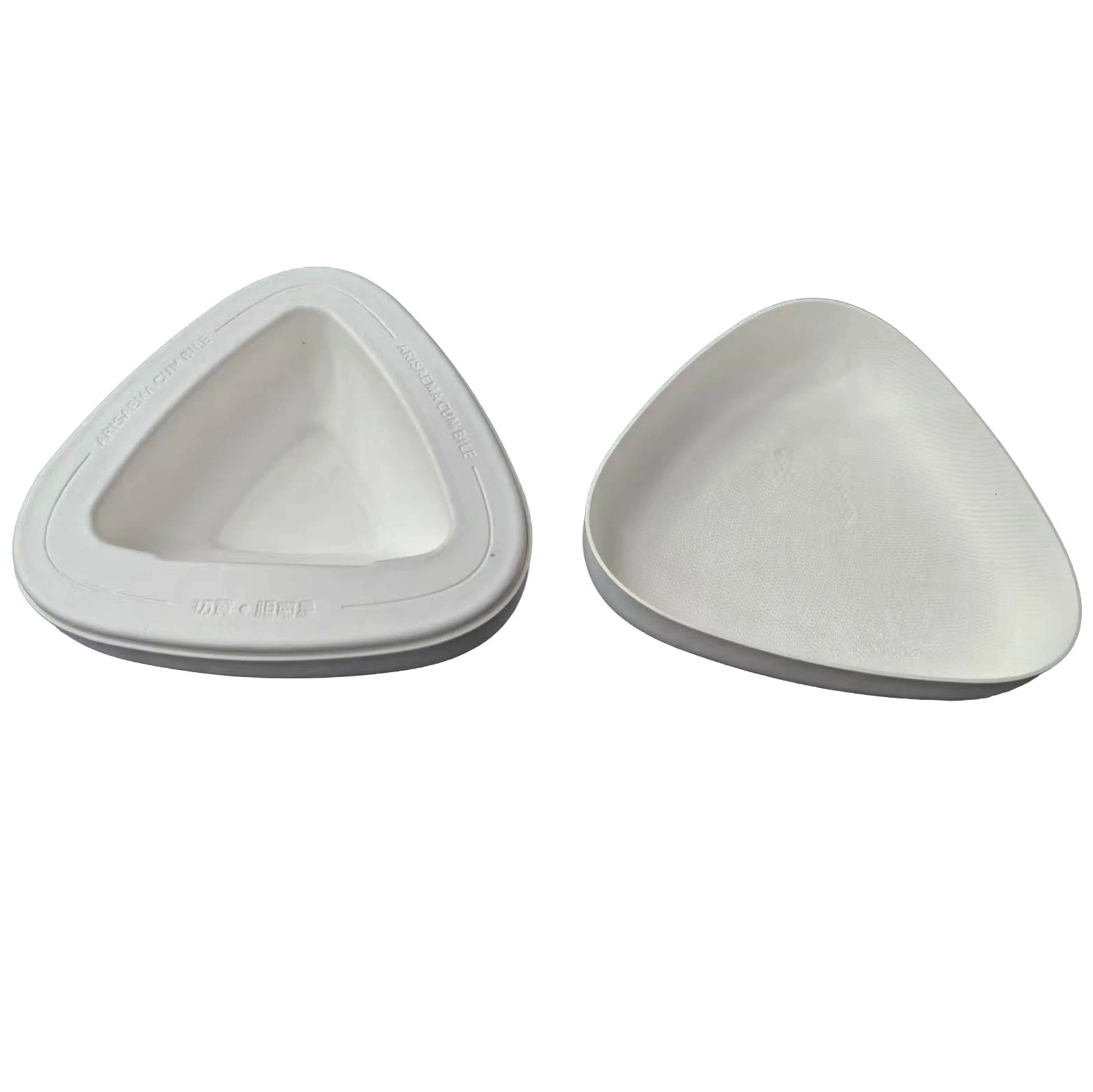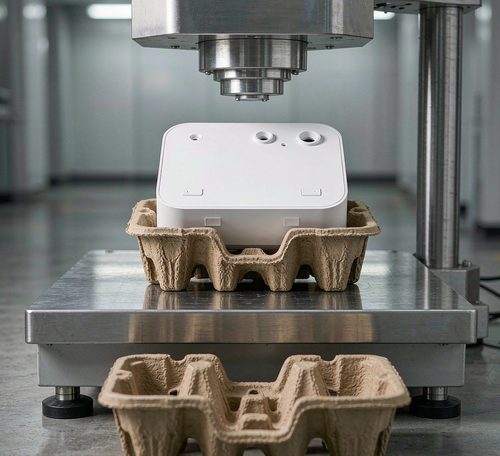

一, How moulded pulp moulds work
Combining leftover paper pulp with water to make a pulp
Using moulds to soak up fibres in a vacuum
Wet billet that has been pre-formed
The final product is made after it has been compressed and dried.
During this procedure, the mould not only shapes the product, but it also has a direct impact on:
Strength of the structure and uniformity of the moulding
Quality of the surface and efficiency of production
two ️⃣ Special design needs for packaging home appliances
Household appliances are complicated, hence their packing needs to be better:
Irregular structures and surfaces with several curves, such air fryers and lamp housings
Weak points (screen, knob, and interface)
High standards for looks (scratch-resistant, pressure-resistant)
Different weight classes (from 0.5 kg to 30 kg and more)
So, mould design has to suit these requirements:
👉 The method must be able to adapt to different structures, provide buffering protection, and be easy to make.
three 3 The three main goals of mould design
Protection product: absorbing impact through structure
Fit: Fit the shape of the object perfectly
Supporting Manufacturing: Making Sure Production Is Stable and Efficient
二,Method of product analysis based on the structure of household appliances
Mould design must be based on 3D data, which includes important information like
Model in STEP/IGES
Structure for putting together products
Distribution of the centre of gravity
Main analysis:
Raised structure (button, interface)
Weak spots (glass panels, ornamental parts)
Zone of structural strength (place for reinforcement, shell)
two design rules for support points
The support point is the most important part of figuring out how well protection works:
At least three points of support (to keep things stable)
Stay away from weak spots
Close to places with strong structures
Design methods that are used a lot:
Protection for corners
Structure for lifting from the bottom
Enveloping fixed structure three Buffers structure design (core technology) six
The structure of moulded pulp gives it its buffering ability, not the substance itself.
Some common structures are:
Ripple structure (more flexible)
Structure of reinforcement (to make it stronger)
Hollow structure (absorbing energy from impacts)
Design rules:
👉 Lengthen the path of impact and lower the peak impact.
三,Important parts of die structure design:
1. Parting Line Design
Is it easy to take off the mould
Does it change how the product looks
How complicated the mould is
Design idea:
Put the use of a single parting surface first
Stay away from structures that are upside down
Keep the direction of the demolding the same. 2. Draft Angle
When designing moulded pulp, the demolding slope is an important factor that can't be ignored:
The best range is 2 ° to 5 °.
Deep cavity structure: bigger is better
Function:
Stop mould from clinging
Make production more efficient
Three: Design the wall thickness and make sure it is even. Seven
The normal thickness range is:
2mm to 5mm
Points to think about when designing:
Uniform thickness (to keep the drying from becoming uneven)
Local thickening in important areas
Don't let it get too thick, which might create cracks or sluggish drying.
four ️⃣ Design of the drainage system and suction holes
The mould uses vacuum adsorption moulding, hence it needs to be designed:
Holes for vacuum Drainage channel
Important factors:
Aperture: Don't block it
Distribution: Even coverage
Density: has an effect on how thick the material is
five ️⃣ Choosing mould materials
Materials that are often used:
Aluminium mould: Very precise and good for making a lot of things at once
Copper mould: Very strong and long-lasting
Resin mould: good for sampling
Criteria for selection:
Project Phase (Sampling vs. Mass Production) cost budget precision needs
四,Design for adapting the process and optimising mass production:
1. Choosing the moulding process
The main process is
Wet Press: very precise, smooth surface, and costs a lot.
Dry Press costs a lot less
The surface is not very smooth.
The accuracy is average, and the shrinkage rate and size compensation are both 2.
During the drying process, the pulp will get smaller:
In general, 1% to 3%
In design, you have to:
Pay for size ahead of time
Stay away from big sections with unequal thickness. Three: Nesting and Stacking Design. Six:
Make transportation and storage as efficient as possible:
Nestable (makes things smaller)
Easy to stack, which makes it more stable
How to design:
Structure that is slanted
Setting up convex points
four ️⃣ Automated production adaptation
Requirements for modern production:
Robot pickup and automatic transmission
Design idea:
easy to understand structure
Very consistent and repeatable
Stay away from complicated buckles