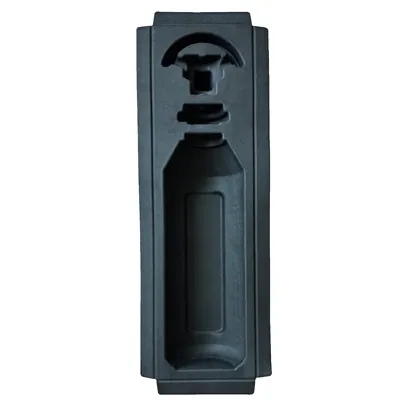
In the early years, pulp molded products generally used waste paper as the base material, and used special equipment and molds to perform three-dimensional modeling through a unique process to produce packaging products and objects of various shapes. At present, high-quality paper-plastic products using reeds, straw husks, sugarcane, wheat straw, bamboo, wood, etc. as raw materials are increasingly used.
Pulp molding mainly uses cheap, renewable and recyclable fiber-like natural materials as raw materials to produce high-value environmentally friendly packaging products. Its appearance greatly reduces the environmental pollution caused by the use of foamed plastics. , And opened up a new broad road for the recycling of waste paper.
What are the characteristics of molded pulp products?
1. It can produce products with various specifications and complex shapes through molds, so that it can meet the packaging needs of products with various shapes, facilitate isolation and positioning, and prevent collisions.
2. The paper is light and soft, and the overall structure has suitable strength and rigidity, which makes it have good protection and cushioning properties.
3. It has ideal ventilation and moisture absorption, which is conducive to the preservation of food. As long as an appropriate amount of waterproofing agent is added to the slurry, the paper molded product can achieve good water resistance.
4. According to needs, pulp molded products can be flame-retardant, anti-static, waterproof, laminating, printing, and applied to terminal retail packaging.
5. Wide range of raw materials and waste utilization, obvious social benefits, high recycling and reuse rate of products, no matter waste products in production or finished products after use can be used as raw materials for re-production.
The following will give you a detailed introduction to the green furniture made of pulp molding. The raw materials of the pulp molded furniture are mainly plant fibers. The plant fiber materials are processed through the process to produce a pulp mold with the physical properties and touch of natural wood on the surface. Plastic furniture.
Pulp molded furniture is divided into two categories
1. According to the requirements of the craft, directly mould into some simple furniture.
2. The molded furniture components are assembled through connectors to achieve the functional requirements of the furniture.
Raw material preparation
Pulp molded furniture mainly uses waste paper and waste cardboard as raw materials. Newspapers, periodicals, books, various packaging papers, office paper, advertising paper, paper boxes, etc. are all raw materials. The raw materials are mixed with water to make a pulp, and then the pulp, additives, additives, etc. are mixed in a certain proportion, and then processed by deletion, selection, purification, etc., and mixed into a pure pulp with a certain concentration.
Process flow
Waste paper sorting → pulping → purification → sizing → pulp and glue preparation → pressure forming → dehydration → drying
→Furniture Parts
additive
In the production process of pulp molded furniture products, appropriate amount of additives are added according to the material properties required by the furniture, and reasonable support ribs are designed. The additives are:
1. Reinforcing agent to improve the compressive and flexural strength of the product, so that the strength and tensile force of the product are significantly improved, the physical properties are improved, and the flatness is also improved.
2. The colloid makes the product tough and does not shrink or deform, and improves the water resistance of the product.
3. Pigments, add colored pigments according to the color requirements of the product.
4. Insect repellent, play a role in preventing insects.
5. Elastic additives, increase the elasticity of the parts.
Design considerations for pulp molded furniture
1. Pulp wood plastic molding has the great advantage of having less impact on the environment, so it is often selected as the ideal material for environmentally friendly products.
2. Untreated pulp generally has two types of brown and gray. Brown pulp is generally processed from kraft paper. Gray pulp is synthesized from recyclable printing paper. In contrast, brown pulp has better strength and recoverability.
3. Pulp molded products are in the form of thin shells.
4. The product dried in the air is smooth on one side (the side that is attached to the mold), and the other side is rough, so the product details are generally added on the smooth side (the side that is attached to the mold).
5. The wet pressing method can improve the surface quality of the finished product; while the hot pressing method improves the surface quality, it will reduce the permeability of the product.
Significance of research and development of pulp molded furniture
1. Use green environmental protection materials, pollution-free, recyclable and reusable.
2. Meet the needs of the multicultural structure of today's society.
3. Large-scale standardized production can be realized in mechanization, automation, and collaborative chemical factories...
Green design and humanized design are the themes of future furniture design. While using waste paper to produce pulp-molded furniture parts, we must also consider the negative effects of the pulp-molded furniture production process to seek advantages and avoid disadvantages. Realize the green design and humanized design of pulp molded furniture products.