
一,Environmentally friendly: The whole cycle is green, from raw materials to recycling.
1. The ability to get fresh raw materials
Plant fibers like waste paper, bagasse pulp, and bamboo pulp are used to make molded pulp. It is easy to find and may be used again and again. For instance, the use of waste paper might be more than 95%, which means that less petroleum-based raw materials are needed. EPS and EPE, on the other hand, depend on refining oil, which is not a sustainable way to use resources and requires a lot of energy to make. For example, making 1 ton of packing material requires 1.5 tons of oil for EPS and only 0.3 tons of scrap paper for molded pulp. This cuts carbon emissions by more than 60%.
2. Can be broken down and recycled
Molded pulp is fully biodegradable, with a composting cycle of just 90 days and a recycling rate of more than 90%. The production process uses physical adsorption molding technology, which only needs a minimal amount of waterproofing agent (such aluminum sulfate) and doesn't release any chemical pollutants. EPS, on the other hand, takes hundreds of years to break down and only 30% of the time it can be recycled. When burned, it also gives off harmful chemicals like styrene. EPE can be recycled, but only about 30% of the time, and the performance of recovered materials goes down, which makes it hard to use them in a closed loop.
3. Based on policy and the market
The worldwide prohibition on plastic has made the need for molded pulp grow even faster. The EU's "Disposable Plastic Directive" makes it plain that EPS packaging can't be used, while China's "Green Packaging Specification for Mail and Express" says that the printing space on packaging can't be more than 50%, which encourages brands to use less molded pulp in their designs. By 2025, the global market size is estimated to be more than $12 billion, with a growth rate of 15% per year.
二,Functionality: Structural innovation gives those with high-end protection demands more power.
1. Buffer performance: geometric structure takes the place of chemical foaming
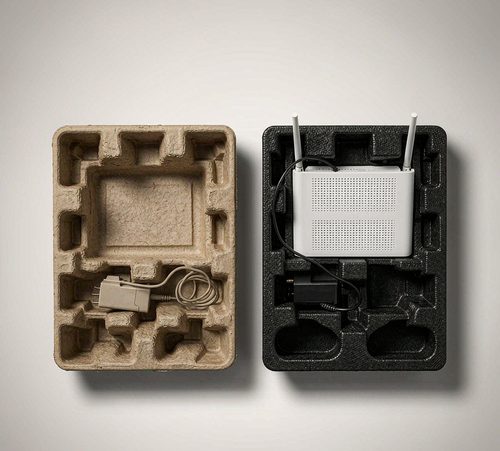
Molded pulp has a load-bearing capability of up to 50kg/㎡ and a compressive strength that is better than EPS. It gets its cushioning from geometric designs like honeycomb structures and wavy patterns. For instance, Sony uses pulp trays instead of EPS packing and specialized molds to make sure that electronic parts fit perfectly, which cuts down on damage during shipping by 30%. EPE is very strong (above 80%), but it can break down under long-term strain, thus it needs to be used with corrugated cardboard, which makes it more expensive and complicated.
2. Ability to adjust to different situations
Not static and breathable: Molded pulp has a natural fiber structure that can be coated with conductive materials that are good for packaging integrated circuits. This prevents the risk of EPS electrostatic adsorption of dust. EPS also has great breathability, which makes it good for storing fresh fruits and vegetables, but it can easily lead to the buildup of condensed water.
Resistance to Heat and Moisture: The molded pulp can handle temperatures from -40 to 120 degrees Celsius thanks to the lamination process. This meets the high temperature testing requirements for cold chain and electronic components. EPE, on the other hand, can only handle temperatures from -60 to 80 degrees Celsius and is likely to soften and change shape at high temperatures.
Resistant to scratches and holes: The molded pulp has a smooth surface that can touch car paint or precision tools directly, which keeps the rough surface of EPS products from scratching them. EPE material is soft and doesn't protect against sharp objects as well as molded pulp and high-density EPP (foamed polypropylene).
3. Light weight and the ability to stack well
The molded pulp is only 0.3–0.5g/cm³ thick, and the foldable shape saves more than 40% of storage space. For instance, egg trays stack 30% better than EPS, which lowers the cost of logistics. EPE has a low density (0.03–0.08g/cm³), but it needs to be filled with gas to keep its shape. It also takes up more space and is less efficient to move than molded pulp.
三, Economy: Finding ways to save costs and the possibility of making a lot of things at once
1. The price of raw materials is lower
The major raw material for molded pulp is old paper, and the price doesn't change as much as it does for products made from oil. For example, molded pulp products used in industry cost about 17500 yuan per ton, which is close to the cost of EPS. The cost can go down much more when they are made in huge quantities. The unit price of EPE is higher than that of EPS, but it can be used again (3–5 times), which can save costs. But its recycling systems aren't very good yet, and the total cost is still more than that of molded pulp.
2. Make the process of making things easier
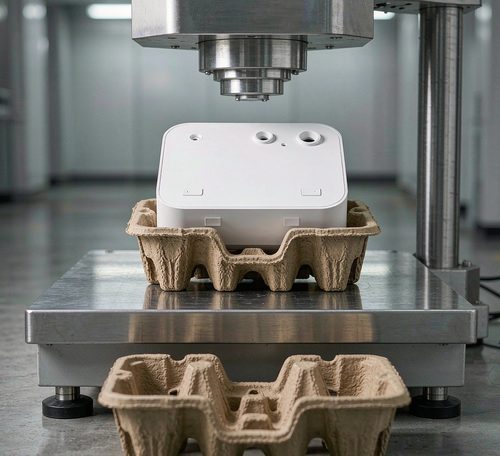
The molded pulp uses either vacuum filtration or grouting molding, which cuts out the chemical foaming step of EPS and speeds up the production cycle by 30%. For example, reciprocating lifting equipment can swiftly transfer molds, meet the needs of small batch customization, and speed up delivery by 50% compared to standard manual boxes. It is hard to meet variable manufacturing needs since EPE needs to be processed through molding or heat sealing processes, which require a lot of money and take a long time to replace molds.
3. Brand premiums and policy dividends
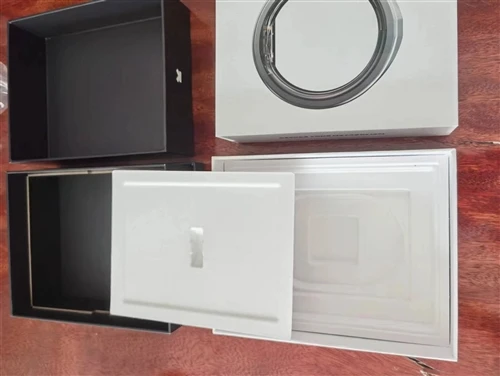
Using molded pulp packaging can help a company get green certification, such FSC forest certification, which can help the brand charge more. For instance, when Apple switched to molded pulp packaging without plastic film, customers became 20% more environmentally friendly, which led to a 15% rise in the number of people who bought the product again. Some high-end brands of EPS have stopped making it because of environmental issues.
四,Adaptability to the market: comprehensive coverage from packaging for businesses to packaging for consumers
1. Electronics industry: precise protection and brand improvement
Electronic parts need to be very resistant to moisture and static, and molded pulp can be designed to protect the contents by "packaging is protection." For instance, the Huawei Mate series smartphones are lined with molded paper pulp and digital printing technology. This cuts packaging costs by 20% and makes the unwrapping experience even better. EPS is slowly leaving the high-end electronic packaging industry because of the risks of static electricity and pressure from the environment.
2. Medical and Food: Safety and Following the Rules
The FDA says that molded pulp can be sterilized at high temperatures (121 °C) and is safe to use with food. A lot of people use it for disposable medical bedding, frozen food boxes, and other things. EPE is likely to let plasticizers out at high temperatures, which makes it hard to meet medical grade safety standards.
3. Fast-moving consumer goods and e-commerce: making small batches and delivering them quickly
Molded pulp works with the public white box and digital label mode, which may swiftly fill modest orders from e-commerce. For instance, ZARA was able to offer "48-hour fast delivery" by molding pulp shoe boxes, which sped up the turnover of their inventory by 40%. EPE needs to be opened in advance and has a high minimum order quantity, which makes it hard to meet the fast-moving consumer goods industry's "short, flat, and fast" needs.