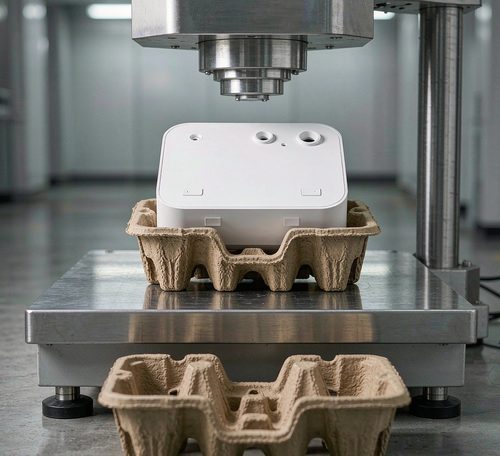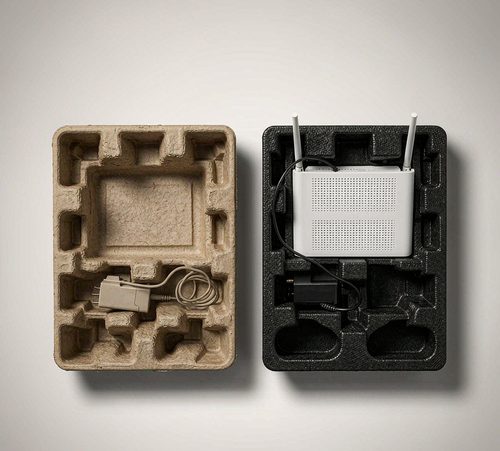

The environmental protection paper tray has packaging functions such as product packaging, top fixing, cushioning, and decoration. After the raw material composition and production process are determined, the change of the structure form is the basis to ensure the performance of these packaging. The structural form and its changes are an important factor that makes the packaging have compressive strength, elastic recovery, resistance to external impact, and vibration energy absorption.
paper tray, the structure of environmental protection paper tray is mainly distinguished from the edge structure, the edge structure of the paper tray, environmental protection paper tray has a borderless structure, a flanging structure and a double-edge structure.
The borderless structure is suitable for disposable tableware and some industrial inner packaging products with light weight and unnecessary strength requirements. The flanging structure and double-sided structure are mostly suitable for industrial inner packaging products, which can improve the overall strength, cushioning performance and beautification of the paper tray. The role of product appearance. In addition, the chamber structure and the combined structure can meet the needs of certain applications, and the heavy load structure is more than the packaging and transportation packaging of heavy products.
1. Eco-friendly paper tray: small edge structure paper tray
In the small-edge paper support structure, the edge size is usually 8-15mm. The force and cushioning effect of the small edge structure in the edge direction is related to the edge length and the deformable space. It is mostly used for fixing and cushioning in the bearing mode, and is suitable for the application conditions of light weight of the package. The buffering effect of this structure is a packaging form in which the paper molded product is more thinly packed through the edges and side walls. The top surface of the product is usually flush with the open end surface of the paper molded packaging structure or slightly lower than the upper end surface. , And its structure is shown in Figure 6-3. This type of packaging is widely used in combination packaging of complete sets of products, and the size of the paper holder is relatively small. An example of its application is shown in Figure 6-4. When used as a cushion for the cushioning packaging of larger products, the small-edge structure of the paper tray is applied in the top and bottom packaging methods, and pays attention to the protection of the external force in the vertical direction. Its application examples are shown in the figure. Shown in 6-5
2. Eco-friendly paper tray: Flip-edge structure paper tray
In the form of the paper tray with a flip-up structure, the edge structure extends to the outside and forms an overturned skirt, so that the paper tray structure forms a relatively complete outer side wall in appearance. Generally, in order to make the product to be packaged contact the mesh side of the paper tray to ensure the accuracy of packaging and fixing dimensions, and at the same time to make the smoother mesh side appear on the outer surface, it is ideal to use the flipping structure. The structure is shown in Figure 6-6.
The load-bearing and deformation of the flipping structure paper support in the edge direction is not only related to the edge length and the deformable space, but also closely related to the change of the lateral structure in the flipping structure. The change of the flipping lateral structure determines this structure form In terms of lateral load-bearing and cushioning performance, especially the lateral structure, there are many alternative forms of change. It has great flexibility to adjust the cushioning performance in this direction, which provides convenience for cushioning design.
Although the flip-side structure paper tray pays attention to the packaging performance and overall aesthetics, it will add some complexity to the structure design and mold processing, especially when the internal size of the packaging box has been limited, the structure of the paper tray cushions the effective size It will be restricted on the surface parallel to the working surface due to the turning edge structure, and will increase the complexity of the mesh laying and increase the installation size of the mold on the working template.
In the turning edge structure, the turning edge size can be a part of the height of the mold body, or it can be the same as the height of the mold body, see Figure 6-6 (a), (b). The height of the turning edge size is related to the structural characteristics of the packaged product, product quality, the form of the paper support mold buffer packaging and the total height of the paper support mold structure. The application example of the turning edge structure is shown in Figure 6-7.
3. Eco-friendly paper tray: paper tray without edge structure
"Edge" refers to the structural component between the outermost edge of the structure and the side wall surface of the structure on the surface parallel to the working surface of the paper support model structure and the forming template. The edge size refers to the width value of the structural component. In the non-edge paper mold structure, the actual minimum edge size is less than 2mm.
The side buffering effect of no edge is mainly used for selection and processing from the whole. The lateral wall surface of the peripheral structure can be inclined or perpendicular to the load direction, and this angle can be adjusted to obtain the required cushioning effect. The non-edge structure paper tray cushioning packaging liner is mainly used in the cushioning packaging of the two ends of the packaged product, and the packaging form of symmetrical structure is mostly. Its application example is shown in Figure 6-2. This structure form It is convenient to place the product during the packaging operation and take it out during consumption. The borderless structure can effectively control the impact of structural changes on the buffering effect, and reduce the local deformation after the edge is deformed by the force and the fixed failure of the product in the package. The non-edge structure of the paper tray facilitates the processing and assembly of paper molds.
4. Eco-friendly paper tray: heavy-duty structural paper tray
The main application purpose of the paper support in the form of heavy load structure is to bear the load. The paper support mold structure of this structure can obtain the bearing capacity of the structure and the required overall rigidity by increasing the thickness of the mold body, or by increasing the arrangement density of the sides of the mold body. The heavy-duty structure paper tray is more than the collective packaging in the packaging and transportation packaging of heavy products.
5. Environmental protection paper tray: chamber structure and combined structure paper tray
The cavity structure paper tray is produced and processed by a combined mold. The paper tray is a closed cavity in some form or formed into a small opening container in structure. The paper tray of the cavity structure needs to use special molding equipment and technology to complete its production and processing: this kind of paper tray is mostly used as a container or decoration,