
一, The manufacturing process and technical aspects of moulded pulp packing
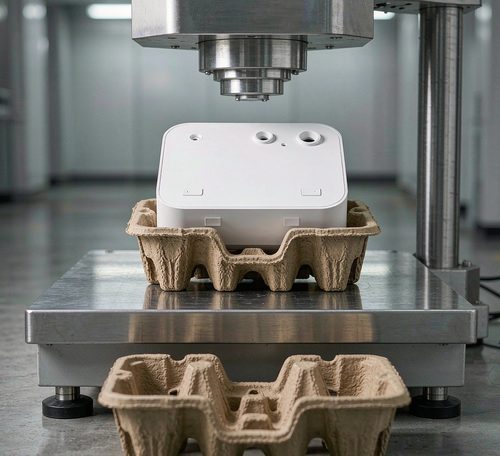
Moulded pulp packaging is a three-dimensional packaging material created by pulping, injection moulding, and compression moulding renewable plant fibres like reed, sugarcane bagasse, bamboo fibre, and wheat straw. Three main steps comprise the fundamental manufacturing process:
Pretreatment of raw materials: To create an evenly concentrated fibre slurry, raw materials like straw and waste paper are treated using a pulping machine. Certain high-end products could include strengthened fibres or natural waterproofing additives.
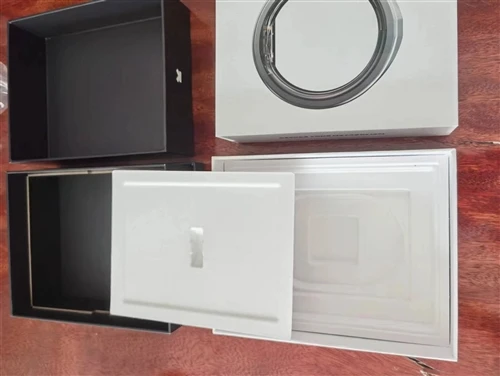
Through the use of a mould and vacuum adsorption technology, the fibre slurry is uniformly applied to the mold's surface, creating a wet embryo that completely fits the shape of the final product. For instance, the mould for the Apple earphone packing box has a precision of up to 0.1mm, guaranteeing that every groove precisely fits the product.
Hot pressing and post-treatment: Wet embryos undergo high-temperature hot pressing at 180–220 °C, which improves structural strength using hot melt technology in addition to achieving quick drying and shape. Some products will be surface treated, laminated, or printed to improve their appearance and resistance to moisture.
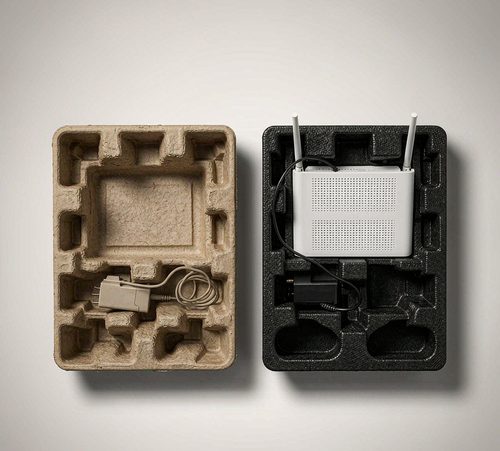
Moulded pulp packaging has no effluent emission, uses 40% less energy than foam plastics, and requires only 30% more raw materials. Using the Huawei MateBook notebook package as an example, the lining is composed of bagasse moulding material, which lowers the weight by 20% and the cost of a single piece by 15% when compared to EPS foam.
二, The Four Fundamental Principles of the Consumer Electronics Sector
1. Accurate protection: from structural support to vibration absorption
Packaging with multi-dimensional protective capabilities is necessary due to the precision of electronic products. In moulded pulp packing, the three-dimensional network structure created by fibre interweaving can accomplish:
Energy dissipation: In a 1.5-meter drop test, the product integrity rate of a particular brand of mobile phone packaging is increased to 99.2% because of the friction between fibres that transforms kinetic energy into thermal energy when an impact occurs.
Customised buffering: Create reinforced rib structures with a compressive strength of up to 120 kPa based on the product's delicate components, such the honeycomb support for drone propeller packaging.
Protection against static electricity: Natural fibres' conductivity can successfully stop the buildup of static charge and guarantee the security of precise circuits.
2. Lightweight Design: Revolution in Logistics Cost
In air transportation, one-way shipping expenses can be reduced by three to five yuan for every kilogramme of packaging weight decrease. The following techniques are used in moulded pulp packaging to achieve lightweighting:
Structural optimisation: A particular brand of headphone packaging saw a 55% reduction in weight and a 3mm wall thickness reduction to 1.5mm by designing a hollow structure using the topology optimisation method.
Material Innovation: By using composite materials made of bamboo fibre and sugarcane bagasse, the package density has been lowered to 0.6g/cm³, which is only 70% of that of foam plastics.
Space utilisation: One brand of smartwatch uses a stacked structure to increase single box loading capacity by 40%, while customised design decreases package volume by 30%.
3. Improving brand value: Linking emotion and functionality
Packaging has emerged as a key channel for companies to interact with consumers in the context of consumer upgrading. The process of making moulded pulp packaging involves:
Natural texture transmission: The warm feel and texture of the fibres produce an aesthetic that contrasts with the technological feel of electronic goods. A particular brand of audio packaging has a 28% higher unpacking satisfaction rate because it contains natural bamboo fibres.
Constructing stories in a sustainable way: Use QR codes for raw material traceability and carbon footprint labels on packaging to visualise environmental initiatives. The phrase "Made with 3 sugarcane stalks" appears on the box label of a certain brand of laptop computer, which has spontaneously gone viral on social media.
Design of the unboxing experience: Unpacking becomes a brand ritual because to creative ideas like tiered displays and easily tearable structures. A magnetic box lid that may be opened and closed 100,000 times is used in the packaging of a certain brand of headphones.
4. The circular economy closed-loop: the complete production-to-regeneration chain
A closed-loop system of "raw materials product regeneration" is built by the moulded pulp packaging:
Raw material end: A packaging company uses 120,000 tonnes of straw each year from agricultural waste, which is equal to lowering pollution from incineration.
Production end: One production line can save thirty tonnes of water a day by implementing a water circulation system.
User end: The product has a 98% breakdown rate in 60 days and can be composted at home.
Recycling end: After being crushed, waste packaging can be used again, creating an endless cycle.