一,Global environmental policies are making businesses change.
1. Rules that limit what people may do and goals for cutting carbon emissions
Many countries throughout the world have rigorous rules about how to deal with plastic litter. The EU's "Disposable Plastic Directive" says that all plastic packaging that may be thrown away must be gone by 2030. China's "14th Five Year Plan" for the growth of the circular economy specifically calls for the use of recyclable express packaging and sets a goal of employing recyclable packaging for 1 billion mail parcels by 2023. These rules directly encourage businesses to speed up the process of getting rid of plastic. Apple, for instance, has cut its use of plastic by 600 tons a year by getting rid of plastic packaging and charging heads. The company has also said that it will be fully carbon neutral by 2030, which will cut carbon emissions from its packaging boxes by 60%.
2. Pressure to follow the rules in the supply chain
Electronic goods that are sent to other countries must meet international environmental requirements. The EU's "plastic-free packaging" accreditation and North American environmental laws say that packaging materials must break down organically and be able to be recycled more than 90% of the time. To follow local rules, Sony is replacing plastic trays with FSC-certified paper trays and plastic wrap with transparent varnish coatings in order to enter the European market. If the business doesn't satisfy the standards, it could encounter problems including customs clearance delays and order delays.
二, Changes in the market are driven by consumer demand.
1. Getting people to care about the environment
People all throughout the world are paying a lot more attention to plastic pollution. Research suggests that 72% of people are more likely to buy products that come in eco-friendly packaging. This number is much higher for Generation Z, who make up more than 85% of the total. Even though there was a lot of debate about it, 30% of customers outside of the US still liked Apple's idea of protecting the environment by getting rid of plastic packaging. This even led to a "packaging box collection" culture, which added a new level of value to products.
2. Find a balance between experience and function
Plasticity is not just a replacement; it's a way to make the user experience better through new design. The Lenovo ThinkPad X1 series uses a self-locking bottom structure instead of plastic tape. This cuts down on the use of tape and makes sure that the product is safe to transport by using a precise buckle design. Xinnuofei has also added perspective windows to the corners of the packaging, replacing traditional plastic transparent films. This not only lets customers see the products, but it also meets the goal of not using plastic. These designs show that you can make something that is both useful and good for the environment at the same time.
三, Technological improvements cut the expenses of non-plasticizing.
1. Advanced pulp molding technology
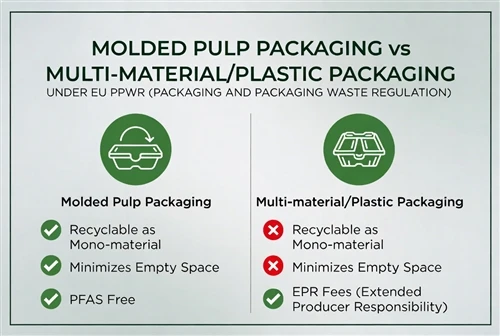
Pulp molded cushioning packing is now widely used. Lenovo will slowly stop using plastic cushioning for computers starting in 2022. By 2024, they will only use pulp molding. It costs 15% less than regular plastics and protects things 20% better. Companies like Huagong Huanyuan have been building up technology for almost 30 years. They offer full chain solutions from mold creation to manufacturing lines, with a yield rate of 99.5% for pulp molding. This meets the need for precise packaging in electronic items.
2. Design with one material and cycles
Using only one type of material for packaging makes it easier to recycle and lowers processing costs. The "air capsule" packaging from Procter & Gamble is made of 100% recyclable polyethylene, thus there is no need for tape, fillers, or cardboard boxes. The weight of each package is cut by 40%, while the carbon emissions from transportation are cut by 35%. Sony has cut the amount of packaging by 30% and the costs of storing and moving the items by using flat cardboard boxes.
四, Improving brand value and gaining a competitive edge in the market
1. Making the environment look good
Unplasticized packaging is becoming the most important way for brands to stand out from the competition. Apple's "technology and environmental protection" idea combines goals for reducing plastic in packaging with goals for carbon neutrality. This strengthens the company's image as a high-end and environmentally friendly brand. Lenovo showed off the ThinkPad X1 Carbon in full pulp molded packaging at CES 2024, which got a lot of media attention and boosted the company's influence in the international market.
2. The synergistic effect on the supply chain
Plasticization helps businesses change the way their supply chains work. Sony's "Green Management 2025" plan requires all of its suppliers to use paper packaging. Procter & Gamble has teamed up with online shopping sites to create a closed-loop recycling network, which means that the "Big Green Treasure" recycling box can be used more than 28 times and costs less than regular cardboard boxes. This partnership not only lowers expenses for the environment, but it also makes the supply chain more resilient.