
The molded fiber packaging industry is entering a decade of rapid expansion driven by sustainability demands, packaging regulations, and continuous innovation in fiber-forming technologies. As global brands look for ways to reduce plastic waste and improve circularity, molded pulp packaging has transitioned from a niche protective material to a mainstream sustainable solution across electronics, food, cosmetics, and consumer goods.
At Hesheng Innovation Development Company Limited, we see this shift firsthand as companies increasingly seek recyclable, compostable, and high-performance molded-fiber solutions. Below is a deep dive into global market trends shaping the industry from 2025 to 2035.
1. Market Growth Forecast: A Decade of Expansion
Recent industry studies project strong growth in the molded fiber space. Market reports estimate that the global molded pulp packaging industry will continue rising steadily through 2035, supported by:
Government plastic-reduction policies
Corporate sustainability commitments
Rising e-commerce packaging volume
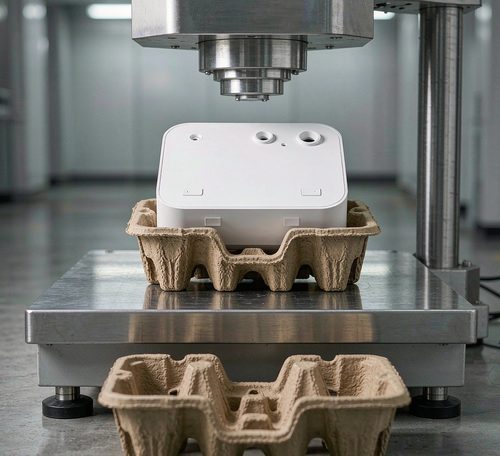
Advancements in thermoformed and dry-molded fiber technology
The Asia-Pacific region remains the fastest-growing segment due to strong manufacturing infrastructure, e-commerce acceleration, and supportive environmental regulations.
2. Key Drivers Behind the Demand Surge
a. Strong Sustainability Push from Global Brands
As more companies adopt ESG frameworks, molded fiber packaging has become a preferred material thanks to its:
Recyclability
Compostability
Low carbon footprint
Non-toxic, PFAS-free options
Fiber packaging allows brands to reduce dependence on plastics while maintaining protection and appealing aesthetics.
b. Regulatory Pressure on Plastics
More than 80 countries have enacted restrictions or taxes on single-use plastics. This regulatory environment is pushing brands toward fiber-based alternatives that comply with evolving packaging laws.
c. Technological Innovation
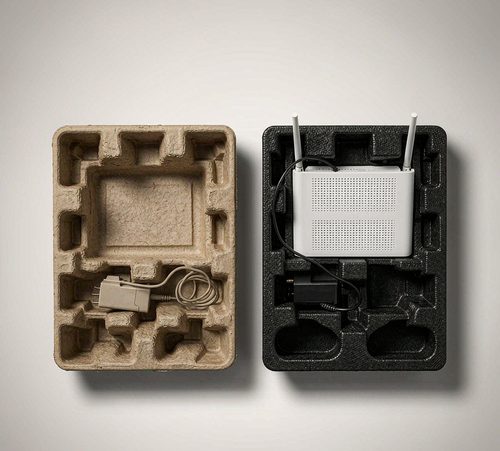
From thermoformed pulp to next-generation fiber structures, new technologies have elevated molded pulp from a simple protective tray to a high-precision packaging material. These improvements make it suitable for premium sectors such as electronics, cosmetics, small appliances, and medical devices.
3. Challenges the Industry Must Overcome
While the outlook is positive, molded fiber still faces several challenges:
a. Higher Production Costs vs Plastic
Although costs continue to decrease with automation and scale, molded fiber production still requires higher tooling and forming investments than traditional plastics.
b. Limited Moisture and Oil Resistance
While new coatings are emerging, molded fiber's performance in wet or oily environments may still require enhancement depending on application.
c. Global Recycling Infrastructure Inequality
Some regions have mature paper recycling systems; others do not, leading to uneven recycling outcomes.
4. Strategic Recommendations for Brands
As molded fiber continues its upward trajectory, brands can take several steps:
Establish long-term partnerships with specialized manufacturers like
Hesheng Innovation Development Company Limited (www.csl-packaging.com)
Conduct small pilot tests to evaluate fiber performance before full rollout
Track regulatory changes and update packaging strategies accordingly
Consider customized thermoformed pulp for premium unboxing experiences
Incorporate circular design strategies such as closed-loop recycling
The global molded fiber packaging industry is entering a transformative period. Supported by sustainability commitments, technological advancements, and expanding applications, molded pulp is moving toward becoming a dominant packaging material for the next decade.
Brands that adapt early and collaborate with experienced suppliers will gain an edge in sustainability, compliance, and product differentiation.