By Hesheng Innovation Development Company Limited
www.csl-packaging.com
As global brands look for practical and sustainable packaging options, molded pulp continues to move from a niche choice to a mainstream solution. The material's strength, design flexibility, and fully renewable origins make it a reliable alternative to plastic, foam, and other traditional packaging substrates. Based on recent developments across different markets, the following trends are expected to define molded-fiber packaging in 2025.
1. Demand for Higher-Precision, Custom-Engineered Pulp Components
Molded pulp has evolved far beyond simple trays. In 2025, more companies are requesting tightly engineered inserts designed around the dimensions of specific products-from electronics and cosmetics to premium spirits and industrial instruments.
This shift is driven by the need for:
Better protection in smaller, more compact packaging formats
Improved product presentation in unboxing experiences
Integration of branding elements into the structure of the pulp itself
At Hesheng Innovation Development Company Limited, we've seen increasing interest in thin-wall molded pulp, which offers cleaner lines and higher dimensional accuracy compared to traditional thick-wall pulp.
2. Greater Use of Bamboo and Bagasse Fiber for Sustainability Compliance
With more markets introducing packaging regulations, fiber sources matter. In 2025, molded-pulp manufacturers are prioritizing fast-renewing fibers such as bamboo and bagasse. These materials offer:
Lower carbon footprints
Strong supply availability
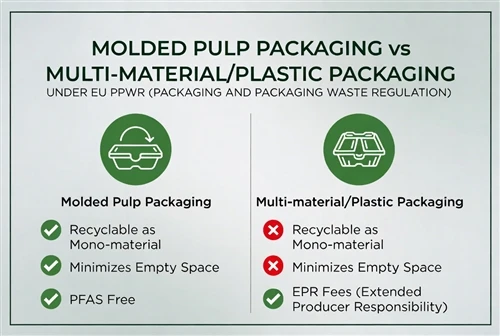
Compliance with global EPR and plastic-reduction rules
Hesheng Innovation (www.csl-packaging.com) incorporates both bamboo and sugarcane fiber blends to help brands meet future environmental standards without compromising durability.
3. Shift Toward Fully Circular Design & Easy Recycling
The next wave of molded pulp is not only biodegradable-it is designed for circularity from the start. Brands are asking for packaging structures that match existing paper-recycling streams and eliminate mixed materials.
Key directions for 2025 include:
One-material packaging systems using only fiber-based components
Glue-free locking structures
Enhanced pulping performance for efficient recycling
This aligns with global sustainability strategies where brands aim to replace laminates, plastics, and foams with single-fiber solutions that can be collected and processed anywhere.
4. Growth of Automation and High-Volume Production
As demand rises, the industry is investing in new automatic forming lines and drying technologies. Faster equipment allows molded-fiber products to compete with plastic on both speed and price-especially for large-volume consumer goods.
This expansion supports:
Shorter lead times
More consistent quality
Competitive unit pricing for large orders
Hesheng Innovation Development Company Limited continues upgrading its production lines to support global brands requiring reliable, scalable molded-pulp supply.
Conclusion
Molded pulp is no longer just an "eco-friendly alternative"-it is becoming the standard material for responsible, high-performance packaging. As brands pursue greener strategies in 2025, fiber-based packaging engineered with precision and circularity in mind will play a central role.
For companies looking to adopt advanced molded-pulp solutions, Hesheng Innovation Development Company Limited provides custom design, rapid sampling, and high-volume production.
Learn more at: www.csl-packaging.com