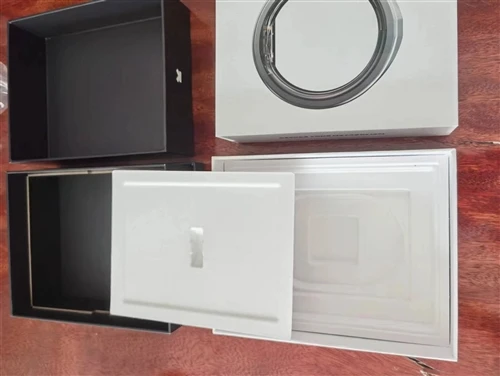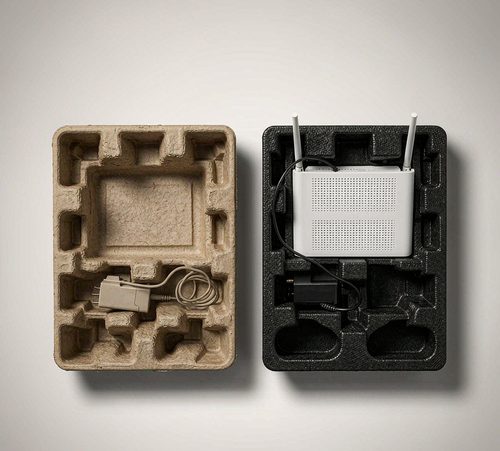

1. The state of the industry: Plastic packaging is still the most common type, but pulp substitution is becoming more common.
Plastic is still the most common material for packaging electronics. Plastic packing film, trays, and cushioning materials are quite popular in computers, communication terminals, and consumer electronics because they are cheap, easy to work with, and provide great protection. Statistics show that in China's plastic packaging sector, which is divided into smaller markets, the revenue from plastic film, packaging boxes, and containers is quite high and continues to increase steadily. However, the environmental problems with plastic packaging are becoming more and more obvious. For example, it is hard to break down, which leads to billions of tonnes of plastic trash being made around the world every year. This is a big problem for marine life and soil health.
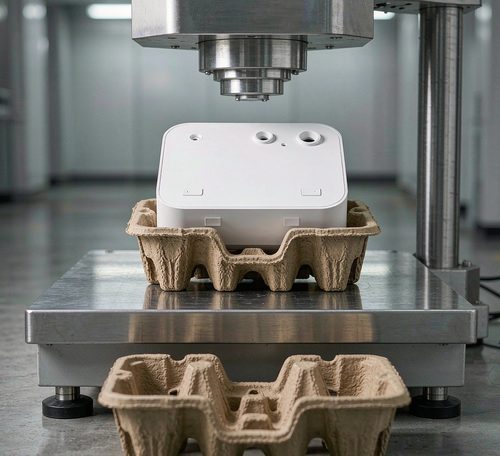
Pulp packaging, on the other hand, is slowly making its way into the world of electronic product packaging because it can be broken down and reused. For instance, 90% of the electronics sold by Amazon in the US come in 100% recyclable packaging, and plastic bags have been replaced with water-based coatings. Lenovo cuts down on the use of plastic packaging by adding more bamboo and sugarcane fibres. Google said that all new hardware packaging will be plastic-free, and the new paper will be three times stronger and 70% more flexible. Also, pulp moulding technology, including plant fibre degradable non-woven bags and eco-friendly paper bags, is being employed more and more in protective packaging. With vacuum adsorption moulding technology, it can make shockproof and moisture-proof packaging items to order.
2. Technical problem: two problems at once: improving performance and keeping costs down
Pulp packaging has many environmental benefits, but it still needs to get beyond two big technological roadblocks before it can fully replace plastic:
Problems with performance: In terms of air tightness, moisture resistance, and impact resistance, traditional pulp materials are not as strong as plastics. For instance, when paper packaging gets wet, it becomes more weaker, which makes it hard to meet the protection standards for shipping electronics across long distances. But in the last few years, the use of green pulp making methods like biological enzyme technology and mechanical chemical pulp co-production technology has greatly improved the purity and consistency of pulp. In some cases, such as when it needs to be resistant to high temperatures and corrosion, it works just like plastic. Google, for instance, has improved the fibre structure such that plastic-free packaging paper is as strong and flexible as standard plastics.
Pressure on costs: International market changes have a big effect on the raw materials used to make pulp packaging, like wood pulp and bamboo pulp. The manufacturing is also more complicated than that of plastics, which makes the starting costs greater. For instance, making pulp moulds needs very exact control of things like pressure, temperature, and humidity. Also, making moulds for pulp moulding costs more than making moulds for plastic injection moulding. However, pulp prices are slowly going down because big corporations are expanding their forest pulp paper integration projects in Southeast Asia and South America, while small and medium-sized businesses are using non-wood fibre raw materials including bamboo pulp and straw pulp. The "forest pulp paper" closed loop that Sun Paper set up in Laos, for instance, has helped the company rely less on imported wood pulp.
3. Market driven: the combination of policies, consumption, and industrial chains
The "pulpification" of electrical product packaging is driven by three things: legislation, consumption, and the industrial chain.
Policy enforcement: Around the world, regulations including bans on plastic, carbon taxes, and extended producer responsibility (EPR) are speeding up the removal of plastic packaging. The EU's Single Use Plastic Directive (SUPD) says that all packaging must be recyclable by 2030. In the UK and EU, plastic taxes make it expensive for packaging that can't be recycled. China's "dual carbon goal" also encourages businesses to cut back on their use of plastic. These rules make corporations use more eco-friendly materials like pulp by making it more expensive for them to follow the rules for plastic packaging.
Change in consumer preferences: Generation Z customers are paying far more attention to environmental factors. More than 60% of consumers are willing to pay more for eco-friendly packaging, and they are more likely to purchase products that employ biodegradable materials. Amazon and Google, two of the biggest internet companies, use eco-friendly packaging to meet this trend and improve their brand's premium qualities.
Working together to come up with new ideas throughout the industrial chain: The close working relationship between packaging companies and electronics manufacturers has sped up the technological evolution of pulp packaging. For instance, Dingmao Technology's DMJ series water-based high-performance heat sealing barrier coating can be used instead of polyethylene (PE) coated paper. This makes paper packaging waterproof, oil-resistant, and heat-sealable. Yiwei Non Woven Products Co., Ltd.'s plant-based biodegradable non-woven bags are strong and break down quickly thanks to a combination of natural fibres and advanced technology. Also, industry trade shows like PACKCON give companies at all levels a chance to share technology and connect their goods.
4. What will happen in the future: 2030 could be a very important year.
Considering technological, policy, and business reasons, the full switch of electrical device packaging from plastic to pulp is predicted to hit a key turning point around 2030.
Technological maturity phase (2025–2028): Green pulp technology (such the biological enzyme process and supercritical CO₂ pulp) will make up half of the industry's production capacity, while non-wood fibre pulp will make up more than 40%. Pulp-molded items will be the most common way to "replace plastic with paper." At the same time, the Internet of Things and big data will make process parameters even better and lower manufacturing costs.
Policy Mandatory Period (2028–2030): Major markets like the European Union and China will completely enforce rules for recyclable packaging and charge significant tariffs or outright bans on plastic packaging that can't be broken down. The European Union, for instance, wants to cut the amount of plastic packaging used by half by 2030 and says that all packaging must be able to be reused or recycled. This will require electronic makers to change their packaging materials by 2028, otherwise they won't be able to sell their products.
Market penetration phase (after 2030): As the price of pulp packaging gets closer to that of plastic and people become more mindful of the environment, pulp packaging will change from being a "optional configuration" for high-end electronics to a "standard configuration" for all types of products. By 2035, it is projected that more than 60% of the materials used to package electrical products around the world would be pulp. Plastic packaging will only be used in a few rare cases, such medical-grade sterile packaging.