
Molded Pulp Packaging for Electronics and Industrial Products: A Buyer's Guide
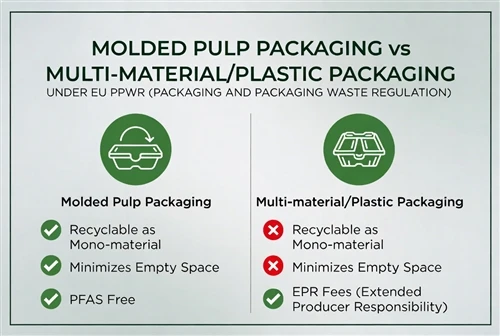
Anyone who has sourced protective packaging for a physical product eventually runs into the same fork in the road: foam or fiber. EPS and PE foam are cheap and forgiving to mold, but they're heavy in the wrong ways - heavy on landfill, heavy on regulatory scrutiny, and increasingly heavy on brand reputation. Molded pulp, sometimes called molded fiber, has quietly become the default answer for companies that need to protect something fragile without shipping a block of plastic to a customer who's going to throw it straight in the trash.
This isn't a new material. Egg cartons have been made this way for decades. What's changed is precision. A process that used to mean lumpy gray trays now produces tight-tolerance inserts that hold a laptop steady inside a shipping box or cradle a circuit board through a cross-country freight run. If you're evaluating molded pulp for electronics or industrial packaging, here's what actually matters once you get past the sustainability marketing copy.
Transfer Molded, Thermoformed, or Thick Wall - They're Not Interchangeable
Suppliers throw these three terms around like they're minor variations, but they produce genuinely different products.
Transfer molded pulp is the workhorse. Pulp slurry is drawn onto a mold, transferred to a second mold for finishing, then dried. It's fast, it's the cheapest per unit at volume, and it's what you'll get by default from most factories unless you specify otherwise. Egg cartons, fruit trays, and a huge share of general protective inserts are transfer molded. The surface finish is rougher than the other two methods - fine for a shipping insert, less fine for anything customer-facing.
Thermoformed pulp goes through a heated press after molding, which compresses the fiber and gives a smoother, more dimensionally accurate finish - closer to what you'd expect from injection-molded plastic. This is the category to specify if the packaging is part of the unboxing experience, or if you need tighter tolerances for something like a device cradle where a sloppy fit means the product shifts in transit.
Thick wall molding builds up denser, more rigid pulp for structural applications - think equipment cases, industrial dunnage, or anything that needs to survive stacking loads in a warehouse rather than just cushion a single drop. It costs more and takes longer to tool, but it's the only one of the three that competes seriously with rigid foam or corrugated inserts on load-bearing strength.
If a supplier quotes you a price without asking which of these three you need, get a second quote.
Where Fiber Actually Solves a Problem for Electronics
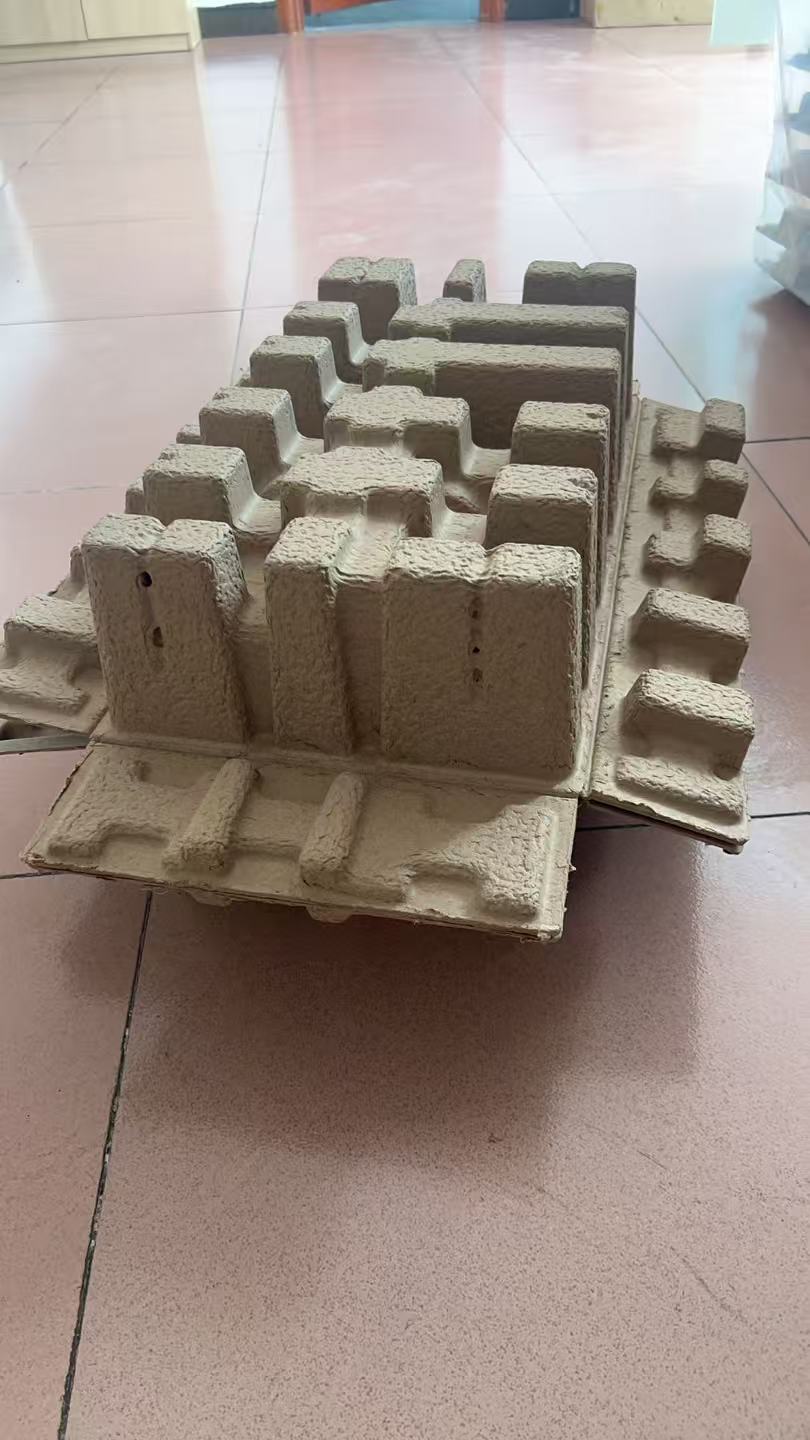
Electronics packaging is where molded pulp has made the most real ground against foam, and it's worth being specific about why, because "eco-friendly" isn't the whole story.
Anti-static behavior matters more than most buyers realize going in. Standard pulp isn't inherently anti-static, but additives and coatings can bring it in line with ESD-sensitive component requirements - this is a spec question to raise early, not something to assume. If your product includes bare PCBs, connectors, or anything static-sensitive, ask for ESD test data, not just a verbal assurance.
Fit is the other half of it. A laptop or tablet insert has to hold the device rigid enough that it doesn't rattle against the box walls during a drop, but not so tight that removing the device scratches the housing. This is a tooling and design problem more than a materials one - it's why thermoformed pulp tends to win out over transfer molded for anything that touches a finished consumer device directly.
Stackability is the quieter win. A molded pulp tray designed with a consistent nesting profile takes up a fraction of the warehouse space that loose foam does before it's packed, which matters more to a logistics manager than it does to a sustainability report.
Industrial and Appliance Packaging: A Different Set of Priorities
Move away from consumer electronics and the calculus shifts. Small appliances, automotive components, and general industrial hardware care less about surface finish and more about compression strength, moisture resistance, and how the packaging performs across a full supply chain - not just a single parcel shipment.
End caps and structural inserts for heavier products need thick wall molding or reinforced transfer molding, sometimes combined with a wax or water-resistant coating if the product is shipping through variable climates or sitting in an uncontrolled warehouse for weeks. This is also where tooling investment becomes the real conversation. Custom molds for industrial applications commonly take longer to develop and validate than a standard tray, and minimum order quantities can be steep enough that it only makes financial sense above a certain shipping volume. Below that volume, a semi-custom or modular pulp tray - adapted from an existing mold rather than built from scratch - is usually the more realistic starting point.
Material Choice: It's Not Just "Recycled Paper"
Most molded pulp is made from recycled paperboard, but the raw material underneath varies more than buyers usually ask about.
Wood pulp gives the most consistent fiber quality and the smoothest molding results, which is why it dominates in electronics and retail-facing packaging where surface finish matters.
Bagasse (sugarcane fiber) and wheat straw are agricultural byproducts increasingly used as a lower-impact alternative, particularly in markets where "made from waste material" is a genuine differentiator rather than a checkbox. They tend to have shorter fiber lengths, which can mean slightly less structural strength for a given wall thickness - worth testing before committing to a large order if load-bearing performance is a factor.
If sustainability messaging is central to your packaging story, ask suppliers for the actual fiber source and recycled content percentage in writing. "Eco-friendly" printed on a spec sheet with no backing data is a claim, not a fact, and increasingly it's a claim regulators and customers are willing to challenge.
What Actually Drives Cost
Three things move the price more than anything else: tooling complexity, wall thickness, and finishing.
A simple, shallow tray with generous tolerances is inexpensive to tool and fast to produce. Add depth, undercuts, fine surface detail, or tight dimensional tolerances for a snug electronics fit, and both tooling cost and cycle time go up. Coatings - moisture barriers, anti-static treatments, printed branding directly on the fiber surface - are usually priced separately and can meaningfully change the per-unit cost at scale, so get them itemized rather than bundled into a single quote line.
Volume matters more here than with plastic injection molding in one specific way: the tooling investment is a bigger share of total cost at low volumes, which means molded pulp often doesn't pencil out below a few thousand units unless you're using a shared or modular mold.
Evaluating a Supplier
A few questions separate a supplier who understands your application from one who's just quoting a commodity tray:
Can they show you a molding process video or plant walkthrough, not just a product photo? Do they ask what's going inside the packaging before quoting wall thickness? Do they have ESD or moisture test data available for electronics or industrial use cases, rather than treating those as afterthoughts? Can they explain their fiber source specifically, rather than defaulting to "recycled materials" as a full answer?
None of these are hard questions to answer for a supplier who actually works in electronics or industrial packaging regularly. They're difficult questions for a general packaging broker reselling capacity they don't fully understand.
Frequently Asked Questions
Is molded pulp packaging strong enough for electronics shipping? Yes, when the wall thickness and molding method are matched to the product weight and fragility. Thermoformed or thick wall pulp, properly engineered with rib structures for support, performs comparably to molded foam for most consumer electronics - laptops, tablets, small appliances - though extremely heavy or delicate items may still need a hybrid approach combining pulp trays with additional cushioning.
Does molded pulp packaging protect against static discharge? Only if it's specifically treated or coated for ESD protection. Standard molded pulp is not inherently anti-static, so this needs to be specified as a requirement, with test documentation requested from the supplier.
How long does custom tooling take for molded pulp packaging? It varies by mold complexity and supplier capacity, but custom tooling is a real lead-time factor that should be planned for well ahead of a product launch - it's rarely something that can be compressed on short notice, which is why many buyers prototype early with an adapted existing mold before committing to a fully custom one.
Is molded pulp actually recyclable and compostable? Most molded pulp is recyclable through standard paper recycling streams, and uncoated pulp is generally compostable. Coatings - particularly moisture or grease barriers - can affect both properties, so it's worth confirming the specific coating used rather than assuming all molded pulp behaves the same way at end of life.