Quick AnswerSometimes Yes, But It Depends on How Different the Products Actually Are
Here's the direct answer before getting into the details. Green Molded Pulp Packaging can absolutely be designed to work across multiple product models, but it's not automatic. It depends on how close the products actually are in size, weight, and shape. A single mold can often cover a small range of similar products, but it can't be stretched to fit anything and everything just because a brand wants to save on tooling cost.
A lot of buyers hear "shared mold" and picture something simpler than what's actually involved. Making one packaging design genuinely work for several product models takes real planning, usually starting back at the product design stage, not just squeezing different-sized items into the same tray after the fact and hoping for the best.
A Question That Comes Up When a Product Line Has Five SKUs and One Packaging Budget
This question comes up constantly with appliance brands running a product line that has several closely related models, maybe three power tiers of the same vacuum, or a handful of color and configuration variants of the same small kitchen appliance. The packaging budget usually doesn't stretch far enough to comfortably justify a separate mold for every single SKU, so someone inevitably asks whether one design could just cover the whole lineup.
The concern that comes right after that question is a fair one. Buyers worry that squeezing multiple products into a single mold means some models end up with a sloppy fit, weaker protection, or packaging that just looks like a compromise rather than something purpose-built. That worry is often justified when a shared mold is done carelessly, but it doesn't have to work out that way if the compatibility is actually planned for properly.
What Makes Multiple Products "Compatible" for a Shared Mold
A few specific factors actually determine whether products can realistically share one mold design, and it's worth understanding them before assuming a shared design is either impossible or effortless.
Size difference range matters most. Products that vary only slightly in length, width, or height, generally within a modest percentage of each other, can often be accommodated in a single mold using flexible internal zones. Products with dramatically different footprints usually can't.
Weight difference matters just as much as size, since heavier products typically need thicker cushioning walls or added support structure to stay protected during shipping. A mold designed around the lightest product in a lineup might not adequately protect the heaviest one, even if they're similar in physical size.
Shape category also plays a big role. Products that are all roughly the same basic shape, say a family of rectangular kitchen appliances in different sizes, are far easier to accommodate in one design than a mix of shapes, like a cylindrical product and a flat rectangular one.
A simple way to think about this: you can reasonably design one shoe box that fits a small range of similar shoe sizes. You can't reasonably expect that same box to also fit a completely different type of footwear with a totally different shape. Molded pulp compatibility works on the same basic logic.
Design Strategies That Enable Multi-Model Molded Pulp Packaging
Nested Tray Design With Multiple Insert Zones
One common approach is designing a single tray with several distinct zones molded into it, each shaped to accommodate a slightly different product footprint. The overall tray stays the same, but different sections of it are shaped to hold different model variants securely, almost like a tray built with a few different "seats" molded in from the start.
Adjustable or Modular Divider Sections
Another approach uses a base tray paired with separate, swappable divider or insert pieces. The main tray mold stays fixed and shared across all models, while smaller, cheaper-to-produce insert pieces get customized for each specific product variant. This keeps the most expensive part of the tooling shared while still allowing a snug fit for each model.
Oversized Base With Model-Specific Supplemental Padding
For cases where products vary a bit more than a single tray can gracefully handle, some designs use a slightly oversized base mold paired with small supplemental pulp or foam inserts specific to each model, filling in the extra space so smaller products in the lineup don't rattle around loosely.
Building in Extra Wiggle Room From the Start
Good multi-model designs also intentionally build in a bit of dimensional buffer, meaning the mold is engineered with a small amount of flexible tolerance rather than an exact, razor-tight fit to one specific product. That buffer is what allows the same design to comfortably handle small, expected variations across a product family.
Comparison Table Shared Mold vs Dedicated Mold Per Model
|
Factor |
Shared Mold Across Models |
Dedicated Mold Per Model |
|
Tooling cost |
Lower overall, one investment covers multiple SKUs |
Higher, a separate mold cost for every model |
|
Per-unit protection fit |
Good, if compatibility was properly planned |
Excellent, purpose-built for each specific product |
|
Design flexibility |
Some constraints from needing to fit multiple products |
Full flexibility for each individual product |
|
Best suited for |
Closely related products with modest size/weight differences |
Products with significantly different shapes or sizes |
Real ExampleA Small Appliance Line Consolidating Packaging Across Three Models
We've worked with small appliance clients running a product line with three power tiers of essentially the same device, where the differences in size and weight between models were modest but real. Using a nested tray design with a couple of adjustable insert zones, the client was able to cover all three models with a single mold investment rather than commissioning three separate tools.
The tooling cost savings were substantial compared to ordering three dedicated molds, and the brand also saw a meaningful simplification in warehouse and inventory management, since staff no longer needed to track and store three separate packaging SKUs alongside the three product SKUs.
When Multi-Model Design Doesn't Work The Honest Limits
It's worth being straightforward here rather than pretending shared molds are always the right call, because sometimes they genuinely aren't. If products in a lineup differ dramatically in size or shape, forcing them into one mold usually means someone's protection quality suffers, either the smallest product rattles around in too much empty space, or the largest product barely fits with cushioning stretched too thin.
Some products also have unique fragile components that need dedicated structural attention a shared design simply can't provide safely. And in some cases, a brand actually wants each model in a lineup to have its own distinct unboxing experience for marketing reasons, in which case forcing everything into a shared design would work against the brand's own goals, even if it were technically feasible.
The honest takeaway is that this is a case-by-case evaluation, not a simple yes-or-no answer. It's worth asking specifically whether shared tooling makes sense for your particular product lineup rather than assuming it automatically will or won't.
Rollguard Molded Pulp Can Structural Protection Also Be Modular
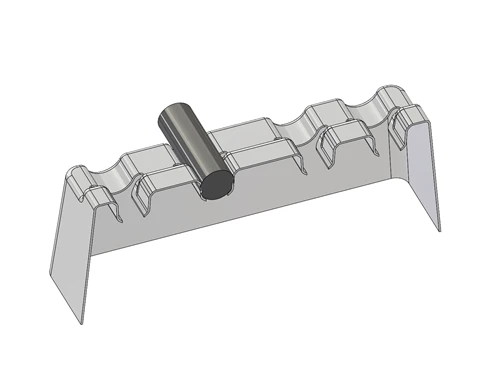
Rollguard Molded Pulp, the structural design typically used for cylindrical or roll-shaped components, faces a tougher challenge when it comes to multi-model compatibility. Structural protection like this needs to closely hug the curved surface of a specific product to work properly, and if different models in a lineup have meaningfully different diameters or curvatures, that structural fit becomes much harder to share across products compared to a flatter, simpler tray design.
A practical middle-ground approach some brands use is keeping the structural, curve-fitted portion of the packaging as a dedicated mold for products with meaningfully different dimensions, while sharing the surrounding tray or base packaging across the broader product line. This lets the part of the design that actually needs precision stay dedicated, while the less critical surrounding structure benefits from shared tooling economics.
Molded Pulp Trays Eco-friendly Where Modular Insert Zones Work Best
Multi-model compatibility tends to work more easily for Molded Pulp Trays Eco-friendly designs used for smaller components and accessories, particularly in electronics-adjacent applications where size differences between models are often fairly modest. A family of small appliance accessory kits, for example, is generally a much better candidate for a shared tray design with modular insert zones than a set of products with dramatically different physical footprints.
How This Affects Long-Term Packaging Cost Across a Product Line
The cost logic behind multi-model packaging design plays out over time rather than all at once. The upfront design work for a genuinely compatible shared mold usually takes more thought and iteration than designing a single-purpose mold for one product, since the design needs to account for a range of dimensions rather than one fixed target. That extra design effort is a real, if modest, upfront cost.
The payoff comes afterward, in the form of a single tooling investment covering multiple SKUs instead of several separate ones, and in simplified ongoing supply chain management, since fewer distinct packaging SKUs generally means less complexity in warehousing, inventory forecasting, and reordering across a product line.
Common Mistakes When Trying to Force Multiple Products Into One Mold
A handful of recurring mistakes show up when brands attempt multi-model packaging without proper planning:
Assuming similar-looking products are automatically compatible. Two products that look alike on a spec sheet can still have meaningfully different weight distributions or structural needs that a shared mold doesn't account for.
Prioritizing mold cost savings over protection quality. Squeezing a heavier or more fragile product into a mold designed around a lighter model can lead to real damage risk during shipping.
Skipping physical sample testing in favor of drawings alone. Compatibility that looks fine on a design rendering doesn't always hold up once real products are physically tested inside the actual mold.
Not accounting for future product models when finalizing a shared design. A mold designed too tightly around the current lineup can become obsolete the moment a new model with different dimensions gets added to the product line.
Industry TrendsWhy More Brands Are Designing Packaging and Products Together
A growing number of brands have started involving packaging suppliers earlier in the product development process, sometimes called designing for packaging, rather than finalizing a product's dimensions first and only bringing in a packaging supplier afterward. This shift makes multi-model shared packaging dramatically more feasible, since dimensional compatibility across a planned product line can be built in from the start rather than reverse-engineered after several products already exist in fixed forms.
This trend has been gaining traction alongside the broader sustainable packaging movement, where reducing the total number of distinct packaging types across a product portfolio is increasingly viewed as both a cost efficiency and a sustainability improvement, since fewer unique packaging SKUs generally means less material waste and simpler end-of-life sorting for customers.
egulatorySustainability Context Worth Knowing
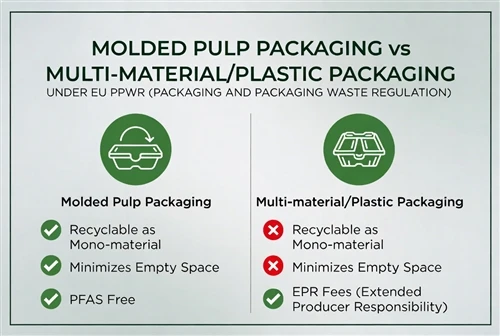
Packaging simplification and waste reduction are directionally aligned with current packaging regulation trends, including the European Union's Packaging and Packaging Waste Regulation, which places emphasis on minimizing unnecessary packaging material and variation. While these regulations don't specifically mandate shared packaging designs across product models, reducing overall packaging material use and complexity fits the broader direction these policies are pushing toward. Specific requirements vary by region, so it's worth confirming current rules in your target markets rather than assuming a single global standard applies.
How to Brief Your Supplier for a True Multi-Model Packaging Solution
A properly briefed supplier can tell you quickly whether shared tooling makes sense for your specific product lineup. A few things worth providing upfront:
Actual dimensions and weights for every model in the lineup, not general descriptions like "roughly similar size," since small differences matter more than they might seem.
Any planned future models over the next year or two, so the mold design can account for reasonable future compatibility rather than needing replacement the moment a new SKU launches.
A request for physical sample testing with real products, rather than relying solely on design renderings to confirm fit and protection quality.
Clarity on whether structural elements like corner protection need separate evaluation from the main tray, since these often have different compatibility limits than flatter packaging components.
If you're working with a Green Molded Pulp Packaging manufacturer or factory directly, it's worth raising the multi-model question early in your product planning process rather than after your product lineup is already finalized, since early involvement is what actually makes shared tooling work well.
F AQ
Q: Can molded pulp packaging really fit multiple product sizes?
A: Yes, within a reasonable range. Products that are similar in shape and only modestly different in size and weight can often share one mold design using techniques like nested tray zones or modular insert sections, though products with dramatically different dimensions generally can't be accommodated by a single shared mold.
Q: How much size difference can one mold typically handle?
A: This varies by product category and design approach, but generally a modest percentage difference in key dimensions can be accommodated with proper planning, while larger variances typically require dedicated tooling or supplemental inserts to maintain adequate protection.
Q: Does sharing a mold across models reduce protection quality?
A: It can, if the compatibility isn't properly planned, but a well-designed shared mold with adequate dimensional buffering and appropriate insert zones can maintain strong protection across all covered models. The risk comes from forcing incompatible products together, not from shared tooling itself.
Q: Is Rollguard structural packaging harder to make multi-model than flat trays?
A: Generally yes, since structural designs need to closely fit a product's specific curvature, making them more sensitive to dimensional differences between models compared to flatter tray designs, which have more flexibility to accommodate size variation.
Q: What happens if I add a new product model later?
A: This depends on how much the new model's dimensions differ from the existing shared mold design. A model with modest differences may fit within the existing design's buffer, while a significantly different model would likely require either a new dedicated mold or a redesign of the shared tooling.
Q: Does multi-model packaging cost less than separate molds per product?
A: Generally yes in total tooling investment, since one mold covering multiple SKUs costs less than several separate dedicated molds, though the upfront design work for a properly compatible shared mold typically requires more planning than a single-purpose design.
Q: How do I know if my product line is a good fit for shared mold design?
A: The best way to know is providing your supplier with actual dimensions and weights for every model and requesting a compatibility assessment, ideally backed by physical sample testing rather than relying only on design renderings.
Q: Should packaging design happen before or after the product design is finalized?
A: Ideally, packaging considerations should be part of the conversation while product dimensions are still being finalized, since this makes multi-model compatibility dramatically easier to achieve than trying to retrofit a shared design after several products already exist in fixed forms.
Final Thoughts Compatibility Needs to Be Designed In, Not Assumed
Green Molded Pulp Packaging can genuinely support multiple product models sharing a single design, but it works best when compatibility is planned deliberately rather than assumed after the fact. Products that are reasonably close in size, weight, and shape are strong candidates for shared tooling, while dramatically different products generally aren't, no matter how much a brand might want to save on mold costs.
Before finalizing a product lineup, it's worth bringing your packaging supplier into the conversation early, rather than waiting until every model is locked in and then asking whether everything can somehow fit into one tray.