
一,The main differences and concepts of the process
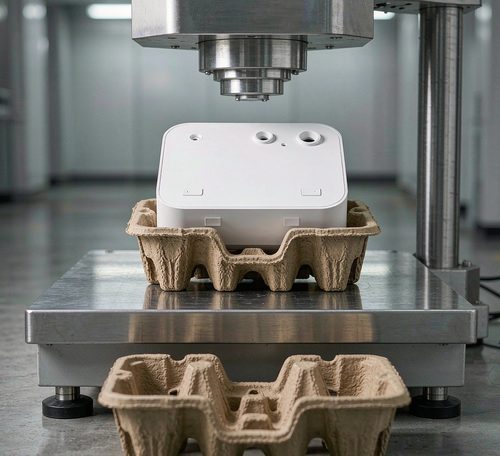
Hot press molded pulp (method of dry pressing)
This technique uses sugarcane pulp, bamboo pulp, or waste paper pulp as raw materials. After vacuum adsorption molding, it must go through two steps: drying (which lowers the moisture content to 10% to 13%) and hot pressing shape. Its main benefits are:
Structural stability: During the drying process, hydrogen bonds form between the fibers. Hot pressing then compresses the fibers even more. The product is hard and doesn't change shape very much (≤ 0.5%), therefore it can hold a lot of weight.
Flexibility in the process: You can make custom cushioning by changing the mold thickness (2–5mm) and fiber density (0.6–1.2g/cm³).
Adaptability of raw materials: Compatible with yellow pulp (recycled pulp) and sugarcane pulp (natural fiber pulp), which lowers the cost of raw materials.
Wet-pressed pulp method
The wet pressing procedure skips the drying step and instead does hot pressing on wet embryos with a moisture content of 65% to 75%. Some of its technical aspects are:
Surface accuracy: Wet fiber flows very well and can make a wall that is only 0.8 mm thick. The surface is smooth to the point where it looks like a mirror (Ra ≤ 0.8 μ m), which is good for high-end looks.
Molding efficiency: The cycle for single piece molding is 30% shorter than that for dry compression, however special release agents are needed to keep the mold from sticking.
Material limitations: To avoid damage during demolding, long fiber pulp (like A4 pulp) is needed, which raises the cost of raw materials.
二, Comparison of Performance: Main Signs of Home Appliance Packaging
1. Performance of the buffer
The process of dry pressing: The impact resistance strength can be ≥ 120kJ/m ², which meets the drop testing requirements of heavy-duty household appliances like refrigerators and washing machines (ISTA 3A standard). This is possible by increasing the density of the unit structure (15–20 protrusions per square centimeter) and the height of the facade (≥ 8mm).
In the wet pressing process, composite structures (such double-layer honeycomb design) need to be utilized to improve buffering since the walls are so thin. This raises the cost by more than 40% and makes the economy worse.
2. Load carrying capacity Dry pressed product: A paper holder that is 2.5mm thick can support more than 150kg and can be used as a bottom holder for a refrigerator or a liner for a washing machine.
Wet pressed product: It has a wall thickness of 0.8mm and can only hold 30kg of weight. To make packaging more complicated, it needs to be utilized with corrugated cardboard or honeycomb board.
3. Weather and water resistance
The dry pressing procedure may make the material waterproof for 72 hours (in an atmosphere with 85% humidity) by adding a nano waterproof coating like silane coupling agent. This meets the needs of sea shipping.
The wet pressing method needs double layer coating technology (bottom coating + top coating). This makes the moisture-proofing 25% more expensive, but it makes the surface shine 30% more.
4. Following the rules for the environment
Both meet the EU EN13432 requirement for biodegradable materials, but the dry pressing procedure cuts the carbon footprint by 20% (based on the LCA lifespan) because it uses recycled pulp.
三, Cost-benefit analysis: the secret to making things on a massive scale
1. The cost of raw materials
The dry pressing process may use up to 60% recycled pulp, and the cost of raw materials per ton is 1800 yuan less than that of wet pressing (based on sugarcane pulp).
The wet pressing technique needs long fiber pulp, and the cost of the raw materials makes up 45% of the total cost (dry pressing is 30%).
2. How well the production works
Dry pressing process: A single production line can make 500,000 pieces a year, and each set of molds costs between 80,000 and 120,000 yuan.
Wet pressing: The procedure can make 700,000 pieces a year, but the molds can cost 200,000 to 250,000 yuan per set because they need to be very precise.
3. Full cost
For example, the packaging of a certain brand of washing machine:
The cost of packaging for one unit is 9 yuan (which includes the bottom tray and side protection), and the damage rate is 0.5%.
Wet pressing plan: Each unit costs 14 yuan (using composite corrugated cardboard), and the damage rate is 0.3% (although the cost of materials makes up 60% of the total).
四, Market adaptability: choosing a strategy based on the situation
1. Heavy-duty equipment for the home (ice air wash)
Process that is recommended: The main procedure is dry pressing, but wet pressing is employed in some places to make things look better.
Case: The bottom support of the Haier refrigerator packaging is dry pressed (3mm thick) and can hold 200kg. The side guard plate employs wet pressing technology to make the unboxing experience better, which lowers the overall cost by 12%.
2. Small equipment for the home, like a microwave oven or rice cooker
Suggested method: wet pressing or semi-wet pressing, with a moisture level of 25% to 45%.
Benefits: Wet pressing technique can make walls that are only 0.5mm thick, cut the volume of packing by 30%, and meet Amazon FBA warehousing regulations.
3. High-end home appliances like OLED TVs and robots that clean floors
Wet pressing and film coating (PE/PLA biofilm) are the best ways to do this.
Effect: The surface glossiness reaches 90GU (only 60GU when dry pressing), which meets the packaging texture needs of brands like Apple and Dyson.