
1. Environmental policies and customer demand: the "green necessity" of pulp trays
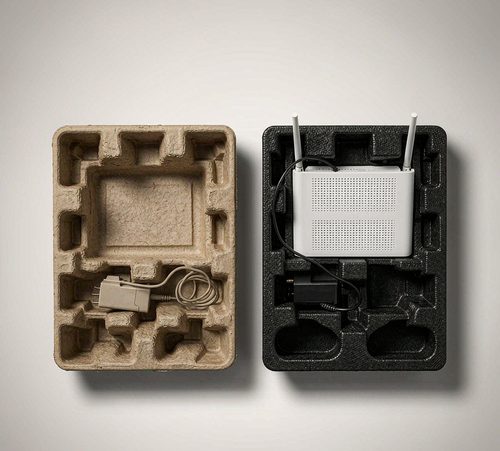
The global "plastic ban/restriction" strategy has helped pulp pallets become more popular. Since 2019, the EU has enforced the Directive on Disposable Plastic Products, which strictly limits the production and sale of plastic tableware, straws, and other items. Since 2020, China has fully enforced the "plastic ban," which requires supermarkets and the catering industry to slowly stop using non-degradable plastic bags. Because they are biodegradable and renewable, pulp trays are now a great alternative to plastic packaging in this situation. For example, the pulp tray for the Huawei P80 series is made from recycled cardboard boxes, sugarcane bagasse, and bamboo fibre. Compared to plastic packaging, each ton of moulded pulp cuts carbon emissions by 62.6%. It can also break down into organic fertilizers in 180 days, which is exactly what worldwide environmental rules say it should do.
This change has happened even faster since customers want packaging that is good for the environment. Studies reveal that more than 70% of people are prepared to pay more for eco-friendly packaging. This is especially true for people who buy high-end electronics and see eco-friendliness in packaging as a sign of a brand's social commitment. Apple tested the iPhone 16 with packaging made of bamboo fibre combined with other materials. Xiaomi 14 Ultra used sugarcane pulp paper holders for certain of its products. Both of these packaging modifications showed the brand's green idea and helped users identify with the brand.
2. Functional adaptation: a complete change from "protection" to "experience"
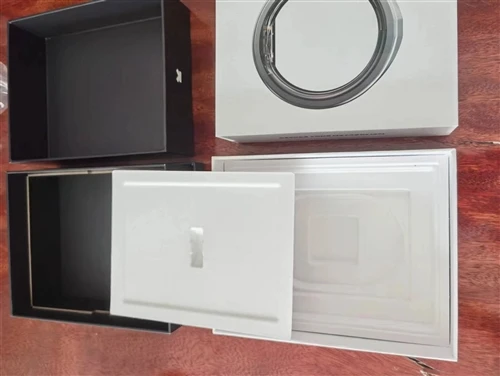
Smart watches need packaging functions that go well beyond what other electrical devices need. For example, their heart rate sensors and AMOLED screens need to be shockproof and scratchproof. Thin and light bodies, like the Lenovo smartwatch W101, which only weighs 42 grams, need packaging that fits well. And high-end positioning, like the Apple Watch that costs more than 3000 yuan, makes the sense of unwrapping ritual even more important. Through three important technological developments, the pulp tray has gone from "basic protection" to "experience upgrade":
Structural mechanics optimization: The pulp holder can spread out the force of a press because to its bionic structure design, which includes honeycomb and wave shapes. Its cushioning is 40% more effective than that of typical foam plastics. The Huawei P80 paper holder, for example, has a hexagonal honeycomb structure that keeps the screen and case safe even when dropped from a height of 1.2 meters. Its surface is treated with a waterproof coating that doesn't easily deform after being wet, which solves the problem of pulp materials absorbing too much water.
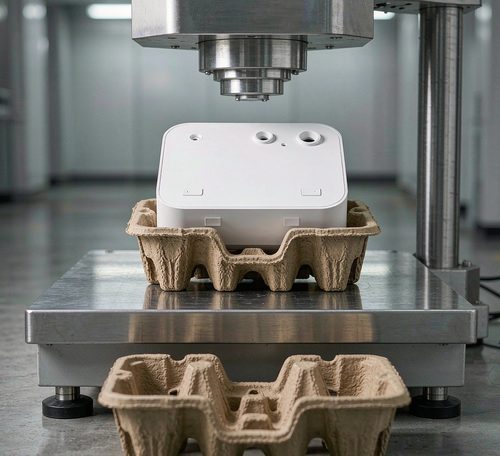
Precision moulding technology: The CAD/CAM computer-aided design and manufacturing technology lets the pulp holder mould with an accuracy of 0.1mm, which means it fits the smart watch's curved body and strap buckle flawlessly. Bishuo Intelligent and other equipment makers have created a dry press moulding machine that can compress pulp fibres to a thickness of 0.5mm. This makes the packaging stronger while using less material, which cuts the weight of the packaging by 30% compared to plastic pallets.
Multi-functional integrated design: The pulp tray is no longer just for protecting things; it now has features like storage for accessories and a way to keep charging cables in place thanks to modular design. For instance, a certain brand of smartwatch comes in a paper holder with a built-in magnetic charging slot, so users can charge it right away when they open the box. In another case, the brand LOGO and product parameters are embossed on the surface of the paper holder, replacing traditional paper manuals and cutting down on waste.
3. Aesthetic Innovation: The Value Shift from "Practicality" to "Art" In the world of high-end consumer electronics, packaging has become a major part of developing a brand that feels luxurious. The pulp tray has changed the idea that eco-friendly packaging is "rough and cheap" by using new materials and technologies. It has been a major way for smartwatches to show off their style:
Natural texture and feel: Pulp fibres seem warmer and less plastic than plastic packing. The Huawei P80 paper holder has a "high mountain flowing water" texture on the outside that looks like real rock. Apple uses laser engraving to show the light and shadow of the product inside the paper holder, which makes it look like it's "floating" when you open the box.
Brand story and colour customization: Pulp trays may now be dyed in colours that match Pantone colour cards exactly, which is a big step forward from the old limits of rice white and light brown. For instance, the packaging for a luxury brand's smartwatch utilizes a deep green pulp tray that fits with the product's "Forest Exploration" theme. In another example, the surface of the paper holder has a gradient starry sky pattern that matches the design of the watch display.
Sustainable story and user resonance: Packaging is a way for firms to show that they care about the environment. Huawei printed the "Made with Recycled Paper Boxes" emblem on the inside of the paper holder and included a QR code link to the page where you can trace your carbon footprint. Xiaomi put seed paper in the packaging box to urge customers to plant and keep doing things to help the environment. These designs turn useful packaging into tools for making emotional connections, which makes users more loyal.