Quick RecapWhy End-of-Life Path Matters More Than the Raw Material Label
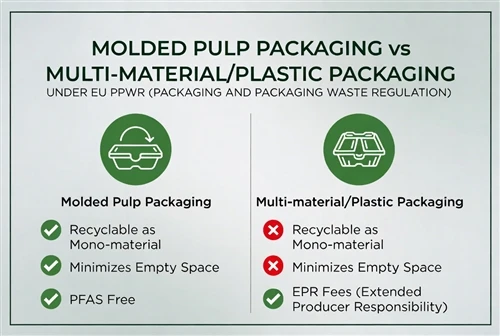
Briefly, since this deserves acknowledgment before moving on: PLA and similar bioplastics generally require industrial composting conditions to break down at any meaningful rate, and without access to that specific infrastructure, they behave far more like conventional plastic than their "biodegradable" label suggests. Molded pulp, by contrast, typically slots directly into existing paper recycling systems that are already widespread. That distinction is real and matters. It's just not the whole story once food is actually involved.
The Breathability FactorWhy This Matters More for Food Than for Electronics
Here's where food packaging becomes a genuinely different conversation than protecting a phone or a set of headphones. Molded pulp has real, documented breathability and moisture absorption properties, its cellulose fibers actively absorb excess surface moisture from produce, which reduces mold risk and can meaningfully extend shelf life for items like berries and other small, moisture-sensitive fruit. This isn't a marginal footnote either, pulp containers are specifically recommended in agricultural packaging guidance for small fruit that's easily damaged by excess surface water.
Biodegradable plastic films work on the opposite principle for the most part. Standard plastic film, whether conventional or bio-based, tends to create a tighter moisture and gas barrier, and when breathability is actually needed for produce that requires airflow, films need to be specifically perforated to allow gas exchange, an added manufacturing step rather than a natural material property. The right choice genuinely depends on the specific commodity's respiration needs and expected handling temperature, not a blanket rule favoring one material category over the other.
Comparison TableMolded Pulp vs Biodegradable Plastic for Food-Contact Packaging
|
Factor |
Molded Pulp |
Biodegradable Plastic (PLA/Film) |
|
Natural breathability |
High, absorbs surface moisture naturally |
Low by default; airflow requires added perforation |
|
Moisture barrier strength |
Weak unless treated with a coating or water repellent |
Strong, provides consistent moisture/oxygen barrier |
|
Structural rigidity for heavy items |
Strong, holds shape well under load |
Generally weaker unless engineered as rigid trays |
|
End-of-life path |
Fits existing paper recycling infrastructure |
Requires industrial composting access to break down properly |
|
Best suited for |
Produce needing airflow, structural bottle/jar support |
Liquid-adjacent or high-moisture foods needing a sealed barrier |
Molded Pulp Wine TraysWhere Rigidity Matters More Than Flexibility
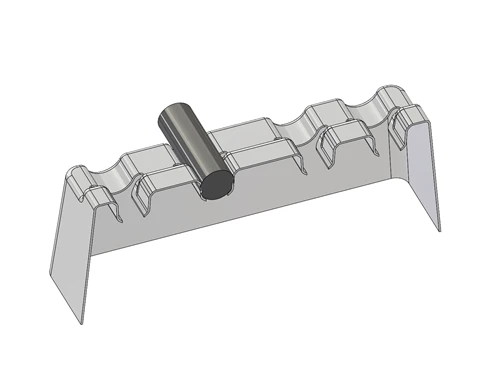
Wine packaging isn't really a breathability conversation at all, it's a structural one. A bottle needs to sit securely, resist shifting during transit, and survive real impact without cracking. Molded Pulp Wine Trays are well suited to this specific job because molded pulp holds its shape under compressive load and can be engineered with slots, ribs, and contoured cavities that cradle an irregular bottle shape precisely, distributing pressure and absorbing shock through the fiber matrix itself.
Bioplastic film, by contrast, generally isn't built for this kind of structural role. It excels as a barrier material, not as load-bearing protective structure, which is why bioplastic in wine packaging typically shows up as a liner or wrap layered inside a more rigid outer structure, rather than functioning as the primary protective element on its own.
Molded Pulp Apple Tray Breathability vs Barrier Protection Trade-offs
This is where the honest nuance comes in, and it's worth being upfront about it rather than presenting molded pulp as automatically superior for every fruit. Most produce genuinely benefits from the airflow and moisture absorption a Molded Pulp Apple Tray naturally provides. But some specific commodities need the opposite: tighter control over moisture loss or gas exchange to prevent shriveling, weight loss, or accelerated ripening from ethylene exposure. For those specific cases, uncoated molded pulp's natural breathability can actually work against shelf life rather than for it.
The practical fix, when it's genuinely needed, is applying a biodegradable coating or water-repellent treatment to the pulp tray, though this does add processing complexity and can modestly reduce some of the material's environmental simplicity. The honest takeaway: breathability is generally an asset for produce, but it's not a universal rule, and matching tray treatment to the specific fruit's actual storage behavior matters more than defaulting to "pulp is always better for fruit."
Food Contact SafetyTwo Different Certification Conversations
This is a distinction worth being precise about, since it's commonly conflated. Environmental credentials and food contact safety are two separate compliance questions, and one doesn't automatically confirm the other. Molded pulp's food safety conversation typically centers on whether any moisture-resistant coating used is PFAS-based or a genuinely food-safe alternative, since PFAS coatings raise both environmental and food-contact safety concerns. Bioplastic's food safety conversation involves a different set of checks entirely, residual monomer content, plasticizer safety, and migration testing specific to the polymer chemistry involved.
Neither material gets a free pass on food safety just because it carries an eco-friendly label. Both require their own specific food-contact testing and documentation, and assuming "sustainable" automatically means "food safe" skips a verification step that actually matters.
Molded Pulp Trays Eco-friendlyWhen Coating Choices Change the Comparison
It's worth being direct about a complication here: if a Molded Pulp Trays Eco-friendly product relies on a PFAS-based coating to achieve moisture resistance, it can actually lose ground relative to bioplastic on the end-of-life comparison discussed earlier, since PFAS coatings complicate clean paper recycling. The favorable comparison to bioplastic assumes the molded pulp product uses either no coating, a genuinely biodegradable coating, or a food-safe water-repellent treatment, not a shortcut that undermines the material's core advantage. This is exactly why asking a supplier specifically what coating technology is used, rather than accepting a generic "eco-friendly" label, matters as much for molded pulp as it does for verifying a bioplastic's actual compostability certification.
Industry Trends Why Food Brands Are Increasingly Choosing MoldedPulpOverBioplastic Films
A recurring pattern shows up across food and beverage brands making this switch: consumer perception plays a bigger role than pure material science. Bioplastic film, even when genuinely compostable, still visually resembles plastic to most shoppers, and that resemblance undercuts the sustainability message a brand is trying to send at the shelf. Molded pulp's matte, fiber-visible finish reads as unmistakably natural, and modern manufacturing now supports crisp printing and embossing that supports branding without sacrificing that visual distinctiveness. Combined with molded pulp's advantage of fitting into recycling infrastructure that's already widespread, rather than depending on composting access that's often unavailable to the end consumer, more food and beverage brands are treating molded pulp as the more practically sustainable choice for consumer-facing produce and wine packaging specifically.
Regulatory Context Worth Knowing
Regardless of which material a brand chooses, direct food-contact packaging needs to satisfy the applicable food-contact material regulations in its target market, commonly FDA requirements in the US or EU food-contact material regulations for European markets. This requirement doesn't relax because a material is marketed as sustainable, both molded pulp and bioplastic packaging in direct food contact need their own specific migration and safety testing documentation, and it's worth confirming this directly with a supplier rather than assuming an environmental certification covers food safety as well.
Real ExampleA Sunhing Stones Case Study on Switching From Bioplastic to Molded Pulp for Produce
We've worked with fresh produce clients through Sunhing Stones who initially used PLA-based trays for a fruit packaging line, then received customer feedback that the packaging still read as visually "plasticky" despite being technically compostable, undercutting the sustainability message the brand wanted to send. After switching to molded pulp apple trays, the client reported improved customer perception of the packaging's environmental credentials, alongside positive feedback on how the trays presented the fruit.
A Note on Industry Standards and Recognition
Within the sustainable food packaging industry, there's a growing recognition that breathability, structural performance, and food-contact safety documentation matter as much as the underlying environmental narrative when choosing between molded pulp and bioplastic for direct food and beverage applications.
Common Mistakes When Choosing Between These Two Materials for Food Packaging
A handful of mistakes come up repeatedly in this specific decision:
Comparing materials only on environmental philosophy, ignoring the specific commodity's storage needs. Some produce genuinely needs a moisture barrier, not breathability, and defaulting to pulp without checking this can shorten shelf life.
Assuming an eco-friendly label automatically means food-safety compliant. These are separate certifications requiring separate documentation, for both materials.
Using a PFAS-based coating on molded pulp while still marketing it as fully sustainable. This undermines the exact recyclability advantage that makes molded pulp the stronger choice on paper.
Choosing bioplastic packaging without confirming local composting infrastructure exists. A compostable label means little if the target market's consumers have no way to actually compost it.
A Decision Checklist for Food-Contact Packaging Material Choice
Identify your specific commodity's actual storage needs - does it benefit from airflow and moisture absorption, or does it need a tighter barrier against moisture loss?
Confirm whether any molded pulp coating used is PFAS-based or a genuine food-safe alternative.
Verify that your target market has real composting infrastructure if considering bioplastic packaging.
Request separate documentation for environmental credentials and food-contact safety certification, since these are two distinct compliance questions for either material.
F A Q
Q: Is molded pulp more breathable than biodegradable plastic packaging?
A: Generally yes. Molded pulp's fibrous structure naturally absorbs surface moisture and allows airflow, while bioplastic film typically requires specific perforation to achieve similar breathability, since standard film construction favors a tighter moisture barrier by default.
Q: Can molded pulp trays keep produce fresh as well as plastic packaging?
A: For many produce types, particularly small fruit sensitive to excess surface moisture, yes, molded pulp's moisture absorption can genuinely extend freshness. For commodities needing tighter moisture or gas control, plastic's stronger barrier properties may perform better unless the pulp is specifically treated.
Q: Do wine trays work better in molded pulp or bioplastic?
A: Molded pulp is generally the stronger choice for wine packaging specifically, since it provides structural rigidity and shock absorption for bottle protection that flexible bioplastic film typically isn't designed to provide on its own.
Q: Does food contact safety certification differ between molded pulp and bioplastic?
A: Yes, they involve different testing focuses. Molded pulp certification concerns often center on coating chemistry (particularly PFAS use), while bioplastic certification typically involves residual monomer and plasticizer safety testing specific to the polymer used.
Q: Does a PFAS coating change which material is more sustainable?
A: Yes, significantly. A PFAS-coated molded pulp product loses much of its recycling advantage over bioplastic, since the coating complicates clean paper recycling, which is exactly why coating chemistry is worth confirming directly with any supplier.
Q: Why are more food brands choosing molded pulp over bioplastic film?
A: Consumer perception plays a large role, since molded pulp's visibly fiber-based, matte appearance reads as more genuinely sustainable to shoppers than bioplastic film, which often still visually resembles conventional plastic despite being compostable.
Q: Is biodegradable plastic ever a better choice for fresh produce than molded pulp?
A: Yes, for commodities specifically needing a tight moisture or gas barrier rather than airflow, where uncoated molded pulp's natural breathability could accelerate moisture loss or spoilage rather than prevent it.
Q: What should I ask a supplier about food-contact safety for either material?
A: Ask specifically for third-party food-contact migration testing documentation matched to your target market's regulations, and for molded pulp specifically, ask whether any coating used is PFAS-based or a verified food-safe alternative.